

Class: Senior Secondary School 1 (SS1, SS 1, SSS1, SSS 1)
Term: 3rd Term
Week: 4
Age: 15 years
Duration: 45 minutes
Subject: Building Construction
Curriculum Theme: Building Construction
Previous Lesson: Walls: Meaning, Types and Functions.
Topic: Walling Materials: Types and Properties
Subject Matter: Definition of walling materials, types of walling materials (cement blocks, bricks, timber, stones), characteristics/properties (strength, durability, water resistance).
Specific Objectives
By the end of the lesson, pupils should be able to:
Cognitive Domain:
- Define walling materials.
- List at least four types of walling materials.
- State three important properties of walling materials.
Affective Domain:
- Appreciate the importance of selecting appropriate walling materials for construction.
- Participate actively in discussions about different walling materials.
Psychomotor Domain:
- Identify different walling materials from provided samples.
- Differentiate between various walling materials based on their properties.
Social Domain:
- Discuss with peers the common uses of various walling materials in their local environment.
Reference Materials
The following resources were used in planning this lesson:
- 9 Years Basic Education Curriculum for Building Construction.
- State Unified Scheme of Work for Senior Secondary School 1.
- O.P. Dada (2018). Building Construction for Senior Secondary Schools 1-3. Learn Africa Plc.
- https://www.buildsite.com/resources/building-materials-types-properties
- https://www.theconstructor.org/building/types-of-building-materials/10435/
Instructional Materials
The teacher will teach this lesson with the aid of:
- Samples of bricks, cement blocks, stones, and timber.
- Charts illustrating different types of walling materials and their applications.
Rationale for the Lesson
This lesson helps pupils understand the basic materials used to build walls in structures. Knowing about different walling materials and their properties enables pupils to make informed choices about materials for various construction purposes and appreciate how buildings are constructed.
Prerequisite/Previous Knowledge
Pupils have basic knowledge of common building components and some materials used in their environment.
Lesson Content/Board Summary
Walling Materials: Types and Properties
Definition of Walling Materials
Walling materials are the various substances used to construct the vertical enclosures (walls) of a building. These materials provide structural support, enclosure, privacy, and protection from weather elements.
Types of Walling Materials
The following are common types of walling materials:
- Cement Blocks: Manufactured from cement, sand, and aggregates. They are uniform in size and offer good strength.
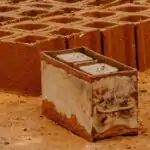
- Bricks: Made from clay, shaped, and then fired in a kiln. They are durable, fire-resistant, and come in various colours.
- Timber (Wood): Obtained from trees and processed into planks or logs. It is lightweight, easy to work with, and offers good insulation.
- Stones: Natural materials extracted from quarries. They are highly durable, strong, and offer a natural aesthetic appeal.
Characteristics/Properties of Walling Materials
The following are important properties of walling materials:
- Strength: The ability of a material to resist external forces without breaking. Strong materials are important for bearing loads from the roof and upper floors.
- Durability: The ability of a material to withstand wear, pressure, or damage over time. Durable materials ensure a long lifespan for the building.
- Water Resistance: The ability of a material to prevent the penetration of water. Water-resistant materials protect the interior of a building from dampness and water damage.
- Insulation: The ability to resist the transfer of heat or sound. Good insulating materials help maintain comfortable indoor temperatures and reduce noise.
- Workability: The ease with which a material can be cut, shaped, or joined.
- Fire Resistance: The ability of a material to withstand fire without significant damage or collapse.
Teaching Methods/Instructional Techniques
Discussion, Lecture, Demonstration, Question and Answer, Visual Aids
Instructional Procedures
Step 1: Introduction
Time: 5 minutes
Teaching Skill: Set Induction
Teacher’s Activity: The teacher greets the pupils and asks them to identify the materials used to build the walls of their school or home. The teacher then introduces the topic: “Walling Materials: Types and Properties.”
Pupils’ Activity: Pupils respond by naming materials like blocks, bricks, or concrete. They listen attentively to the topic introduction.
Learning Point: Pupils are engaged and relate the lesson to their environment.
Step 2: Definition of Walling Materials
Time: 7 minutes
Teaching Skill: Explanation/Definition
Teacher’s Activity: The teacher defines walling materials, explaining their purpose in construction. The teacher writes the definition on the board.
Pupils’ Activity: Pupils listen, take notes, and ask questions for clarification.
Learning Point: Pupils understand what walling materials are and their basic function.
Step 3: Types of Walling Materials
Time: 10 minutes
Teaching Skill: Demonstration/Listing
Teacher’s Activity: The teacher displays samples of bricks, cement blocks, timber, and stones. For each sample, the teacher identifies it and briefly explains its origin and common uses. The teacher lists these types on the board.
Pupils’ Activity: Pupils observe the samples, identify them, and note down the different types of walling materials.
Learning Point: Pupils can identify and name various walling materials.
Step 4: Characteristics/Properties of Walling Materials
Time: 10 minutes
Teaching Skill: Explanation/Discussion
Teacher’s Activity: The teacher explains key properties like strength, durability, and water resistance, providing examples of how each property is important for a wall. The teacher encourages pupils to suggest other properties.
Pupils’ Activity: Pupils listen, contribute to the discussion, and note down the characteristics/properties of walling materials.
Learning Point: Pupils understand the important properties that walling materials should possess.
Step 5: Group Discussion/Activity
Time: 5 minutes
Teaching Skill: Collaborative Learning
Teacher’s Activity: The teacher divides pupils into small groups and asks them to discuss which walling material they would recommend for a specific scenario (e.g., building a fence, a house in a rainy area) and why.
Pupils’ Activity: Pupils discuss within their groups and prepare to share their findings.
Learning Point: Pupils apply their knowledge to practical scenarios and develop critical thinking.
Step 6: Teacher’s Summary
Time: 3 minutes
Teaching Skill: Consolidation
Teacher’s Activity: The teacher briefly summarizes the main points of the lesson, reiterating the definition, types, and properties of walling materials.
Pupils’ Activity: Pupils listen and review their notes.
Learning Point: Key learning points are reinforced.
Step 7: Evaluation/Review
Time: 5 minutes
Teaching Skill: Questioning/Assessment
Teacher’s Activity: The teacher evaluates the learning by asking the following questions:
- What are walling materials?
- Mention three types of walling materials you have learned today.
- State two important properties of good walling materials.
- Why is durability an important property for a walling material?
Pupils’ Activity: Pupils answer orally and in writing.
Learning Point: Pupils demonstrate understanding of the lesson.
Step 8: Conclusion
Time: (Remaining time)
Teaching Skill: Closure
Teacher’s Activity: The teacher gives homework: “Research and write down three advantages and three disadvantages of using timber as a walling material.” The teacher then thanks the pupils for their participation and dismisses the class.
Pupils’ Activity: Pupils copy the homework and prepare for the next lesson.
Learning Point: The lesson is brought to a formal close, and learning is extended.
Lesson Keywords
- Walling Materials – Substances used to construct the vertical enclosures of a building.
- Cement Blocks – Manufactured walling units made from cement, sand, and aggregates.
- Bricks – Building units made from fired clay.
- Timber – Wood prepared for use in building and carpentry.
- Stones – Natural rock material used for construction.
- Strength – Ability to withstand forces without breaking.
- Durability – Ability to last a long time without significant wear or damage.
- Water Resistance – Ability to prevent water penetration.
Differentiation
For pupils who grasp concepts quickly, the teacher can ask them to research the environmental impact of different walling materials. For those who need more support, the teacher can provide simplified charts or visual aids and offer more one-on-one guidance during the activity session.
Note for teachers using this lesson plan
Ensure that actual samples of walling materials are available for pupils to touch and observe, as this greatly enhances understanding. Encourage pupils to share examples of these materials from their local environment. Emphasize the practical application of understanding material properties in real-world construction scenarios.

Community Join the conversation Open discussion +