

Class: Junior Secondary School 1 (JSS 1 / JS1)
Term: 3rd Term
Week: 7
Age: 12 years
Duration: 45 minutes
Subject: Business Studies
Curriculum Theme: Business Studies
Previous Lesson: Meaning of Double Entry Book Keeping in Double Entry Bookkeeping.
Topic: LEDGERS
Subject Matter: Meaning of ledgers, Classes of ledgers, Classification of accounts: Real, Nominal, Personal, Impersonal
Specific Objectives
By the end of the lesson, pupils should be able to:
Cognitive Domain:
- Define a ledger.
- List the different classes of ledgers.
- Classify accounts into Real, Nominal, Personal, and Impersonal accounts.
- State the rules for debiting and crediting different types of accounts.
Affective Domain:
- Appreciate the importance of ledgers in business record-keeping.
- Show willingness to learn about account classification.
Psychomotor Domain:
- Draw a simple T-account to represent a ledger.
- Identify examples of each type of account.
Social Domain:
- Collaborate with peers to discuss account classifications.
- Participate actively in class discussions about ledgers.
Reference Materials
The following resources were used in planning this lesson:
- 9 Years Basic Education Curriculum for Business Studies JSS 1-3.
- State Unified Scheme of Work for Business Studies JSS 1.
- Any relevant Business Studies textbook for Junior Secondary Schools Book 1.
- https://www.accountingcoach.com/ledgers/explanation
- https://www.wallstreetmojo.com/types-of-accounts-in-accounting/
Instructional Materials
The teacher will teach this lesson with the aid of:
- Chart showing examples of a ledger account.
- Whiteboard/Blackboard.
- Markers/Chalk.
Rationale for the Lesson
This lesson helps pupils understand how financial transactions are organized and summarized in a business. It enables them to identify different types of accounts, which is important for basic record-keeping and understanding business financial information.
Prerequisite/Previous Knowledge
Pupils should have basic knowledge of business transactions, source documents, and the concept of debit and credit.
Lesson Content/Board Summary
Ledgers
Meaning of Ledgers
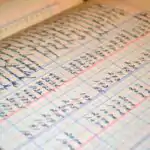
A ledger is the principal book of accounts where all financial transactions of a business are recorded. It is a collection of all accounts (e.g., Cash, Sales, Purchases, Rent) used by a business. Each account in the ledger shows the financial activity related to a specific item.
Classes of Ledgers
Ledgers are generally classified into the following types:
- Sales Ledger (Debtors Ledger): This ledger contains the individual accounts of customers who buy goods on credit from the business. It shows how much each customer owes the business.
- Purchases Ledger (Creditors Ledger): This ledger contains the individual accounts of suppliers from whom the business buys goods on credit. It shows how much the business owes each supplier.
- General Ledger (Nominal Ledger): This ledger contains all other accounts that are not found in the sales or purchases ledgers. It includes accounts for assets (e.g., Cash, Bank, Building), liabilities (e.g., Loans), expenses (e.g., Salaries, Rent), and revenues (e.g., Sales, Discount Received).
Classification of Accounts
Accounts are classified to help in understanding their nature and how to apply the rules of debit and credit. The main classifications are:
- Personal Accounts: These are accounts related to individuals, firms, or companies. Examples include Debtors (customers), Creditors (suppliers), Capital account (owner’s investment), and Drawings account (owner’s withdrawals).
Rule: Debit the receiver, Credit the giver. - Real Accounts: These are accounts related to assets, properties, or possessions of the business that have a physical existence or can be measured. Examples include Cash, Bank, Land, Building, Furniture, Machinery, and Stock.
Rule: Debit what comes in, Credit what goes out. - Nominal Accounts: These are accounts related to expenses, losses, incomes, and gains of the business. These accounts are closed at the end of each accounting period. Examples include Salaries, Rent, Wages, Discount Received, Commission Paid, Interest Received, Sales, and Purchases.
Rule: Debit all expenses and losses, Credit all incomes and gains. - Impersonal Accounts: This is a broad category that includes both Real Accounts and Nominal Accounts. It is often used to distinguish these accounts from Personal Accounts.
Teaching Methods/Instructional Techniques
Discussion, Lecture, Demonstration, Question and Answer, Visual Aids
Instructional Procedures
Step 1: Introduction
Time: 5 minutes
Teaching Skill: Set Induction
Teacher’s Activity: The teacher greets the pupils and asks them to recall what they learned in the previous lesson about business transactions and source documents. The teacher then introduces the topic “Ledgers” as the next step in recording business transactions.
Pupils’ Activity: Pupils respond to the teacher’s questions and listen attentively to the introduction of the new topic.
Learning Point: Pupils connect previous knowledge to the new topic.
Step 2: Meaning of Ledgers
Time: 10 minutes
Teaching Skill: Explanation/Definition
Teacher’s Activity: The teacher explains the meaning of a ledger as a main book of accounts where all financial transactions are summarized. The teacher uses a chart to show a simple example of a ledger account (T-account).
Pupils’ Activity: Pupils listen, observe the chart, and ask questions for clarification. They copy the definition into their notes.
Learning Point: Pupils understand what a ledger is and its purpose.
Step 3: Classes of Ledgers
Time: 10 minutes
Teaching Skill: Explanation/Listing
Teacher’s Activity: The teacher explains the three main classes of ledgers: Sales Ledger, Purchases Ledger, and General Ledger. The teacher gives examples of accounts found in each ledger.
Pupils’ Activity: Pupils listen, take notes, and identify examples of accounts for each ledger class.
Learning Point: Pupils learn about the different types of ledgers and their contents.
Step 4: Classification of Accounts
Time: 10 minutes
Teaching Skill: Explanation/Categorization
Teacher’s Activity: The teacher explains the classification of accounts into Personal, Real, Nominal, and Impersonal accounts. For each type, the teacher defines it, gives examples, and states the debit and credit rule.
Pupils’ Activity: Pupils listen, ask questions, and take detailed notes on each account type, its examples, and its rule.
Learning Point: Pupils understand the different categories of accounts and their specific rules.
Step 5: Evaluation/Review
Time: 5 minutes
Teaching Skill: Questioning/Assessment
Teacher’s Activity: The teacher evaluates the learning by asking the following questions:
- What is a ledger?
- Mention two classes of ledgers.
- Classify the following accounts: Cash, John Doe, Rent Paid.
- State the debit and credit rule for Nominal accounts.
Pupils’ Activity: Pupils answer orally and in writing.
Learning Point: Pupils demonstrate understanding of the lesson.
Step 8: Conclusion
Time: 5 minutes
Teaching Skill: Summarization
Teacher’s Activity: The teacher summarizes the key points of the lesson, emphasizing the importance of ledgers and correct account classification for accurate record-keeping. The teacher gives pupils a short assignment to list five examples of each account type.
Pupils’ Activity: Pupils listen to the summary and copy down the assignment.
Learning Point: Pupils consolidate their learning and prepare for further practice.
Home Task: Give three correct examples of LEDGERS and explain what each example shows.
Lesson Keywords
- Ledger – A book or collection of accounts in which financial transactions are recorded.
- Personal Account – An account related to individuals, firms, or companies.
- Real Account – An account related to assets and properties.
- Nominal Account – An account related to expenses, losses, incomes, and gains.
- Impersonal Account – A category including Real and Nominal accounts.
Differentiation
For pupils who grasp the concepts quickly, the teacher can ask them to provide more complex examples of each account type. For pupils who need more support, the teacher will provide simpler examples and additional guidance during practice exercises.
Note for teachers using this lesson plan
Ensure pupils understand the basic concept of debit and credit before delving into account classification. Use clear, simple language and provide numerous relevant examples to illustrate each type of account. Encourage pupils to draw and label a simple T-account to visualize ledger entries.


Community Join the conversation Open discussion +