

Class: Senior Secondary School 2 (SS2 / SSS 2)
Term: 1st Term
Week: 9
Age: 16 years
Duration: 45 minutes
Subject: Geography
Curriculum Theme: Environmental Issues
Previous Lesson: Environmental Problems: Coastal Erosion, Flooding and Deforestation.
Topic: Environmental Problems (HAZARDS) Cont.
Subject Matter: Pollution meaning, types of pollution, land pollution meaning causes effects and solutions, water pollution meaning causes effects and solutions, air pollution meaning causes effects and solutions, noise pollution meaning causes effects and solutions.
Specific Objectives
By the end of the lesson, pupils should be able to:
Cognitive Domain:
- Define pollution.
- Identify different types of pollution.
- State the causes, effects, and solutions for land, water, air, and noise pollution.
Affective Domain:
- Appreciate the importance of preventing pollution in their communities.
- Develop a sense of responsibility towards environmental protection.
Psychomotor Domain:
- Observe and identify pollution problems in their immediate environment.
- Suggest practical and actionable solutions to local pollution issues.
Social Domain:
- Participate actively in discussions about environmental problems.
- Collaborate with peers to propose community-based solutions to pollution.
Reference Materials
The following resources were used in planning this lesson:
- 9 Years Basic Education Curriculum for Senior Secondary Schools.
- State Unified Scheme of Work for Geography, SS2.
- Ojo, P.O. (2018). Senior Secondary Geography for Nigeria. Ibadan: University Press PLC.
- WAEC e-learning: Environmental Problems
- Video: Types of Pollution Explained
Instructional Materials
The teacher will teach this lesson with the aid of:
- Documentaries on environmental problems.
- World and local maps showing areas affected by pollution.
- Whiteboard/Chalkboard and markers/chalk.
- Pictures or charts illustrating various types of pollution.
Rationale for the Lesson
This lesson helps pupils understand the various ways human activities harm the environment. Understanding pollution is important because it enables pupils to identify environmental problems around them and encourages them to participate in finding solutions for a healthier community.
Prerequisite/Previous Knowledge
Pupils have basic knowledge of environmental problems and hazards from previous lessons.
Lesson Content/Board Summary
Environmental Pollution
Meaning of Pollution
Pollution is the introduction of harmful substances or products into the environment, causing adverse effects on living organisms and the overall ecosystem.
Types of Pollution
Pollution can be classified into several types based on the medium affected:
- Land Pollution
- Water Pollution
- Air Pollution
- Noise Pollution
Land Pollution
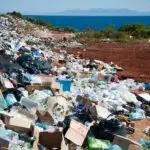
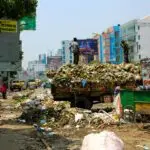
Land pollution is the contamination of the Earth’s land surface with harmful substances, often as a result of human activities.
The following are causes of land pollution:
- Improper disposal of solid waste (e.g., plastics, domestic refuse, electronic waste).
- Industrial waste discharge (e.g., chemical spills, toxic waste from factories).
- Agricultural activities (e.g., overuse of pesticides, herbicides, and chemical fertilizers).
- Mining activities (e.g., excavation, waste rock, and tailings).
- Deforestation and soil erosion leading to loss of topsoil and degradation.
The following are effects of land pollution:
- Loss of fertile land for agriculture, impacting food production.
- Contamination of groundwater through leachate from landfills.
- Habitat destruction for wildlife, leading to loss of biodiversity.
- Spread of diseases by pests like rats and flies attracted to waste.
- Unpleasant aesthetics and foul odour in affected areas.
The following are solutions to land pollution:
- Proper waste management practices, including the “Reduce, Reuse, Recycle” principle.
- Safe and regulated disposal of industrial and hazardous waste.
- Promotion of organic farming and reduced use of chemical inputs.
- Afforestation, reforestation, and erosion control measures.
- Public awareness and education campaigns on responsible waste disposal.
Water Pollution
Water pollution is the contamination of water bodies (such as rivers, lakes, oceans, and groundwater) by substances that degrade water quality and are harmful to living organisms.
The following are causes of water pollution:
- Discharge of untreated sewage and domestic wastewater.
- Industrial effluents containing chemicals, heavy metals, and dyes.
- Agricultural runoff carrying pesticides, fertilizers, and animal waste.
- Oil spills from ships, offshore drilling, and pipelines.
- Improper disposal of solid waste and plastic into water bodies.
The following are effects of water pollution:
- Destruction of aquatic life (fish, plants, and microorganisms).
- Spread of waterborne diseases (e.g., cholera, typhoid, dysentery).
- Contamination of drinking water sources, posing health risks to humans.
- Eutrophication, leading to excessive growth of algae and oxygen depletion.
- Economic losses for fishing communities and tourism.
The following are solutions to water pollution:
- Treatment of sewage and industrial wastewater before discharge.
- Strict regulations and enforcement on industrial waste disposal.
- Adoption of sustainable agricultural practices to reduce runoff.
- Prevention of oil spills and effective clean-up mechanisms.
- Public education on responsible waste disposal and water conservation.
Air Pollution
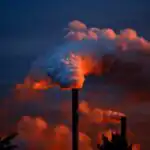
Air pollution is the presence of harmful substances in the atmosphere, such as gases, particulate matter, and biological molecules, that can cause health problems and environmental damage.
The following are causes of air pollution:
- Emissions from vehicles (e.g., carbon monoxide, nitrogen oxides, particulate matter).
- Industrial emissions (e.g., sulfur dioxide, volatile organic compounds).
- Burning of fossil fuels for energy generation and domestic use.
- Bush burning, deforestation, and uncontrolled wildfires.
- Dust from construction activities, mining, and unpaved roads.
The following are effects of air pollution:
- Respiratory diseases (e.g., asthma, bronchitis, lung cancer).
- Acid rain, which damages buildings, vegetation, and aquatic ecosystems.
- Climate change and global warming due to greenhouse gas emissions.
- Smog formation, reducing visibility and irritating respiratory systems.
- Damage to the ozone layer, increasing exposure to harmful UV radiation.
The following are solutions to air pollution:
- Use of cleaner fuels and promotion of renewable energy sources.
- Implementation of emission control technologies in vehicles and industries.
- Afforestation, urban greening, and protection of existing forests.
- Promotion of public transportation, cycling, and carpooling.
- Enforcement of environmental laws and air quality standards.
Noise Pollution
Noise pollution is excessive or disturbing sound that can have harmful effects on human or animal life.
The following are causes of noise pollution:
- Industrial machinery and construction activities (e.g., jackhammers, generators).
- Vehicular traffic (e.g., cars, motorcycles, airplanes, trains).
- Loud music, public address systems, and social gatherings.
- Generators and household appliances in residential areas.
- Religious activities with loud loudspeakers.
The following are effects of noise pollution:
- Hearing loss and impairment, particularly with prolonged exposure.
- Stress, anxiety, irritability, and sleep disturbances.
- Interference with communication, concentration, and learning.
- Impact on wildlife behaviour, migration patterns, and reproduction.
- Reduced quality of life and general well-being.
The following are solutions to noise pollution:
- Zoning regulations to separate residential areas from noisy industrial zones.
- Use of noise-reducing technologies in vehicles, machinery, and construction.
- Planting trees and creating green belts as natural sound barriers.
- Enforcement of noise limits and regulations by authorities.
- Public awareness campaigns on the impact of noise and ways to reduce it.
Teaching Methods/Instructional Techniques
Discussion, Lecture, Demonstration, Question and Answer, Visual Aids
Instructional Procedures
Step 1: Introduction
Time: 5 minutes
Teaching Skill: Set Induction
Teacher’s Activity: The teacher greets the pupils and reminds them of the previous lesson on environmental problems. The teacher asks pupils to mention some common environmental problems they observe in their community.
Pupils’ Activity: Pupils respond to the greetings and mention examples of environmental problems like refuse dumps, dirty water, and smoke from vehicles.
Learning Point: Pupils recall previous knowledge and are prepared for the new topic.
Step 2: Meaning and Types of Pollution
Time: 5 minutes
Teaching Skill: Explanation/Definition
Teacher’s Activity: The teacher defines pollution and introduces the main types of pollution (land, water, air, noise) using examples from the pupils’ environment. The teacher writes the definition and types on the board.
Pupils’ Activity: Pupils listen attentively, take notes, and identify examples of pollution in their surroundings.
Learning Point: Pupils understand the general meaning and classification of pollution.
Step 3: Land Pollution
Time: 7 minutes
Teaching Skill: Explanation/Discussion
Teacher’s Activity: The teacher explains land pollution, its causes, effects, and solutions. The teacher shows pictures or a short clip from a documentary illustrating land pollution and guides a discussion on how to tackle it in their communities.
Pupils’ Activity: Pupils observe the visuals, participate in the discussion, and suggest ways to manage land waste.
Learning Point: Pupils understand the specifics of land pollution and its management.
Step 4: Water Pollution
Time: 7 minutes
Teaching Skill: Explanation/Demonstration
Teacher’s Activity: The teacher explains water pollution, its causes, effects, and solutions. The teacher may use a map to point out polluted water bodies or show another clip from a documentary focusing on water pollution.
Pupils’ Activity: Pupils listen, observe the map/documentary, and discuss the impact of water pollution on health and aquatic life.
Learning Point: Pupils understand the specifics of water pollution and its management.
Step 5: Air Pollution
Time: 7 minutes
Teaching Skill: Explanation/Questioning
Teacher’s Activity: The teacher explains air pollution, its causes, effects, and solutions. The teacher asks pupils to identify sources of air pollution they encounter daily (e.g., vehicle exhaust, generator fumes).
Pupils’ Activity: Pupils respond to questions, share their observations, and learn about ways to reduce air pollution.
Learning Point: Pupils understand the specifics of air pollution and its management.
Step 6: Noise Pollution
Time: 7 minutes
Teaching Skill: Explanation/Interactive
Teacher’s Activity: The teacher explains noise pollution, its causes, effects, and solutions. The teacher asks pupils about common sources of excessive noise in their environment and its impact on them.
Pupils’ Activity: Pupils share their experiences with noise pollution and discuss how it can be mitigated.
Learning Point: Pupils understand the specifics of noise pollution and its management.
Step 7: Evaluation/Review
Time: 5 minutes
Teaching Skill: Questioning/Assessment
Teacher’s Activity: The teacher evaluates the learning by asking the following questions:
- Define pollution in your own words.
- List any three types of pollution discussed.
- State two causes and two effects of land pollution.
- Mention two solutions for water pollution.
- Explain one cause and one solution for air pollution.
Pupils’ Activity: Pupils answer orally and in writing.
Learning Point: Pupils demonstrate understanding of the lesson.
Step 8: Conclusion
Time: 2 minutes
Teacher’s Activity: The teacher summarizes the lesson by reiterating the importance of understanding and preventing pollution for a healthy environment. The teacher encourages pupils to be advocates for environmental protection.
Pupils’ Activity: Pupils listen and ask any remaining questions.
Learning Point: Pupils consolidate their understanding and are encouraged to apply what they have learned.
Lesson Keywords
- Pollution – The introduction of harmful substances into the environment.
- Land Pollution – Contamination of the Earth’s land surface.
- Water Pollution – Contamination of water bodies.
- Air Pollution – Presence of harmful substances in the atmosphere.
- Noise Pollution – Excessive or disturbing sound.
- Contamination – The act of making something impure or unsuitable.
- Effluents – Liquid waste discharged from factories or sewage treatment plants.
- Smog – A type of air pollution consisting of a mixture of smoke and fog.
- Eutrophication – Excessive richness of nutrients in a lake or other body of water, frequently due to runoff from the land, which causes a dense growth of plant life and death of animal life from lack of oxygen.
Differentiation
For pupils who may struggle, the teacher will provide simplified notes and focus on the core definitions and one cause, effect, and solution for each type of pollution. Group activities will be used to encourage peer learning. For advanced pupils, the teacher will encourage further research on local pollution challenges and ask them to propose innovative solutions or present case studies.
Note for teachers using this lesson plan
Teachers should ensure that the documentaries and maps used are relevant to the Nigerian context where possible. Encourage pupils to relate the concepts of pollution directly to their immediate environment to make the lesson more impactful. Emphasize practical solutions that pupils can implement or advocate for in their daily lives. Ensure pupils understand that environmental protection is a shared responsibility.

Community Join the conversation Open discussion +