

Class: Senior Secondary School 2 (SS2 / SSS2)
Term: 1st Term
Week: 6
Age: 16 years
Duration: 45 minutes
Subject: Geography
Curriculum Theme: Resource Management
Previous Lesson: Environmental Resources: Minerals, Land and Human Capital.
Topic: Renewable and Non-Renewable Resources
Subject Matter: Meaning of renewable resources, meaning of non-renewable resources, types of renewable resources, types of non-renewable resources, advantages of renewable resources, advantages of non-renewable resources, disadvantages of renewable resources, disadvantages of non-renewable resources
Specific Objectives
By the end of the lesson, pupils should be able to:
Cognitive Domain:
- Define renewable resources.
- Define non-renewable resources.
- List types of renewable resources.
- List types of non-renewable resources.
- State advantages of renewable resources.
- State disadvantages of renewable resources.
- State advantages of non-renewable resources.
- State disadvantages of non-renewable resources.
Affective Domain:
- Appreciate the importance of sustainable resource management.
- Participate actively in discussions about resource utilization.
Psychomotor Domain:
- Identify local examples of renewable and non-renewable resources.
- Tabulate resources into renewable and non-renewable categories.
Social Domain:
- Collaborate with peers during fieldwork to identify resources.
Reference Materials
The following resources were used in planning this lesson:
- 9 Years Basic Education Curriculum for Senior Secondary Schools.
- State Unified Scheme of Work for Geography SS2.
- Senior Secondary Geography by Onabamiro, B. S. (2010).
- https://www.nationalgeographic.org/encyclopedia/renewable-and-nonrenewable-resources/
- https://www.eia.gov/energyexplained/what-is-energy/sources-of-energy.php
Instructional Materials
The teacher will teach this lesson with the aid of:
- Illustrative diagrams and sketches of various resources.
- Documentaries or video clips on renewable and non-renewable resources.
- Maps showing resource distribution.
- Whiteboard or chalkboard, and markers or chalk.
- Pictures of local resources.
Rationale for the Lesson
This lesson helps pupils understand where the resources they use daily come from and why it is important to manage them properly. It enables pupils to differentiate between resources that can be replenished and those that cannot, which is essential for making informed decisions about resource use in their communities.
Prerequisite/Previous Knowledge
Pupils have a basic understanding of what resources are and their general uses from their previous studies in Geography.
Lesson Content/Board Summary
Renewable and Non-Renewable Resources
Meaning of Renewable Resources
Renewable resources are natural resources that can be replenished or regenerated naturally over a relatively short period of time, either through natural processes or sustainable human management. They are considered inexhaustible if managed properly.
Types of Renewable Resources
The following are common types of renewable resources:
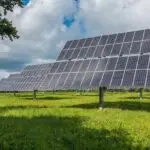
- Solar Energy: Energy derived from sunlight.
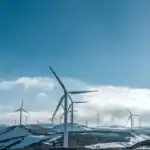
- Wind Energy: Energy harnessed from the movement of air.
- Hydroelectric Power: Energy generated from flowing water.
- Biomass Energy: Energy from organic matter (e.g., wood, agricultural waste).
- Geothermal Energy: Heat energy from within the Earth.
- Tidal Energy: Energy from ocean tides.
- Forests: Trees and other vegetation that can be replanted.
- Water: The water cycle continually replenishes fresh water.
Advantages of Renewable Resources
The following are advantages of renewable resources:
- They are sustainable and will not run out.
- They generally have a lower environmental impact, producing fewer greenhouse gases.
- They can reduce dependence on foreign energy sources.
- They can create new job opportunities in green industries.
- They can lead to stable energy prices in the long term.
Disadvantages of Renewable Resources
The following are disadvantages of renewable resources:
- Their availability can be intermittent (e.g., solar power at night, wind power when there is no wind).
- Initial setup costs for renewable energy infrastructure can be high.
- They often require large land areas for installations (e.g., solar farms, wind farms).
- Energy storage can be a challenge.
- Some forms can have local environmental impacts (e.g., dams affecting river ecosystems).
Meaning of Non-Renewable Resources
Non-renewable resources are natural resources that exist in finite quantities and cannot be replenished or regenerated on a human timescale once they are used up. Their formation takes millions of years.
Types of Non-Renewable Resources
The following are common types of non-renewable resources:
- Fossil Fuels:
- Coal: A combustible black or brownish-black sedimentary rock.
- Petroleum (Oil): A naturally occurring, yellowish-black liquid found beneath the Earth’s surface.
- Natural Gas: A naturally occurring hydrocarbon gas mixture.
- Nuclear Fuels:
- Uranium: A heavy, silvery-white metallic element used in nuclear power.
- Minerals:
- Iron Ore: Rocks and minerals from which metallic iron can be economically extracted.
- Gold: A precious metal.
- Copper: A reddish-orange metallic element.
- Bauxite: The main ore of aluminium.
Advantages of Non-Renewable Resources
The following are advantages of non-renewable resources:
- They are generally highly concentrated and can produce a large amount of energy from a small volume.
- They are relatively inexpensive to extract and process, especially in established industries.
- They are reliable and can provide a continuous supply of energy.
- Existing infrastructure for their extraction, transportation, and utilization is well-developed.
Disadvantages of Non-Renewable Resources
The following are disadvantages of non-renewable resources:
- They are finite and will eventually run out.
- Their extraction and use contribute significantly to environmental pollution and climate change (e.g., greenhouse gas emissions).
- They can lead to geopolitical conflicts due to competition over scarce resources.
- Accidents during extraction or transportation can cause severe environmental damage (e.g., oil spills).
- Their prices can be volatile due to supply and demand fluctuations.
Teaching Methods/Instructional Techniques
Discussion, Lecture, Demonstration, Question and Answer, Visual Aids
Instructional Procedures
Step 1: Introduction
Time: 5 minutes
Teaching Skill: Set Induction
Teacher’s Activity: The teacher greets the pupils and asks them to name some natural things they use every day, like water, wood, or fuel. The teacher then introduces the topic by explaining that these resources can be classified based on their ability to be replenished.
Pupils’ Activity: Pupils respond by naming various natural resources and listen attentively to the introduction.
Learning Point: Pupils are introduced to the concept of natural resources and their classification.
Step 2: Meaning and Types of Renewable Resources
Time: 10 minutes
Teaching Skill: Explanation/Demonstration
Teacher’s Activity: The teacher defines renewable resources using simple language and provides examples. The teacher uses diagrams, pictures, or a short video clip to illustrate different types of renewable resources like solar, wind, and hydro energy, explaining how each is replenished or harnessed.
Pupils’ Activity: Pupils listen, take notes, and observe the visual aids. They may ask questions for clarification.
Learning Point: Pupils understand the meaning of renewable resources and can identify various types.
Step 3: Advantages and Disadvantages of Renewable Resources
Time: 7 minutes
Teaching Skill: Discussion/Analysis
Teacher’s Activity: The teacher leads a discussion on the benefits and drawbacks of using renewable resources. The teacher encourages pupils to think about the environmental and economic impacts of these resources.
Pupils’ Activity: Pupils contribute to the discussion by stating advantages and disadvantages, drawing from their general knowledge or the provided examples.
Learning Point: Pupils can identify the advantages and disadvantages associated with renewable resources.
Step 4: Meaning and Types of Non-Renewable Resources
Time: 10 minutes
Teaching Skill: Explanation/Demonstration
Teacher’s Activity: The teacher defines non-renewable resources, emphasizing their finite nature. The teacher then presents and explains common types such as fossil fuels (coal, oil, natural gas) and minerals, using maps or diagrams to show their distribution.
Pupils’ Activity: Pupils listen, observe the visual aids, and take notes on the definitions and types of non-renewable resources.
Learning Point: Pupils understand the meaning of non-renewable resources and can identify various types.
Step 5: Advantages and Disadvantages of Non-Renewable Resources
Time: 7 minutes
Teaching Skill: Discussion/Analysis
Teacher’s Activity: The teacher facilitates a discussion on the advantages and disadvantages of non-renewable resources, focusing on their historical importance, current use, and long-term environmental consequences.
Pupils’ Activity: Pupils actively participate, expressing their views on the pros and cons of non-renewable resources.
Learning Point: Pupils can identify the advantages and disadvantages associated with non-renewable resources.
Step 6: Field Tour/Documentary Discussion
Time: (This step would typically be done outside of the 45-minute lesson, or a simulated activity/documentary viewing within the classroom)
Teaching Skill: Application/Observation
Teacher’s Activity: (If a field trip is not feasible, the teacher shows a documentary or video clip about local or global resource utilization, prompting pupils to identify examples of renewable and non-renewable resources within their community or shown in the video. The teacher guides them to tabulate what they observe.)
Pupils’ Activity: Pupils watch the documentary/video, identify resources, and tabulate them into renewable and non-renewable categories.
Learning Point: Pupils apply their knowledge to identify and categorize resources from real-world examples.
Step 7: Evaluation/Review
Time: 5 minutes
Teaching Skill: Questioning/Assessment
Teacher’s Activity: The teacher evaluates the learning by asking the following questions:
- Define renewable resources and non-renewable resources.
- List three types of renewable resources.
- Mention two advantages of non-renewable resources.
- State two disadvantages of renewable resources.
Pupils’ Activity: Pupils answer orally and in writing.
Learning Point: Pupils demonstrate understanding of the lesson.
Step 8: Conclusion
Time: 1 minute
Teaching Skill: Summarization
Teacher’s Activity: The teacher summarizes the key points of the lesson, reiterating the importance of understanding and managing both renewable and non-renewable resources for sustainable development.
Pupils’ Activity: Pupils listen and reflect on the lesson’s main points.
Learning Point: Pupils consolidate their understanding of the topic and its relevance.
Lesson Keywords
- Renewable Resources – Resources that can be replenished naturally over a short period.
- Non-Renewable Resources – Resources that exist in finite quantities and cannot be replenished on a human timescale.
- Fossil Fuels – Non-renewable energy sources formed from the remains of ancient organisms (e.g., coal, oil, natural gas).
- Solar Energy – Energy derived from the sun.
- Wind Energy – Energy harnessed from moving air.
- Sustainable Management – Managing resources in a way that meets current needs without compromising the ability of future generations to meet their own needs.
Differentiation
For pupils who grasp concepts quickly, the teacher can encourage them to research specific renewable energy projects in Nigeria or discuss the economic implications of transitioning from non-renewable to renewable energy. For pupils needing more support, the teacher will provide simplified diagrams and allow for peer-supported learning during the identification and tabulation tasks.
Note for teachers using this lesson plan
Teachers should ensure that visual aids are clear and relevant to the Nigerian context where possible. Encourage active participation and critical thinking regarding resource use and environmental impact. The field tour or documentary viewing can be adapted based on available resources and time; if a physical tour is not possible, a virtual tour or detailed pictures of local resources can be used effectively.
Community Join the conversation Open discussion +