

Class: Senior Secondary School 2 (SS2 / SSS2)
Term: 2nd Term
Week: 4
Age: 16 years
Duration: 45 minutes
Subject: Geography
Curriculum Theme: Human Geography
Previous Lesson: .
Topic: Transportation in Nigeria
Subject Matter: Meaning of transportation, modes of transportation such as road, rail, water, air, pipeline, aerial rope ways, human and animal portage, road transport meaning and types, merits and demerits of road transport, problems of road transport and solutions, rail transport meaning and types, merits and demerits of rail transport, problems of rail transport and solutions, pipeline transport meaning and types, water transport meaning and types, merits and demerits of water transport, problems of transportation and solutions, influence of transportation on human activities
Specific Objectives
By the end of the lesson, pupils should be able to:
Cognitive Domain:
- Define transportation.
- Identify and describe major modes of transportation in Nigeria.
- Explain the merits and demerits of different transport modes.
- Discuss the problems of transportation in Nigeria and propose solutions.
- Explain the influence of transportation on human activities.
Affective Domain:
- Appreciate the importance of an efficient transportation system.
- Participate actively in class discussions on transportation challenges and solutions.
Psychomotor Domain:
- Draw maps of Nigeria illustrating road and rail transportation systems.
Social Domain:
- Collaborate with peers to analyze transportation issues in Nigeria.
Reference Materials
The following resources were used in planning this lesson:
- 9 Years Basic Education Curriculum for Senior Secondary Schools.
- State Unified Scheme of Work for Geography SS2.
- Adeleke, B.O. & Leong, G.C. (2007). Certificate Physical and Human Geography for Senior Secondary Schools. Africana First Publishers Plc.
Instructional Materials
The teacher will teach this lesson with the aid of:
- Atlas
- Maps of Nigeria showing transportation networks
- Documentaries, films or slides on transportation
- Diagrams and sketches of transport modes
- Drawing paper and tracing paper for map work
Rationale for the Lesson
This lesson helps pupils understand how people and goods move across Nigeria. It enables them to appreciate the role of transportation in daily life and economic development, and to identify ways to improve the system.
Prerequisite/Previous Knowledge
Pupils have a basic understanding of Nigerian geography and the concept of movement of people and goods.
Lesson Content/Board Summary
Transportation in Nigeria
Meaning of Transportation
Transportation refers to the movement of people, goods, and services from one place to another. It is a fundamental activity that links different parts of a region or country, facilitating trade, communication, and social interaction.
Modes of Transportation
The following are the major modes of transportation:
- Road transport
- Rail transport
- Water transport
- Air transport
- Pipeline transport
- Aerial ropeways
- Human and animal portage (traditional modes)
Road Transport
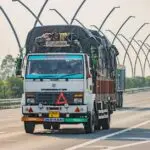
Road transport involves the movement of people and goods on roads using vehicles like cars, buses, lorries, and motorcycles.
Types of roads include:
- Trunk A roads (Federal roads)
- Trunk B roads (State roads)
- Trunk C roads (Local government roads)
The following are the merits of road transport:
- Door-to-door service is possible.
- Flexible routes and timings.
- Suitable for short distances.
- Less capital intensive to construct than railways or airports.
The following are the demerits of road transport:
- High risk of accidents.
- Traffic congestion, especially in urban areas.
- Higher cost for long distances compared to rail or water.
- Environmental pollution from vehicle emissions.
The following are the problems of road transport in Nigeria:
- Poor road network and bad road conditions (potholes, erosion).
- Inadequate maintenance of existing roads.
- High incidence of road accidents.
- Traffic congestion in cities.
- Lack of proper road signs and markings.
- Activities of touts and illegal levies.
The following are the solutions to problems of road transport:
- Construction of new and well-maintained roads.
- Regular rehabilitation and repair of existing roads.
- Strict enforcement of traffic laws and regulations.
- Introduction of mass transit systems.
- Training and retraining of drivers.
- Removal of illegal checkpoints and touts.
Rail Transport
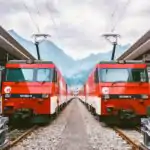
Rail transport involves the movement of people and goods by trains on railway tracks.
Types of rail transport:
- Passenger rail (for people)
- Freight rail (for goods)
- Light rail/Metro (for urban areas)
The following are the merits of rail transport:
- Suitable for long-distance heavy goods and bulk materials.
- Relatively safer and more reliable than road transport.
- Less affected by weather conditions.
- More fuel-efficient per ton-mile for bulk cargo.
The following are the demerits of rail transport:
- Lack of flexibility in routes and timings.
- Requires large capital investment for construction and maintenance.
- Not suitable for door-to-door service.
- Limited network coverage in many areas.
The following are the problems of rail transport in Nigeria:
- Outdated infrastructure and rolling stock.
- Narrow gauge lines limiting speed and capacity.
- Poor management and funding.
- Competition from road transport.
- Vandalism of rail tracks.
The following are the solutions to problems of rail transport:
- Modernization of rail infrastructure (standard gauge lines).
- Increased government investment and private sector participation.
- Efficient management and operational practices.
- Improved security to prevent vandalism.
Pipeline Transport
Pipeline transport involves the movement of liquid and gaseous products, such as crude oil, refined petroleum products, and natural gas, through pipes.
Types of pipeline transport:
- Oil pipelines (e.g., crude oil, refined products)
- Gas pipelines (e.g., natural gas)
- Water pipelines (for water supply)
Water Transport
Water transport involves the movement of people and goods on water bodies using boats, ships, ferries, and canoes.
Types of water transport:
- Inland water transport (rivers, lakes, lagoons)
- Ocean/Sea transport (international trade, coastal shipping)
The following are the merits of water transport:
- Cheapest mode for carrying heavy and bulky goods over long distances.
- Environmentally friendly (less pollution per ton-mile).
- No need for road construction or maintenance (natural routes).
The following are the demerits of water transport:
- Slowest mode of transport.
- Dependent on water levels and weather conditions.
- Limited to areas with water bodies.
- High cost of port facilities and handling.
The following are the problems of water transport in Nigeria:
- Shallow rivers and silting preventing navigation.
- Lack of modern port facilities and equipment.
- Insecurity (piracy) in coastal and international waters.
- Poor maintenance of waterways.
The following are the solutions to problems of water transport:
- Dredging of rivers and waterways.
- Modernization and expansion of port facilities.
- Enhanced security measures against piracy.
- Investment in modern vessels and navigation aids.
Influence of Transportation on Human Activities
Transportation influences human activities in various ways:
- Economic Development: Facilitates trade, industrial growth, and distribution of goods, leading to job creation and wealth.
- Social Interaction: Enables movement of people for education, healthcare, recreation, and family visits, fostering social cohesion.
- Urbanization: Influences the growth and development of cities and towns, as transport nodes often become commercial centers.
- Accessibility: Connects remote areas to markets and services, improving quality of life.
- Tourism: Essential for accessing tourist destinations, boosting the tourism industry.
- Agriculture: Helps farmers transport produce to markets, reducing post-harvest losses and increasing income.
- Security: Facilitates rapid deployment of security forces during emergencies.
Teaching Methods/Instructional Techniques
Discussion, Lecture, Demonstration, Question and Answer, Visual Aids
Instructional Procedures
Step 1: Introduction
Time: 5 minutes
Teaching Skill: Set Induction
Teacher’s Activity: The teacher greets the pupils and asks them how they travelled to school today. The teacher then asks them to imagine a day without any form of transport and what challenges they would face.
Pupils’ Activity: Pupils respond to the questions and share their experiences and thoughts on the importance of movement.
Learning Point: Pupils are introduced to the concept of transportation and its relevance to daily life.
Step 2: Meaning and Modes of Transportation
Time: 7 minutes
Teaching Skill: Explanation/Definition
Teacher’s Activity: The teacher defines transportation and, with the aid of maps and diagrams, helps pupils identify and describe the major modes of transportation in Nigeria.
Pupils’ Activity: Pupils listen, observe the maps, and identify various modes of transportation.
Learning Point: Pupils understand the meaning of transportation and can list its different modes.
Step 3: Road Transport
Time: 8 minutes
Teaching Skill: Discussion/Analysis
Teacher’s Activity: The teacher explains road transport, its types, merits, and demerits. The teacher then guides a discussion on the problems of road transport in Nigeria and possible solutions.
Pupils’ Activity: Pupils listen, contribute to the discussion on problems and solutions, and take notes.
Learning Point: Pupils understand the characteristics, advantages, disadvantages, problems, and solutions related to road transport.
Step 4: Rail Transport
Time: 7 minutes
Teaching Skill: Explanation/Comparison
Teacher’s Activity: The teacher explains rail transport, its types, merits, and demerits. The teacher also discusses the problems facing rail transport in Nigeria and outlines solutions.
Pupils’ Activity: Pupils listen, compare rail transport with road transport, and participate in identifying problems and solutions.
Learning Point: Pupils gain knowledge of rail transport’s features, benefits, drawbacks, and ways to improve it.
Step 5: Pipeline and Water Transport
Time: 7 minutes
Teaching Skill: Explanation/Description
Teacher’s Activity: The teacher describes pipeline transport and its types. The teacher then explains water transport, its types, merits, demerits, problems, and solutions.
Pupils’ Activity: Pupils listen, ask questions for clarification, and note down key points.
Learning Point: Pupils understand pipeline and water transport, including their characteristics, pros, cons, challenges, and proposed solutions.
Step 6: Influence of Transportation on Human Activities
Time: 5 minutes
Teaching Skill: Elaboration/Illustration
Teacher’s Activity: The teacher explains how transportation influences various human activities such as economic development, social interaction, and urbanization, providing practical examples.
Pupils’ Activity: Pupils contribute examples of how transportation affects their daily lives and the economy.
Learning Point: Pupils recognize the significant impact of transportation on various aspects of human society.
Step 7: Evaluation/Review
Time: 5 minutes
Teaching Skill: Questioning/Assessment
Teacher’s Activity: The teacher evaluates the learning by asking the following questions:
- Define transportation.
- List three major modes of transportation in Nigeria.
- State two merits and two demerits of road transport.
- Mention two problems associated with rail transport and propose one solution for each.
- Explain two ways transportation influences human activities.
Pupils’ Activity: Pupils answer orally and in writing.
Learning Point: Pupils demonstrate understanding of the lesson.
Step 8: Conclusion
Time: 1 minute
Teaching Skill: Summarization
Teacher’s Activity: The teacher summarizes the key points of the lesson, emphasizing the importance of an efficient transportation system for national development.
Pupils’ Activity: Pupils listen and reflect on the lesson.
Learning Point: Pupils consolidate their understanding of transportation in Nigeria.
Lesson Keywords
- Transportation – The movement of people, goods, and services from one place to another.
- Road Transport – Movement on roads using vehicles.
- Rail Transport – Movement by trains on railway tracks.
- Water Transport – Movement on water bodies using boats and ships.
- Pipeline Transport – Movement of liquids and gases through pipes.
- Merits – Advantages or benefits.
- Demerits – Disadvantages or drawbacks.
Differentiation
The teacher will provide additional support to pupils who are struggling by using simplified language and more visual aids. Advanced pupils will be encouraged to research current transportation projects in Nigeria and present their findings.
Note for teachers using this lesson plan
Teachers should encourage pupils to relate the concepts taught to their local environment and current events in Nigeria. Practical examples and real-life scenarios will enhance understanding. Ensure maps are clear and legible for pupils to identify transportation routes effectively.
Community Join the conversation Open discussion +