

Class: Senior Secondary School 2 (SS2 / SSS 2)
Term: 2nd Term
Week: 9-10
Age: 16 years
Duration: 45 minutes
Subject: Geography
Curriculum Theme: Economic Geography
Previous Lesson: Industry In Nigeria: Local Craft, Importance, Problems and Solutions.
Topic: Commercial Activities in Nigeria
Subject Matter: Meaning of commercial activities, major commercial activities such as trade, transportation and commercialization, trade in Nigeria, major commercial areas in Nigeria, stock exchange and capital market in Nigeria, major commercial zones, importance of commercial activities
Specific Objectives
By the end of the lesson, pupils should be able to:
Cognitive Domain:
- Define commercial activities.
- Identify major commercial activities in Nigeria.
- Explain the concept of trade in Nigeria.
- Describe the functions of the stock exchange and capital market.
- Mention important commercial zones in Nigeria.
Affective Domain:
- Appreciate the importance of commercial activities to Nigeria’s economy.
- Value the role of different commercial activities in daily life.
Psychomotor Domain:
- Draw a sketch map of Nigeria showing major commercial cities.
- Carry out a simple field report on observed commercial activities in their locality.
Social Domain:
- Participate actively in discussions about commercial activities.
- Collaborate with peers to identify and discuss commercial areas.
Reference Materials
The following resources were used in planning this lesson:
- 9 Years Basic Education Curriculum (Senior Secondary Education)
- State Unified Scheme of Work for Senior Secondary Schools
- Adeleke, B.O. (2015). Essential Geography for Senior Secondary Schools. Tonad Publishers.
Instructional Materials
The teacher will teach this lesson with the aid of:
- Map of Nigeria showing commercial cities
- Pictures of various commercial activities (e.g., markets, ports, banks)
- Films or documentaries on Nigerian trade and economy
- Whiteboard/blackboard and markers/chalk
- Textbooks
Rationale for the Lesson
This lesson helps pupils understand how goods and services move within and outside Nigeria, and how money is exchanged through various economic activities. Understanding commercial activities is important for pupils to appreciate the economy and how people earn a living, connecting classroom learning to real-world experiences.
Prerequisite/Previous Knowledge
Pupils are expected to have basic knowledge of economic activities, types of production, and the general geography of Nigeria.
Lesson Content/Board Summary
Commercial Activities in Nigeria
Meaning of Commercial Activities
Commercial activities refer to all economic activities involved in the exchange of goods and services. These activities facilitate the movement of products from producers to consumers and include buying, selling, banking, insurance, transportation, and communication.
Major Commercial Activities
The main commercial activities include:
- Trade: The buying and selling of goods and services, which can be internal (within a country) or external (between countries).
- Transportation: The movement of goods, services, and people from one place to another using various means like road, rail, air, and water.
- Commercialization: The process of managing or running something for profit, often involving the introduction of new products or services into the market.
- Banking: Financial institutions that handle money, credit, and other financial transactions.
- Insurance: A system of protection against financial loss.
- Communication: The transfer of information, which supports commercial transactions (e.g., telecommunication, postal services).
Trade in Nigeria
Trade is a significant commercial activity in Nigeria, involving the exchange of agricultural products, raw materials, manufactured goods, and petroleum products. It includes both:
- Internal Trade: Exchange of goods and services within Nigeria, often seen in local markets, inter-state trade, and regional distribution.
- External Trade: Exchange of goods and services between Nigeria and other countries (imports and exports). Nigeria’s major exports include crude oil, natural gas, cocoa, and rubber, while imports include machinery, chemicals, manufactured goods, and food items.
Major Commercial Areas in Nigeria
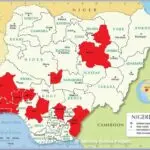
Commercial areas are regions with high concentrations of commercial activities. These often include major cities and towns that serve as hubs for trade, finance, and transportation.
Stock Exchange and Capital Market in Nigeria
The stock exchange and capital market are vital for long-term investments and economic growth.
- Stock Exchange: A market where securities (stocks and bonds) are bought and sold. The Nigerian Exchange Group (NGX) is the primary stock exchange in Nigeria, facilitating capital raising for companies and providing investment opportunities for individuals.
- Capital Market: A financial market where long-term funds are raised through instruments like stocks and bonds. It provides a platform for governments and businesses to obtain long-term financing and for investors to make long-term investments.
Major Commercial Zones in Nigeria
Nigeria has several prominent commercial zones characterized by specific types of activities:
- Lagos: The economic and commercial hub, known for its ports, financial services, manufacturing, and general trade.
- Kano: A major northern commercial center, known for textiles, agricultural produce, and trans-Saharan trade routes.
- Port Harcourt: A key center for the oil and gas industry, as well as a significant port city.
- Onitsha: Famous for its large market, serving as a major trading hub in the South-East.
- Aba: Known for manufacturing, particularly textiles, shoes, and general merchandise.
- Ibadan: An agricultural trade center and a growing industrial city.
Importance of Commercial Activities
Commercial activities are important for several reasons:
- Employment Generation: They create jobs for many people in various sectors like trade, transportation, and finance.
- Revenue Generation: They provide income for individuals and revenue for the government through taxes and duties.
- Facilitation of Exchange: They enable the efficient movement of goods and services from producers to consumers.
- Economic Growth: They contribute significantly to the Gross Domestic Product (GDP) and overall economic development.
- Specialization: They encourage regions and individuals to specialize in what they produce best, leading to greater efficiency.
- Improvement in Standard of Living: By making a wide range of goods and services available, they improve people’s quality of life.
Teaching Methods/Instructional Techniques
Discussion, Lecture, Demonstration, Question and Answer, Visual Aids
Instructional Procedures
Step 1: Introduction
Time: 5 minutes
Teaching Skill: Set Induction
Teacher’s Activity: The teacher greets the pupils and asks them about different ways people buy and sell things, and how goods move from one place to another. The teacher then introduces the topic “Commercial Activities in Nigeria.”
Pupils’ Activity: Pupils respond to questions and listen attentively to the introduction of the topic.
Learning Point: Pupils are engaged and introduced to the concept of commercial activities.
Step 2: Meaning and Major Commercial Activities
Time: 10 minutes
Teaching Skill: Explanation/Definition
Teacher’s Activity: The teacher defines commercial activities and explains the various major types, such as trade, transportation, and commercialization, using simple examples.
Pupils’ Activity: Pupils listen, take notes, and ask questions for clarification. They define commercial activities and identify the major types.
Learning Point: Pupils understand the definition and categories of commercial activities.
Step 3: Trade in Nigeria and Major Commercial Areas
Time: 10 minutes
Teaching Skill: Illustration/Discussion
Teacher’s Activity: The teacher discusses internal and external trade in Nigeria, highlighting typical goods traded. The teacher uses a map of Nigeria to point out major commercial areas and explains why they are important.
Pupils’ Activity: Pupils observe the map, participate in discussions, and identify major commercial areas in Nigeria. They also draw sketch maps showing commercial cities.
Learning Point: Pupils understand trade patterns and the geographical distribution of commercial areas in Nigeria.
Step 4: Stock Exchange and Capital Market
Time: 7 minutes
Teaching Skill: Explanation/Concept Building
Teacher’s Activity: The teacher explains the concepts of the stock exchange and the capital market, clarifying their roles in long-term financing and investment in Nigeria.
Pupils’ Activity: Pupils listen, take notes, and define stock exchange and capital market in their own words.
Learning Point: Pupils grasp the basic functions of financial markets in Nigeria.
Step 5: Importance of Commercial Activities
Time: 8 minutes
Teaching Skill: Elaboration/Enumeration
Teacher’s Activity: The teacher guides a discussion on the importance of commercial activities to individuals, businesses, and the Nigerian economy, listing points such as employment, revenue, and economic growth.
Pupils’ Activity: Pupils contribute to the discussion, list the importance of commercial activities, and make notes.
Learning Point: Pupils understand the economic and social benefits of commercial activities.
Step 6: Evaluation/Review
Time: 5 minutes
Teaching Skill: Questioning/Assessment
Teacher’s Activity: The teacher evaluates the learning by asking the following questions:
- What are commercial activities?
- Mention three major commercial activities in Nigeria.
- Explain the role of the stock exchange in Nigeria.
- List four reasons why commercial activities are important.
Pupils’ Activity: Pupils answer orally and in writing.
Learning Point: Pupils demonstrate understanding of the lesson.
Step 7: Conclusion
Time: 2 minutes
Teaching Skill: Summarization
Teacher’s Activity: The teacher summarizes the key points of the lesson, reiterating the definition, types, and importance of commercial activities in Nigeria. The teacher assigns homework for pupils to research a major commercial zone.
Pupils’ Activity: Pupils listen to the summary and copy down the homework assignment.
Learning Point: The lesson is reinforced, and pupils are given a task to deepen their understanding.
Lesson Keywords
- Commercial Activities – Economic activities involved in the exchange of goods and services.
- Trade – The buying and selling of goods and services.
- Transportation – The movement of goods, services, and people.
- Stock Exchange – A market for buying and selling company stocks and bonds.
- Capital Market – A financial market for long-term borrowing and lending.
- Commercial Zones – Areas with high concentration of business and trade.
Differentiation
For pupils who grasp concepts quickly, the teacher can ask them to research the impact of technology on commercial activities in Nigeria. For those needing more support, the teacher can provide simplified notes or assign group work to discuss specific commercial activities with peer support.
Note for teachers using this lesson plan
Teachers should encourage pupils to relate the concepts to their local environment, perhaps by identifying commercial activities in their community. The use of visual aids like pictures and maps is important to make the lesson concrete. Fieldwork, if feasible, can provide valuable practical experience, and pupil reports on these activities should be encouraged.


Community Join the conversation Open discussion +