

Class: Senior Secondary School 2 (SS2 / SSS2)
Term: 1st Term
Week: 3
Age: 16 years
Duration: 45 minutes
Subject: Basic Electronics
Curriculum Theme: Alternating Current Circuits
Previous Lesson: Alternating Current: RL, RC, RLC Circuits, Symbols, Units and Abbreviations.
Topic: ALTERNATING CURRENT; CALCULATION OF CAPACITIVE REACTANCE AND INDUCTIVE REACTANCE (XC and XL)
Subject Matter: Meaning of ALTERNATING CURRENT (recap meaning of alternating current), calculation of capacitive reactance (Xc formula and substitution), calculation of inductive reactance (XL formula and substitution)
Specific Objectives
By the end of the lesson, pupils should be able to:
Cognitive Domain:
- Define Alternating Current (AC) in simple terms.
- State the formulas for calculating Capacitive Reactance (Xc) and Inductive Reactance (XL).
- Identify the variables in the formulas for Xc and XL and their respective units.
Affective Domain:
- Appreciate the importance of understanding AC circuits in electronics.
- Develop interest in solving problems related to AC components.
- Value precision and accuracy when performing calculations.
Psychomotor Domain:
- Apply the formula to calculate Capacitive Reactance (Xc) for a given circuit.
- Apply the formula to calculate Inductive Reactance (XL) for a given circuit.
- Solve numerical problems involving frequency, capacitance, and inductance.
Social Domain:
- Collaborate with peers to solve problems related to reactance calculations.
- Engage in discussions to clarify concepts and share problem-solving strategies.
Reference Materials
The following resources were used in planning this lesson:
- Senior Secondary Schools Education Curriculum
- State Unified Scheme of Work
- Basic Electronics for Senior Secondary Schools, Book 2.
Instructional Materials
The teacher will teach this lesson with the aid of:
- Calculator
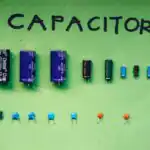
- Capacitance components
- Inductors
- Circuit diagrams
Rationale for the Lesson
This lesson helps pupils understand how capacitors and inductors behave in alternating current circuits. Knowing how to calculate capacitive and inductive reactance is important for designing and troubleshooting electronic circuits and understanding their real-world applications.
Prerequisite/Previous Knowledge
Pupils have a basic understanding of Alternating Current (AC), direct current (DC), capacitance, and inductance from previous lessons.
Lesson Content/Board Summary
ALTERNATING CURRENT; CALCULATION OF CAPACITIVE REACTANCE AND INDUCTIVE REACTANCE
Meaning of Alternating Current (AC)
Alternating Current (AC) is an electric current that periodically reverses direction and continuously changes its magnitude with time, in contrast to direct current (DC), which flows only in one direction.
Capacitive Reactance (Xc)
Capacitive reactance (Xc) is the opposition offered by a capacitor to the flow of alternating current. It is measured in Ohms (Ω). Capacitive reactance decreases as the frequency of the AC or the capacitance increases.
The formula for Capacitive Reactance is:
Xc = 1 / (2πfC)
Where:
- Xc = Capacitive Reactance (Ohms, Ω)
- π (pi) = approximately 3.142 or 22/7
- f = Frequency of the AC supply (Hertz, Hz)
- C = Capacitance (Farads, F)
NOTE: Ensure capacitance is in Farads (F). If given in microfarads (μF), multiply by 10-6. If given in millifarads (mF), multiply by 10-3.
Worked Example 1:
Calculate the capacitive reactance (Xc) of a 100 mF capacitor when connected to a 10 Hz AC supply.
Step 1: Identify the given values and convert units if necessary.
- f = 10 Hz
- C = 100 mF = 100 × 10-3 F = 0.1 F
Step 2: Apply the formula.
- Xc = 1 / (2πfC)
- Xc = 1 / (2 × 3.142 × 10 Hz × 0.1 F)
- Xc = 1 / (6.284)
- Xc ≈ 0.159 Ω
Worked Example 2:
A capacitor of 47 μF is connected to an AC source of 50 Hz. Calculate its capacitive reactance.
Step 1: Identify the given values and convert units.
- f = 50 Hz
- C = 47 μF = 47 × 10-6 F
Step 2: Apply the formula.
- Xc = 1 / (2πfC)
- Xc = 1 / (2 × 3.142 × 50 Hz × 47 × 10-6 F)
- Xc = 1 / (0.01476)
- Xc ≈ 67.75 Ω
Inductive Reactance (XL)
Inductive reactance (XL) is the opposition offered by an inductor to the flow of alternating current. It is measured in Ohms (Ω). Inductive reactance increases as the frequency of the AC or the inductance increases.
The formula for Inductive Reactance is:
XL = 2πfL
Where:
- XL = Inductive Reactance (Ohms, Ω)
- π (pi) = approximately 3.142 or 22/7
- f = Frequency of the AC supply (Hertz, Hz)
- L = Inductance (Henries, H)
NOTE: Ensure inductance is in Henries (H). If given in millihenries (mH), multiply by 10-3. If given in microhenries (μH), multiply by 10-6.
Worked Example 1:
Calculate the inductive reactance (XL) in a circuit with a frequency of 50 Hz and an inductance of 20 H.
Step 1: Identify the given values.
- f = 50 Hz
- L = 20 H
Step 2: Apply the formula.
- XL = 2πfL
- XL = 2 × 3.142 × 50 Hz × 20 H
- XL = 6284 Ω
Worked Example 2:
An inductor of 250 mH is connected to a 60 Hz AC supply. Determine its inductive reactance.
Step 1: Identify the given values and convert units.
- f = 60 Hz
- L = 250 mH = 250 × 10-3 H = 0.25 H
Step 2: Apply the formula.
- XL = 2πfL
- XL = 2 × 3.142 × 60 Hz × 0.25 H
- XL = 94.26 Ω
Teaching Methods/Instructional Techniques
Discussion, Lecture, Demonstration, Question and Answer, Visual Aids
Instructional Procedures
Step 1: Introduction
Time: 5 minutes
Teaching Skill: Set Induction
Teacher’s Activity: The teacher greets the pupils, checks attendance, and briefly reminds them about the previous lesson on Alternating Current. The teacher then introduces the topic: “Alternating Current; Calculation of Capacitive Reactance and Inductive Reactance (Xc and XL).”
Pupils’ Activity: Pupils respond to greetings, indicate their presence, recall previous knowledge, and listen attentively to the new topic.
Learning Point: Pupils are prepared for the day’s lesson and connect new information to prior knowledge.
Step 2: Recap of Alternating Current
Time: 5 minutes
Teaching Skill: Questioning
Teacher’s Activity: The teacher asks pupils to briefly define Alternating Current (AC) and state its key characteristics.
Pupils’ Activity: Pupils provide definitions and characteristics of AC based on their understanding from previous lessons.
Learning Point: Pupils recall the fundamental concept of Alternating Current.
Step 3: Introduction to Capacitive Reactance (Xc)
Time: 8 minutes
Teaching Skill: Explanation/Demonstration
Teacher’s Activity: The teacher explains what capacitive reactance is, its symbol (Xc), and the formula Xc = 1 / (2πfC). The teacher explains each variable (f, C, π) and their units, emphasizing the importance of converting capacitance to Farads.
Pupils’ Activity: Pupils listen, take notes, and ask questions for clarification regarding the definition, formula, and units.
Learning Point: Pupils understand the concept and formula for capacitive reactance.
Step 4: Calculation of Capacitive Reactance
Time: 8 minutes
Teaching Skill: Problem Solving/Demonstration
Teacher’s Activity: The teacher works through a step-by-step example on the board, demonstrating how to calculate Xc, including unit conversion (e.g., for 10Hz and 100mF). The teacher guides pupils on using their calculators.
Pupils’ Activity: Pupils copy the example, follow the steps, and practice the calculation using their calculators, asking questions if they encounter difficulties.
Learning Point: Pupils gain practical experience in calculating capacitive reactance.
Step 5: Introduction to Inductive Reactance (XL)
Time: 8 minutes
Teaching Skill: Explanation/Demonstration
Teacher’s Activity: The teacher explains what inductive reactance is, its symbol (XL), and the formula XL = 2πfL. The teacher explains each variable (f, L, π) and their units, emphasizing the importance of converting inductance to Henries.
Pupils’ Activity: Pupils listen, take notes, and ask questions for clarification regarding the definition, formula, and units.
Learning Point: Pupils understand the concept and formula for inductive reactance.
Step 6: Calculation of Inductive Reactance
Time: 8 minutes
Teaching Skill: Problem Solving/Demonstration
Teacher’s Activity: The teacher works through a step-by-step example on the board, demonstrating how to calculate XL, including unit conversion (e.g., for 50Hz and 20H). The teacher encourages pupils to solve along.
Pupils’ Activity: Pupils copy the example, follow the steps, and solve the problem using their calculators, verifying their answers.
Learning Point: Pupils gain practical experience in calculating inductive reactance.
Step 7: Evaluation/Review
Time: 5 minutes
Teaching Skill: Questioning/Assessment
Teacher’s Activity: The teacher evaluates the learning by asking the following questions:
- Define Alternating Current (AC).
- State the formula for Capacitive Reactance (Xc).
- State the formula for Inductive Reactance (XL).
- Calculate the capacitive reactance of a 50 μF capacitor in a 20 Hz AC circuit.
- Determine the inductive reactance of a 500 mH inductor in a 100 Hz AC circuit.
Pupils’ Activity: Pupils answer orally and in writing.
Learning Point: Pupils demonstrate understanding of the lesson.
Step 8: Conclusion
Time: 3 minutes
Teaching Skill: Summarization/Assignment
Teacher’s Activity: The teacher summarizes the key learning points about capacitive and inductive reactance and their calculations. The teacher then assigns relevant homework problems from the textbook for practice.
Pupils’ Activity: Pupils listen to the summary and copy down the homework assignment.
Learning Point: Pupils consolidate their understanding and are given tasks to reinforce learning.
Lesson Keywords
- Alternating Current – An electric current that periodically reverses direction.
- Capacitive Reactance – Opposition to AC flow by a capacitor.
- Inductive Reactance – Opposition to AC flow by an inductor.
- Frequency – The number of cycles per second (Hz).
- Capacitance – The ability of a component to store an electric charge (Farads).
- Inductance – The property of an electrical conductor by which a change in current flowing through it induces an electromotive force (Henries).
- Ohm – The unit of electrical resistance and reactance.
Differentiation
For pupils who grasp the concepts quickly, the teacher will provide more complex problems involving series and parallel combinations of components. For pupils who need more support, the teacher will provide additional guided practice with simpler examples and offer one-on-one assistance, focusing on unit conversions and formula application.
Note for teachers using this lesson plan
Ensure that pupils have access to calculators and are proficient in using them for scientific notation and basic arithmetic operations. Emphasize the importance of correct unit conversions (e.g., mF to F, mH to H) as this is a common source of error. Encourage pupils to show all steps in their calculations, not just the final answer. Use visual aids like circuit diagrams to illustrate where capacitors and inductors are used.

Community Join the conversation Open discussion +