

Class: Senior Secondary School 2 (SS2 / SSS 2)
Term: 3rd Term
Week: 3
Age: 16 years
Duration: 45 minutes
Subject: Basic Electronics
Curriculum Theme: Electrical and Electronic Technology
Previous Lesson: Measuring Instruments: Types and Uses (Multimeter, Voltmeter, Ammeter, Oscilloscope).
Topic: TRANSDUCERS AND SENSORS
Subject Matter: Meaning of Transducers and Sensors, Types and Uses of Transducers (Acoustic and Photoelectric), Types and Uses of Sensors (Proximity Sensor).
Specific Objectives
By the end of the lesson, pupils should be able to:
Cognitive Domain:
- Define transducers.
- Define sensors.
- Identify types of transducers.
- Identify types of sensors.
- Explain the uses of various transducers and sensors.
Affective Domain:
- Participate actively in class discussions about transducers and sensors.
- Appreciate the importance of transducers and sensors in daily life.
Psychomotor Domain:
- Observe and describe the operation of demonstrated sensors.
- Draw simple diagrams of transducers and sensors.
Social Domain:
- Collaborate with peers to discuss different applications of transducers and sensors.
Reference Materials
The following resources were used in planning this lesson:
- Senior Secondary Schools Education Curriculum
- State Unified Scheme of Work
- Basic Electronics for Senior Secondary Schools by A. O. Oladejo
- https://www.electrical4u.com/transducer/
- https://www.electronicshub.org/sensors-types-applications/
Instructional Materials
The teacher will teach this lesson with the aid of:
- Charts showing different types of transducers and sensors (e.g., microphone, LDR, proximity sensor).
- A simple demonstration kit with a proximity sensor or a light sensor if available.
Rationale for the Lesson
This lesson helps pupils understand how electronic devices convert energy from one form to another and detect changes in their environment. This knowledge is important for understanding modern technology and its applications in various fields.
Prerequisite/Previous Knowledge
Pupils have basic knowledge of electricity, electronic components, and energy conversion from previous lessons.
Lesson Content/Board Summary
TRANSDUCERS AND SENSORS
Meaning of Transducers
A transducer is a device that converts energy from one form to another. It typically converts a physical quantity (like sound, light, temperature, pressure) into an electrical signal, or vice versa.
Meaning of Sensors
A sensor is a device that detects and responds to some type of input from the physical environment. The input could be light, heat, motion, moisture, pressure, or any one of a great number of other environmental phenomena. The output is typically an electrical signal that is proportional to the measured quantity.
Types and Uses of Transducers
The following are types and uses of transducers:
- Acoustic Transducers: These convert sound energy into electrical energy or vice versa.
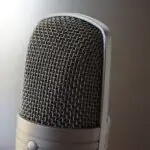
- Microphone: Converts sound waves into electrical signals (e.g., for recording or communication).
- Loudspeaker: Converts electrical signals into sound waves (e.g., for playing music).
- Photoelectric Transducers: These convert light energy into electrical energy or vice versa.
- Photodiode/Phototransistor: Converts light intensity into an electrical current (e.g., in light detectors, remote controls).
- Light Emitting Diode (LED): Converts electrical energy into light energy (e.g., in indicators, displays).
Types and Uses of Sensors
The following are types and uses of sensors:
- Proximity Sensor: Detects the presence or absence of an object without physical contact.
- Uses: Automatic doors, parking sensors in cars, object detection on conveyor belts.
- Temperature Sensor (e.g., Thermistor, Thermocouple): Measures temperature.
- Uses: Thermometers, air conditioners, industrial process control, fire alarms.
- Light Sensor (e.g., Light Dependent Resistor – LDR): Detects light intensity.
- Uses: Automatic street lights, camera exposure meters, light-activated switches.
- Motion Sensor (e.g., Passive Infrared – PIR sensor): Detects movement.
- Uses: Security alarms, automatic lighting, automatic faucets.
Teaching Methods/Instructional Techniques
Discussion, Lecture, Demonstration, Question and Answer, Visual Aids
Instructional Procedures
Step 1: Introduction
Time: 5 minutes
Teaching Skill: Set Induction
Teacher’s Activity: The teacher greets the pupils and asks them to mention devices that convert one form of energy to another or detect changes in the environment.
Pupils’ Activity: Pupils respond by mentioning devices like microphones, loudspeakers, or light switches.
Learning Point: Pupils are introduced to the concept of energy conversion and detection.
Step 2: Meaning of Transducers
Time: 7 minutes
Teaching Skill: Explanation/Definition
Teacher’s Activity: The teacher defines a transducer as a device that converts energy from one form to another, giving examples like a microphone converting sound to electrical energy.
Pupils’ Activity: Pupils listen attentively and copy the definition into their notebooks.
Learning Point: Pupils learn the definition of a transducer.
Step 3: Meaning of Sensors
Time: 7 minutes
Teaching Skill: Explanation/Definition
Teacher’s Activity: The teacher defines a sensor as a device that detects and responds to physical inputs from the environment, such as light, heat, or motion.
Pupils’ Activity: Pupils listen and write down the definition of a sensor.
Learning Point: Pupils understand the definition of a sensor.
Step 4: Types and Uses of Transducers
Time: 7 minutes
Teaching Skill: Elaboration/Illustration
Teacher’s Activity: The teacher explains acoustic transducers (e.g., microphones, loudspeakers) and photoelectric transducers (e.g., photodiodes, LEDs), discussing their functions and uses with the aid of charts.
Pupils’ Activity: Pupils observe the charts, listen to the explanations, and ask questions for clarification.
Learning Point: Pupils identify and understand the uses of different types of transducers.
Step 5: Types and Uses of Sensors
Time: 7 minutes
Teaching Skill: Demonstration/Explanation
Teacher’s Activity: The teacher explains the proximity sensor and its uses. The teacher also introduces other common sensors like temperature, light, and motion sensors, demonstrating with a simple sensor if available.
Pupils’ Activity: Pupils observe the demonstration, participate in discussions, and note down the types and uses of sensors.
Learning Point: Pupils learn about various types of sensors and their practical applications.
Step 6: Class Discussion and Application
Time: 5 minutes
Teaching Skill: Questioning/Facilitation
Teacher’s Activity: The teacher encourages pupils to discuss where they encounter transducers and sensors in their daily lives and asks them to suggest new applications.
Pupils’ Activity: Pupils share examples from their experiences and suggest creative applications.
Learning Point: Pupils connect theoretical knowledge to real-world applications.
Step 7: Evaluation/Review
Time: 5 minutes
Teaching Skill: Questioning/Assessment
Teacher’s Activity: The teacher evaluates the learning by asking the following questions:
- Define a transducer.
- What is a sensor?
- Mention two types of transducers and state one use for each.
- List two types of sensors and explain their uses.
Pupils’ Activity: Pupils answer orally and in writing.
Learning Point: Pupils demonstrate understanding of the lesson.
Step 8: Conclusion
Time: 2 minutes
Teaching Skill: Summarization
Teacher’s Activity: The teacher summarizes the key points of the lesson, emphasizing the importance of transducers and sensors in modern technology. The teacher assigns homework for pupils to research other types of transducers and sensors.
Pupils’ Activity: Pupils listen to the summary and note down the homework.
Learning Point: The lesson is reinforced, and pupils are encouraged to further explore the topic.
Lesson Keywords
- Transducer – A device that converts energy from one form to another.
- Sensor – A device that detects and responds to physical input from the environment.
- Acoustic Transducer – Converts sound energy to electrical energy or vice versa.
- Photoelectric Transducer – Converts light energy to electrical energy or vice versa.
- Proximity Sensor – Detects the presence of an object without physical contact.
Differentiation
For pupils who grasp concepts quickly, the teacher can challenge them to explain the working principles of specific transducers or sensors in more detail. For pupils needing more support, the teacher can provide simplified diagrams and additional real-world examples to aid understanding.
Note for teachers using this lesson plan
Ensure that the charts used are clear and visible to all pupils. If possible, bring actual simple transducers (like a microphone or an LDR) and a basic sensor for a hands-on demonstration to enhance understanding. Encourage pupils to relate the concepts to everyday devices they use.


Community Join the conversation Open discussion +