

Class: Senior Secondary School 2 (SS2 / SSS2)
Term: 2nd Term
Week: 2
Age: 16 years
Duration: 45 minutes
Subject: Basic Electronics
Curriculum Theme: Electronic Devices and Systems
Previous Lesson: Integrated Circuits and Micro Processors: Concept of Integrated Circuits and Advantages and Disadvantages.
Topic: INTEGRATED CIRCUITS (IC) AND MICRO-PROCESSORS.
Subject Matter: Meaning of INTEGRATED CIRCUITS (IC) AND MICRO-PROCESSORS, application of IC and microprocessors.
Specific Objectives
By the end of the lesson, pupils should be able to:
Cognitive Domain:
- Define Integrated Circuits (IC).
- Explain the meaning of microprocessors.
- State at least three applications of Integrated Circuits.
- Identify at least three applications of microprocessors.
Affective Domain:
- Appreciate the importance of ICs and microprocessors in modern technology.
- Show interest in learning more about electronic components.
Psychomotor Domain:
- Draw a simple block representation of an IC or microprocessor (if applicable).
- Identify devices that use ICs and microprocessors.
Social Domain:
- Participate actively in class discussions about the uses of electronic components.
Reference Materials
The following resources were used in planning this lesson:
- Senior Secondary Schools Education Curriculum
- State Unified Scheme of Work
- Basic Electronics for Senior Secondary Schools by A. O. Okoro
- https://www.electronicshub.org/applications-of-integrated-circuits/
- https://www.geeksforgeeks.org/applications-of-microprocessor/
Instructional Materials
The teacher will teach this lesson with the aid of:
- A chart showing different types of ICs.
- A chart illustrating devices that use ICs and microprocessors (e.g., mobile phone, computer motherboard).
- A functional (or non-functional) mobile phone or calculator for demonstration.
Rationale for the Lesson
This lesson helps pupils understand the fundamental components that power modern electronic devices. Learning about Integrated Circuits and microprocessors enables pupils to grasp how complex functions are achieved in a compact form, which is essential for understanding contemporary technology and its impact on daily life.
Prerequisite/Previous Knowledge
Pupils have basic knowledge of simple electronic components like resistors, capacitors, and transistors.
Lesson Content/Board Summary
INTEGRATED CIRCUITS (IC) AND MICRO-PROCESSORS
1. Integrated Circuits (IC)
An Integrated Circuit (IC), also known as a microchip, is a miniaturized electronic circuit consisting of many electronic components (like transistors, resistors, and capacitors) fabricated on a small flat piece of semiconductor material, usually silicon. These components are interconnected to perform a specific function or a set of functions.
2. Microprocessors
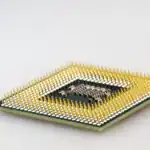
A microprocessor is a type of Integrated Circuit that contains the entire Central Processing Unit (CPU) of a computer on a single chip. It is the “brain” of a computer, responsible for executing instructions, performing arithmetic and logical operations, and managing the overall flow of data within a system.
3. Applications of Integrated Circuits (ICs)
Integrated Circuits are widely used due to their small size, low power consumption, and high reliability. The following are common applications of ICs:
- Computers and Laptops: Used in processors, memory chips, and various control circuits.
- Mobile Phones: Essential for communication, processing, and memory functions.
- Calculators: Form the core logic for performing arithmetic operations.
- Audio and Video Equipment: Found in amplifiers, tuners, and signal processing units in TVs, radios, and music players.
- Automotive Electronics: Used in engine control units, anti-lock braking systems (ABS), and infotainment systems.
- Medical Devices: Employed in pacemakers, diagnostic equipment, and monitoring systems.
4. Applications of Microprocessors
Microprocessors are the core of many digital electronic devices. The following are common applications of microprocessors:
- Personal Computers (PCs) and Workstations: They serve as the main processing unit.
- Embedded Systems: Found in everyday devices like washing machines, microwave ovens, digital cameras, and smart home devices to control their functions.
- Mobile Devices: High-performance microprocessors are crucial for smartphones and tablets.
- Gaming Consoles: Powering the complex graphics and game logic.
- Servers and Data Centers: Used in large-scale computing environments for data processing and management.
- Industrial Automation: Controlling robots and automated machinery in factories.
Teaching Methods/Instructional Techniques
Discussion, Lecture, Demonstration, Question and Answer, Visual Aids
Instructional Procedures
Step 1: Introduction
Time: 5 minutes
Teaching Skill: Set Induction
Teacher’s Activity: The teacher greets the pupils and asks them to mention some electronic components they know and devices they are used in.
Pupils’ Activity: Pupils respond by mentioning components like resistors, capacitors, and devices like radios, phones.
Learning Point: Pupils recall previous knowledge and are introduced to the lesson topic.
Step 2: Meaning of Integrated Circuits (IC)
Time: 10 minutes
Teaching Skill: Explanation/Definition
Teacher’s Activity: The teacher explains what an Integrated Circuit (IC) is, using the chart of ICs to show examples. The teacher emphasizes that it combines many components on a single chip.
Pupils’ Activity: Pupils listen attentively, observe the chart, and take notes.
Learning Point: Pupils understand the definition and basic structure of an Integrated Circuit.
Step 3: Meaning of Microprocessors
Time: 7 minutes
Teaching Skill: Explanation/Comparison
Teacher’s Activity: The teacher explains that a microprocessor is a specialized type of IC that functions as the CPU of a computer. The teacher highlights its role as the “brain” of electronic devices.
Pupils’ Activity: Pupils listen, ask questions for clarity, and write down the definition.
Learning Point: Pupils learn the definition and primary function of a microprocessor.
Step 4: Applications of Integrated Circuits (ICs)
Time: 8 minutes
Teaching Skill: Discussion/Illustration
Teacher’s Activity: The teacher leads a discussion on the various applications of ICs, using the provided chart and real-life examples (e.g., showing a mobile phone or calculator). The teacher encourages pupils to state applications.
Pupils’ Activity: Pupils state applications of ICs in different devices and systems, contributing to the discussion.
Learning Point: Pupils identify and list various applications of Integrated Circuits.
Step 5: Applications of Microprocessors
Time: 5 minutes
Teaching Skill: Elaboration/Examples
Teacher’s Activity: The teacher further discusses the applications of microprocessors, giving examples like computers, embedded systems in appliances, and gaming consoles.
Pupils’ Activity: Pupils listen and note the different applications of microprocessors.
Learning Point: Pupils identify and list various applications of microprocessors.
Step 6: Class Activity/Discussion
Time: 5 minutes
Teaching Skill: Consolidation/Engagement
Teacher’s Activity: The teacher asks pupils to name two devices in their homes that likely use both ICs and microprocessors, explaining the difference in their roles.
Pupils’ Activity: Pupils discuss and provide examples, explaining their reasoning.
Learning Point: Pupils consolidate their understanding of ICs and microprocessors and their applications.
Step 7: Evaluation/Review
Time: 5 minutes
Teaching Skill: Questioning/Assessment
Teacher’s Activity: The teacher evaluates the learning by asking the following questions:
- What is an Integrated Circuit (IC)?
- Explain what a microprocessor is.
- Mention three applications of Integrated Circuits.
- List three devices where microprocessors are commonly used.
Pupils’ Activity: Pupils answer orally and in writing.
Learning Point: Pupils demonstrate understanding of the lesson.
Step 8: Conclusion
Time: 5 minutes
Teaching Skill: Summarization/Assignment
Teacher’s Activity: The teacher summarizes the key points of the lesson, reiterating the importance of ICs and microprocessors in modern electronics. The teacher then gives homework: “Research and write a short note on the evolution of microprocessors.”
Pupils’ Activity: Pupils listen to the summary and copy down the homework assignment.
Learning Point: Pupils review the lesson content and receive an assignment for further study.
Lesson Keywords
- Integrated Circuit (IC) – A miniaturized electronic circuit fabricated on a semiconductor material.
- Microprocessor – An IC that contains the entire Central Processing Unit (CPU) of a computer.
- Semiconductor – A material with electrical conductivity between that of a conductor and an insulator, like silicon.
- CPU – Central Processing Unit, the electronic circuitry within a computer that carries out the instructions of a computer program.
- Microchip – Another term for an Integrated Circuit.
Differentiation
For pupils who grasp concepts quickly, the teacher can challenge them to explain the difference between an analog IC and a digital IC. For those who need more support, the teacher will provide simplified definitions and more direct examples, possibly pairing them with faster learners.
Note for teachers using this lesson plan
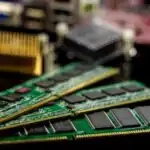
Teachers should ensure that they have actual examples of ICs (even old computer motherboards can be useful) or clear charts to illustrate the concepts. Encourage pupils to relate the lesson to devices they use daily to make the learning more practical and engaging.


Community Join the conversation Open discussion +