

Class: Senior Secondary School 2 (SS2 / SSS2)
Term: 3rd Term
Week: 5
Age: 16 years
Duration: 45 minutes
Subject: Basic Electronics
Curriculum Theme: Electronic Devices and Systems
Previous Lesson: Transducers and Sensors: Principles of Operation of Transducers and Sensors.
Topic: TRANSDUCERS AND SENSORS
Subject Matter: Meaning of TRANSDUCERS AND SENSORS (recap definition), acoustic transducer (meaning), types of acoustic transducers (loud-speaker, microphone, ear-phone), application of acoustic transducer (tweeter, micro-phone, underwater speaker).
Specific Objectives
By the end of the lesson, pupils should be able to:
Cognitive Domain:
- Define transducers and sensors.
- Explain the meaning of an acoustic transducer.
- Identify different types of acoustic transducers.
- State various applications of acoustic transducers.
Affective Domain:
- Appreciate the importance of transducers and sensors in everyday technology.
- Participate actively in class discussions about transducers.
Psychomotor Domain:
- Draw simple diagrams of common acoustic transducers.
- Differentiate between the functions of different acoustic transducers.
Social Domain:
- Collaborate with peers to discuss real-world examples of transducer use.
- Share ideas on how transducers contribute to modern communication.
Reference Materials
The following resources were used in planning this lesson:
- Senior Secondary Schools Education Curriculum
- State Unified Scheme of Work
- New General Science for Senior Secondary Schools
- https://www.electronicdesign.com/technologies/test-measurement/article/21184711/what-are-acoustic-transducers
- https://www.flir.com/discover/instruments/acoustic-imagers/what-is-an-acoustic-imager/
Instructional Materials
The teacher will teach this lesson with the aid of:
- Loud-speakers
- Micro-phones
- Ear-phones
- Charts showing acoustic transducers
Rationale for the Lesson
This lesson helps pupils understand how devices convert energy from one form to another, which is fundamental to modern electronics. It enables pupils to recognize the components that make many electronic gadgets work, from communication systems to everyday audio devices.
Prerequisite/Previous Knowledge
Pupils have basic knowledge of energy conversion and simple electronic components.
Lesson Content/Board Summary
TRANSDUCERS AND SENSORS
Meaning of Transducers
A transducer is a device that converts energy from one form to another. It typically converts a signal in one physical form to a signal in another physical form. For example, a microphone converts sound energy into electrical energy.
Meaning of Sensors
A sensor is a device that detects and responds to some type of input from the physical environment. The input could be light, heat, motion, pressure, or any other physical phenomenon. The output is typically an electrical signal.
Acoustic Transducers
An acoustic transducer is a device that converts sound energy into electrical energy or vice versa. It deals specifically with sound waves and their conversion to or from electrical signals.
Types of Acoustic Transducers
The following are common types of acoustic transducers:
- Loudspeaker: Converts electrical signals into sound waves.
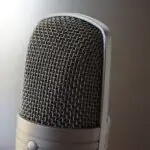
- Microphone: Converts sound waves into electrical signals.
- Earphone (Headphone): Converts electrical signals into sound waves, typically for individual listening.
Applications of Acoustic Transducers
The following are some applications of acoustic transducers:
- Tweeter: A type of loudspeaker designed to produce high-frequency sounds (treble).
- Microphone: Used in recording studios, public address systems, telephones, and voice recognition systems to capture sound.
- Underwater Speaker (Hydrophone/Sonar Transducer): Used for generating or detecting sound waves underwater, for applications like sonar, marine communication, and underwater mapping.
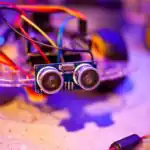
- Ultrasonic Sensors: Used in medical imaging (ultrasound), industrial non-destructive testing, and range-finding.
- Hearing Aids: Devices that amplify sound for people with hearing impairment, using miniature microphones and loudspeakers.
- Musical Instruments Pickups: Convert the vibrations of instrument strings into electrical signals for amplification.
Teaching Methods/Instructional Techniques
Discussion, Lecture, Demonstration, Question and Answer, Visual Aids
Instructional Procedures
Step 1: Introduction
Time: 5 minutes
Teaching Skill: Set Induction
Teacher’s Activity: The teacher greets the pupils and reviews the previous lesson. The teacher then asks pupils to identify devices that change sound to electricity or vice versa, leading to the new topic.
Pupils’ Activity: Pupils respond to greetings, recall the previous lesson, and suggest devices like microphones or loudspeakers.
Learning Point: Pupils connect prior knowledge to the new topic.
Step 2: Meaning of Transducers and Sensors
Time: 10 minutes
Teaching Skill: Explanation/Definition
Teacher’s Activity: The teacher defines “transducer” as a device that converts energy from one form to another and “sensor” as a device that detects physical input and converts it to an electrical signal. The teacher provides simple examples.
Pupils’ Activity: Pupils listen attentively, ask questions for clarity, and take notes.
Learning Point: Pupils understand the fundamental definitions of transducers and sensors.
Step 3: Acoustic Transducers
Time: 7 minutes
Teaching Skill: Explaining Concepts
Teacher’s Activity: The teacher explains that acoustic transducers specifically deal with converting sound energy to electrical energy or vice versa. The teacher gives examples like a microphone.
Pupils’ Activity: Pupils listen and contribute examples of devices that involve sound conversion.
Learning Point: Pupils grasp the specific role of acoustic transducers.
Step 4: Types of Acoustic Transducers
Time: 8 minutes
Teaching Skill: Listing/Demonstration
Teacher’s Activity: The teacher discusses and shows examples of different types of acoustic transducers such as loudspeakers, microphones, and earphones, explaining their primary functions.
Pupils’ Activity: Pupils observe the instructional materials, identify the transducers, and note their functions.
Learning Point: Pupils can identify and differentiate between various types of acoustic transducers.
Step 5: Applications of Acoustic Transducers
Time: 7 minutes
Teaching Skill: Elaboration/Application
Teacher’s Activity: The teacher explains practical applications of acoustic transducers, including tweeters, microphones in various settings, and underwater speakers, providing additional real-world contexts.
Pupils’ Activity: Pupils discuss how these transducers are used in everyday life and suggest other applications.
Learning Point: Pupils understand the practical relevance and uses of acoustic transducers.
Step 6: Class Discussion and Clarification
Time: 3 minutes
Teaching Skill: Questioning/Facilitation
Teacher’s Activity: The teacher facilitates a brief discussion, encouraging pupils to ask any remaining questions and providing further clarification on concepts covered.
Pupils’ Activity: Pupils ask questions and participate in the discussion to reinforce their understanding.
Learning Point: Pupils clarify doubts and consolidate their understanding of the topic.
Step 7: Evaluation/Review
Time: 5 minutes
Teaching Skill: Questioning/Assessment
Teacher’s Activity: The teacher evaluates the learning by asking the following questions:
- Define a transducer.
- What is an acoustic transducer?
- Mention three types of acoustic transducers.
- State two applications of acoustic transducers.
Pupils’ Activity: Pupils answer orally and in writing.
Learning Point: Pupils demonstrate understanding of the lesson.
Step 8: Conclusion
Time: 2 minutes
Teaching Skill: Summarization
Teacher’s Activity: The teacher summarizes the key points of the lesson, emphasizing the importance of transducers and sensors in technology. The teacher gives pupils an assignment to research other types of transducers.
Pupils’ Activity: Pupils listen to the summary and copy the assignment.
Learning Point: Pupils consolidate their learning and prepare for further study.
Lesson Keywords
- Transducer – A device that converts energy from one form to another.
- Sensor – A device that detects and responds to physical input.
- Acoustic Transducer – A transducer that converts sound energy to electrical energy or vice versa.
- Loudspeaker – An acoustic transducer that converts electrical signals into sound.
- Microphone – An acoustic transducer that converts sound into electrical signals.
Differentiation
For pupils who grasp concepts quickly, the teacher can encourage them to research and present on non-acoustic transducers (e.g., temperature sensors, pressure sensors). For pupils who need more support, the teacher will provide simplified diagrams and re-explain definitions using additional real-life examples.
Note for teachers using this lesson plan
Ensure that actual examples of loudspeakers, microphones, and earphones are available for demonstration. Encourage pupils to relate the concepts to devices they use daily. Emphasize the energy conversion aspect of transducers. Encourage drawing and labeling of simple diagrams of these devices.


Community Join the conversation Open discussion +