

Class: Primary Five
Term: First Term
Subject: History
Curriculum Theme:
Previous Lesson: Nationalists And Nationalism In Nigeria, Mallam Aminu Kano
Topic: Nigeria’s Independence
Content/Learning Area: What is Independence?, The year of Independence, Key Figures in Nigeria’s Independence, Key Facts About Nigeria’s Independence, National Symbols
Time Allocation: 40 minutes
Performance Objectives
By the end of the lesson, pupils should be able to:
- Cognitive Domain:
1. State the year Nigeria gained independence.
2. List at least three key figures who participated in Nigeria’s independence.
3. Identify and draw Nigeria’s flag as a symbol of independence.
- Affective Domain:
1. Appreciate the importance of independence to Nigeria’s national identity.
- Psychomotor Domain:
1. Identify and draw Nigeria’s flag as a symbol of independence.
- Social Domain:
1. Discuss the contributions of key individuals toward Nigeria’s independence.
Reference Materials
- 9 – Years Basic Education Curriculum
- Abuja Educational Resource Center Scheme of Work
- NAPPS National Unified Scheme of Work
- Online Information
- Relevant textbooks
Instructional Materials
To deliver this lesson, the teacher will use the following materials:
- Whiteboard or chart
- Markers or chalk
- Pictures of key figures
- Nigerian flag image
Rationale for the Lesson
Understanding Nigeria’s independence is crucial for developing a sense of national identity and patriotism. This lesson provides a foundation for future learning about Nigeria’s history and governance.
Prerequisite/previous Knowledge
Pupils are familiar with the concept of Nigeria as a country and have some basic knowledge of Nigerian history.
Lesson Content
Nigeria’s Independence
Nigeria’s independence marked the end of British colonial rule and the start of self-governance.
What is Independence?
Independence refers to a nation’s freedom to govern itself without external control. For Nigeria, it signified the end of British rule and the beginning of sovereignty.
The Year of Independence
nigeria gained independence on October 1, 1960. This date is celebrated annually as Independence Day.The ceremony involved lowering the Union Jack and raising the Nigerian flag, symbolizing the nation’s sovereignty.Sir Abubakar Tafawa Balewa gave a memorable speech as the first Prime Minister.
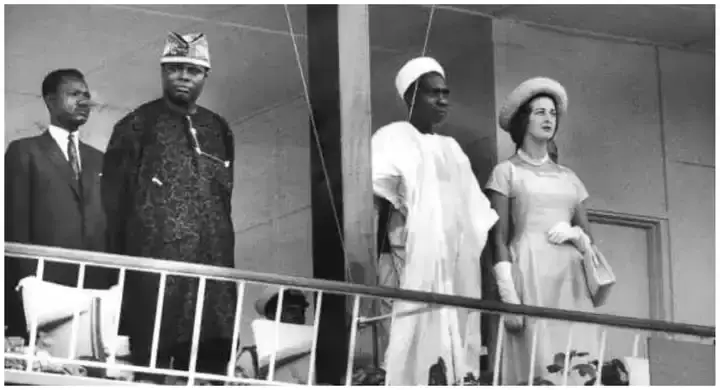
Key Figures in Nigeria’s Independence
These are some of the leaders who contributed to Nigeria’s independence:
- Queen Elizabeth II
- Sir James Wilson Robertson
- Sir Hugh Foot
- British Parliament Members
- Sir Abubakar Tafawa Balewa
- Dr. Nnamdi Azikiwe
- Chief Obafemi Awolowo
- Herbert Macaulay
- Anthony enahoro
- Funmilayo Ransome-kuti
- Ahmadu Bello
- Jaja Wachuku
Key Facts About Nigeria’s Independence
Here are some important facts about Nigeria’s journey to independence:
- Nigeria was a British colony for over 100 years.
- Independence was achieved peacefully.
- The British handed over power on october 1, 1960, in Lagos.
- Nigeria adopted a federal system of government.
- The green and white Nigerian flag was designed by Michael Taiwo Akinkunmi in 1959.
- Queen Elizabeth II remained Nigeria’s head of state until 1963.
- The first national anthem was “Nigeria, We Hail Thee.”
- The first indigenous Governor-General was Dr. Nnamdi Azikiwe.
National Symbols
The Nigerian flag
The Nigerian flag has two green stripes and a white stripe. Green represents agriculture, and white represents peace and unity. It was designed by Michael Taiwo Akinkunmi in 1959 and first hoisted on October 1, 1960.
Teaching Methods
To deliver this lesson, the teacher will adopt the following methods: Discussion, Question and answer, Visual aids
Instructional Procedures
To deliver this lesson, the teacher will adopt the following steps:
Step 1: introduction (Set Induction)
Time: 5 minutes
Teaching Skill: Set Induction
Teacher’s Activity: briefly review the previous lesson and introduce the topic of Nigeria’s independence.Ask pupils what they know about independence.
Pupils’ Activity: Respond to the teacher’s questions and share their prior knowledge.
Step 2: Clarification of Key Concepts
Time: 10 minutes
Teaching skill: Explanation
Teacher’s Activity: Explain the meaning of independence and its significance for Nigeria.
Pupils’ Activity: Listen attentively and ask clarifying questions.
Step 3: Presentation/Guided Practice
Time: 10 minutes
Teaching Skill: Demonstration
Teacher’s Activity: Show pictures of key figures involved in nigeria’s independence and explain their roles. Show the Nigerian flag and explain its symbolism.
Pupils’ Activity: Observe the pictures and listen to the teacher’s explanation.
Step 4: Self-Reliant Practice
Time: 5 minutes
Teaching Skill: Guided practice
Teacher’s Activity: Guide pupils in drawing the Nigerian flag.
Pupils’ Activity: draw the Nigerian flag.
Step 5: Note-Taking
Time: 5 minutes
Teaching Skill: Note-Taking
Teacher’s Activity: Guide pupils in taking notes on key facts about Nigeria’s independence.Pupils’ Activity: Take notes on key facts.
Step 6: Evaluation/Review
Time: 5 minutes
Teaching Skill: Questioning
Teacher’s Activity: Ask evaluation questions to assess pupils’ understanding.
Pupils’ Activity: Answer the evaluation questions.
Objective-aligned checks:
- State the year Nigeria gained independence.
- List at least three key figures who participated in Nigeria’s independence.
- Identify and draw Nigeria’s flag as a symbol of independence.
Step 7: Conclusion
Time: 2 minutes
teaching Skill: Summarizing
Teacher’s Activity: Summarize the key points of the lesson.
Pupils’ Activity: Listen to the summary and ask any remaining questions.
Lesson Keywords
- Independence – Freedom from external control or influence.
- Sovereignty – Supreme power or authority.
- Colony – A country or area under the full or partial political control of another country.
- Nationalism – Patriotic feeling, principles, or efforts.
- Symbol – A thing that represents or stands for something else.
Lesson Evaluation
To evaluate the learning, the teacher asks pupils to:
- What year did Nigeria gain independence?
- name three leaders who played a key role in Nigeria’s independence.
- What does the white colour on the Nigerian flag represent?
- Who was the first Prime Minister of Nigeria?
- Why is independence notable for Nigeria?
- Who designed the Nigerian flag?
- What system of government did Nigeria adopt at independence?
- Draw and label the Nigerian flag.
Assignment/Homework
- Research and write a short paragraph about one of the key figures in Nigeria’s independence.
- Find out and list three challenges Nigeria faced promptly after independence.
- Write down the words of the first stanza of the former national anthem, “Nigeria, We Hail Thee.”
Differentiation
- For slower learners: Provide simplified notes and one-on-one assistance during the drawing activity.
- For advanced learners: encourage further research on the events leading up to Nigeria’s independence and the challenges faced afterward.
- For visual/auditory/kinesthetic learners: Use visual aids, discussions, and hands-on activities like drawing the flag to cater to different learning styles.
Note for Teachers
ensure to use visual aids and real-life examples to make the lesson engaging. Encourage pupils to ask questions and participate actively in discussions. Provide additional resources for further reading for advanced learners.
Community Join the conversation Open discussion +