

Class: Primary Five
Term: First Term
Subject: History
curriculum Theme:
Previous Lesson: Dr. Nnamdi Azikiwe, Nationalists And Nationalism in Nigeria
Topic: Chief Obafemi Awolowo: A Nigerian Nationalist
Content/Learning Area: Understanding the life and contributions of Chief Obafemi Awolowo, Learning key facts about his background and early life, Identifying his major nationalist activities and their impact on Nigeria
Time Allocation: 40 minutes
Performance Objectives
By the end of the lesson, pupils should be able to:
- Cognitive Domain:
1. Understand Chief Obafemi Awolowo’s life and contributions.
2.Identify key facts about his background and early life.3. Explain his major nationalist activities and their impact.
- Affective Domain:
1. Show recognition for Chief Obafemi Awolowo’s contributions to Nigeria.
2. Develop a sense of national pride.
- Psychomotor Domain:
1. Take notes on Chief Obafemi Awolowo’s life and work.
2. Participate actively in class discussions.
- Social Domain:
1. Work collaboratively with peers during group activities.
2. Respect diverse opinions and perspectives.
Reference Materials
- 9 – Years Basic education Curriculum
- Abuja Educational Resource Center Scheme of Work
- NAPPS National Unified Scheme of Work
- Relevant Textbooks
Instructional Materials
To deliver this lesson, the teacher will use the following materials:
- Whiteboard or chart paper
- Markers or pens
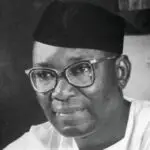
- Pictures of Chief Obafemi Awolowo
- Relevant textbooks
Rationale for the Lesson
This lesson is crucial for understanding nigeria’s history and the role of key figures in its independence and advancement. Learning about Chief Awolowo inspires future leaders and promotes national unity.
Prerequisite/Previous knowledge
The teacher will begin by asking pupils what they know about crucial Nigerian leaders. A brief discussion will follow, leading into the introduction of Chief Obafemi Awolowo.
Lesson Content
Chief Obafemi Awolowo: Key Facts
These are some important facts about Chief Obafemi Awolowo:
- Full Name: Chief Obafemi Jeremiah Oyeniyi Awolowo
- Date of Birth: March 6, 1909
- Place of Birth: Ikenne, Ogun State, Nigeria
- Education: Wesley College, University of London (Law)
- Notable Titles: Premier of Western Nigeria, Leader of the action Group, Minister of Finance
- Key Achievements: Introduced free primary education, pioneered rural development programs, and championed federalism.
- Date of Death: May 9, 1987
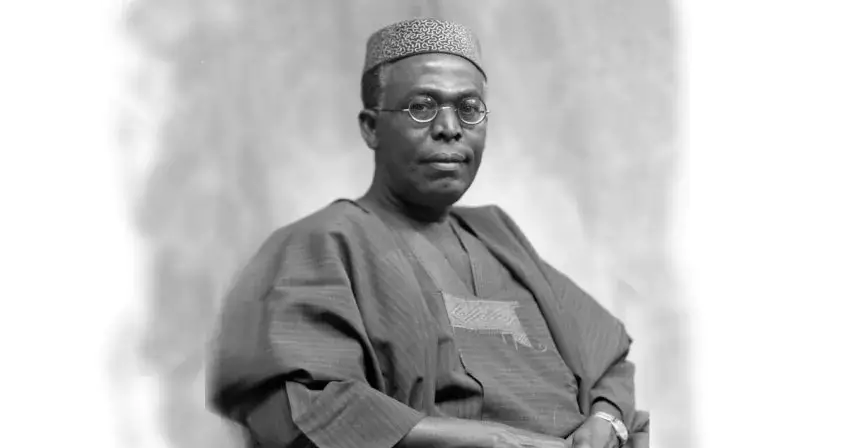
Background of Chief Obafemi Awolowo
Born into a humble family, Awolowo’s father was a farmer. Despite hardship, he excelled academically, attending Wesley College and later the university of London, earning a law degree in 1946. While in England, he co-founded Egbe Omo Oduduwa, promoting yoruba unity and Nigerian independence. He wrote path to Nigerian Freedom (1947), outlining his vision for federalism.
Nationalist Activities by Chief Obafemi Awolowo
Nationalist activities are actions taken by individuals or groups to promote the interests and independence of their nation. The following are some nationalist activities by Chief obafemi Awolowo:
- Advocated for federalism as the best governance system for Nigeria.
- Founded the Action Group (AG) in 1951,a political party advocating self-governance and Western Region rights.
- introduced the first free primary education program in Western Nigeria in 1955.
- Actively participated in constitutional conferences, advocating for Nigeria’s independence.
- Spearheaded industrialization, establishing initiatives like the O’odua Investment Company and Western Nigeria Television (WNTV).
- Resisted colonial policies that undermined Nigeria’s sovereignty.
- Promoted agricultural development through modern farming techniques and cooperative societies.
- Championed the rights of minority groups within nigeria to ensure equitable representation and protection.
Lessons from Chief Obafemi Awolowo’s Life
Awolowo’s life emphasizes vision, resilience, and dedication to public service. His focus on education, federalism, and economic development provides valuable insights into nation-building and leadership.
Teaching Methods
To deliver this lesson, the teacher will adopt the following methods: Lecture method, Discussion method, Question and answer method.
Instructional Procedures
To deliver this lesson, the teacher will adopt the following steps:
Step 1: Introduction (Set Induction)
Time: 5 minutes
Teaching Skill: Questioning, explaining
Teacher’s Activity: Introduces Chief Obafemi Awolowo and his meaning.
Pupils’ Activity: Listen attentively and participate in the introductory discussion.
Step 2: Clarification of Key Concepts
Time: 10 minutes
Teaching Skill: Explaining, clarifying
Teacher’s Activity: Explains key facts about Awolowo’s life, background, and education.
Pupils’ Activity: Take notes and ask clarifying questions.
Step 3: Discussion of nationalist Activities
Time: 10 minutes
Teaching Skill: Modeling, guiding
Teacher’s Activity: Guides pupils through a discussion of Awolowo’s nationalist activities.
Pupils’ Activity: Participate in the guided discussion and answer questions.
Step 4: Independent practice
Time: 5 minutes
Teaching skill: Monitoring,assessing
Teacher’s Activity: Asks pupils to answer questions individually.
Pupils’ Activity: Answer questions independently.
Step 5: note-Taking
Time: 5 minutes
Teaching Skill: Summarizing, organizing
Teacher’s Activity: Summarizes key points and encourages note-taking.
Pupils’ activity: Take notes on the lesson.
Step 6: Evaluation/Review
Time: 5 minutes
Teaching Skill: Questioning, feedback
Teacher’s Activity: Reviews the lesson and answers any remaining questions.
Pupils’ Activity: Ask questions and participate in the review.
Objective-aligned checks:
- Identify key facts about his background and early life.
- Explain his major nationalist activities and their impact.
- Show recognition for Chief Obafemi Awolowo’s contributions to Nigeria.
step 7: conclusion
Time: 5 minutes
Teaching Skill: Summarizing, reinforcing
Teacher’s Activity: Summarizes the key points about Chief Obafemi Awolowo’s life and contributions, emphasizing his lasting legacy on Nigeria.
Pupils’ activity: Listen attentively and ask any final questions.
Lesson Keywords
- Nationalist – A person who strongly identifies with their own nation and vigorously supports its interests, especially to the exclusion or detriment of the interests of other nations.
- Federalism – A system of government in which power is divided between a central authority and constituent political units.
- Action Group – A political party in Nigeria during the First Republic, led by Chief Obafemi Awolowo.
- Free Primary Education – A policy providing free access to primary school education for all children.
- Independence – The state of being self-governing and not subject to control by others.
Lesson Evaluation
To evaluate the learning, the teacher asks pupils to:
- Who was Chief Obafemi Awolowo?
- What was his role in Nigeria’s independence movement?
- What were some of his key achievements?
- what is the meaning of the Action Group?
- What was the impact of his free primary education policy?
Assignment/Homework
- Research and write a short paragraph about another Nigerian nationalist.
- list three ways Chief Obafemi Awolowo contributed to the development of Nigeria.
- Explain the importance of free primary education in Nigeria.
Differentiation
- For slower learners: The teacher will provide one-on-one assistance and simplified explanations.
- For advanced learners: More advanced pupils can conduct further research on Awolowo’s life and contributions.
- For visual/auditory/kinesthetic learners: Use visual aids like pictures and videos, encourage active participation through discussions, and incorporate hands-on activities like creating timelines.
note for Teachers
Encourage pupils to appreciate the contributions of Nigerian nationalists and to understand the importance of leadership and service to the nation. Emphasize the values of education, unity, and development in building a strong and prosperous Nigeria.
Community Join the conversation Open discussion +