

Class: Primary Five
Term: Frist Term
Subject: History
Curriculum Theme:
Previous Lesson: Nationalists And Nationalism In Nigeria, Chief Obafemi Awolowo
Topic: Alhaji Sir Ahmadu Bello: A Nigerian Nationalist
Content/Learning area: Key Facts About Alhaji Sir Ahmadu Bello, Background of Alhaji Sir Ahmadu Bello, Nationalist Activities by Alhaji Sir Ahmadu bello
Time Allocation: 40 minutes
Performance Objectives
By the end of the lesson, pupils should be able to:
- Cognitive Domain:
– Identify key facts about Alhaji Sir Ahmadu Bello’s life and career.
– Explain Alhaji Sir Ahmadu Bello’s role in the Nigerian independence movement.
– describe Alhaji Sir Ahmadu Bello’s contributions to the growth of Northern Nigeria.
- Affective Domain:
– show appreciation for Alhaji Sir Ahmadu Bello’s contributions to Nigeria.
– Develop a sense of national pride.
- Psychomotor Domain:
– Take notes on the key aspects of Alhaji Sir Ahmadu Bello’s life and work.
– Participate actively in class discussions.
- Social Domain:
– Work collaboratively with peers in group activities.
– Respect diverse perspectives and opinions.
reference Materials
- 9 – Years Basic Education Curriculum
- abuja Educational Resource center Scheme of Work
- NAPPS national Unified Scheme of Work
- Relevant Textbooks
Instructional Materials
To deliver this lesson, the teacher will use the following materials:
- Whiteboard or chart paper
- Markers or pens
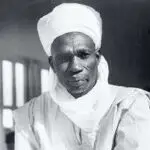
- Pictures of Alhaji sir Ahmadu Bello
- Relevant textbooks
Rationale for the Lesson
understanding alhaji Sir Ahmadu Bello’s life and contributions is crucial for pupils to grasp the complexities of Nigeria’s history and the diverse perspectives that shaped the nation’s independence and progress. This lesson fosters a deeper understanding of Nigerian nationalism and its impact.
Prerequisite/Previous Knowledge
The teacher will begin by asking pupils what they remember about the previous lesson on Chief Obafemi Awolowo. The teacher will then introduce Alhaji Sir Ahmadu Bello as another crucial figure in Nigeria’s history, highlighting his meaning in the Northern region.
Lesson Content
Key Facts About alhaji Sir Ahmadu Bello
These are some important details about Alhaji Sir Ahmadu Bello’s life:
- Born: June 12, 1910, in Rabah, Sokoto State, Nigeria.
- Title: Sardauna of Sokoto.
- Education: Sokoto Provincial School and Katsina Training College.
- Family Background: Born into the royal family of the Sokoto Caliphate.
- Political Career: Premier of Northern Nigeria (1954).
- Death: Assassinated January 15, 1966.
- recognition: Knighted by the British government (1957).
- Religious Influence: Devout muslim.
- Nickname: “The Great Unifier”.
- Vision: To modernize Northern Nigeria while preserving its cultural and religious values.

Background of Alhaji Sir Ahmadu Bello
Alhaji sir Ahmadu Bello came from a powerful family in the Sokoto Caliphate, a centre of Islamic culture and learning.His upbringing and education shaped his understanding of both conventional and modern leadership.He became involved in Northern Nigerian politics, serving as an advisor before becoming the Sardauna of Sokoto.
as the movement for Nigerian independence grew, Ahmadu Bello became a key figure.He helped create the Northern People’s Congress (NPC) in 1949,a party that represented Northern interests. The NPC gained wide support, especially in rural areas, as of Ahmadu bello’s focus on social justice, economic growth, and cultural preservation.
As the first premier of northern Nigeria, ahmadu Bello focused on regional autonomy, wanting the north to develop independently while staying united with the rest of the country. He worked with other leaders to negotiate Nigeria’s independence.
While committed to nigerian unity, Ahmadu Bello’s focus on Northern interests sometimes caused disagreements with other regions. Though, his lasting impact on Nigerian politics and his dedication to Northern Nigeria’s development are critically important parts of his legacy.
Nationalist Activities by Alhaji Sir Ahmadu Bello
These are some of the nationalist activities carried out by Alhaji Sir Ahmadu Bello:
- formation of the Northern people’s Congress (NPC): Ahmadu Bello helped found the NPC in 1949 to represent Northern Nigeria’s interests and promote the region’s welfare while working towards Nigerian independence.
- Advocacy for Regional Autonomy: He strongly believed in northern Nigeria’s right to its own culture and political system within a united Nigeria.
- Promotion of Education in the North: He prioritized expanding education, especially in rural areas, to improve literacy and opportunities.
- Support for the Nigerian Independence Movement: He worked with other leaders to achieve independence for Nigeria.
- Economic Development of Northern Nigeria: He focused on building infrastructure and developing agriculture to improve the Northern economy.
- Religious Leadership: As a devout Muslim, he played a key role in maintaining religious unity in Northern Nigeria.
- Opposition to Southern Dominance: He worked to ensure that no region dominated others in the new nation.
- Advocacy for the Preservation of Customary Institutions: He supported traditional leaders and their role in governance.
- Establishment of Media Outlets: He established media outlets to promote Northern Nigerian perspectives and culture.
- Investment in Healthcare: He invested in healthcare facilities to improve the well-being of Northern Nigerians.
Teaching Methods
To deliver this lesson, the teacher will adopt the following methods: Lecture method, Discussion method, Question and answer method
Instructional Procedures
To deliver this lesson, the teacher will adopt the following steps:
Step 1: Introduction (Set Induction)
Time: 5 minutes
Teaching Skill: Questioning, Introduction
Teacher’s Activity: Briefly review the previous lesson and introduce Alhaji Sir Ahmadu Bello.
Pupils’ Activity: Respond to teacher’s questions and listen attentively.
Step 2: Description of Key Concepts
Time: 10 minutes
Teaching Skill: Description, Definition
Teacher’s Activity: Explain key concepts related to nationalism and leadership.
Pupils’ activity: Listen attentively and take notes.
Step 3: Exhibition/Guided Practice
Time: 10 minutes
Teaching Skill: Modeling, Guided Practice
Teacher’s Activity: Show pictures of Alhaji Sir Ahmadu Bello and discuss his life and achievements.
Pupils’ Activity: Observe and participate in discussions.
Step 4: Self-reliant Practice
Time: 5 minutes
Teaching Skill: Submission, Self-reliant Work
Teacher’s Activity: Assign short questions related to the lesson.
Pupils’ Activity: Answer the questions independently.
Step 5: Note-Taking
Time: 5 minutes
Teaching Skill: Note-Taking, Summarization
Teacher’s Activity: Guide pupils in summarizing key points.
Pupils’ Activity: Take notes and summarize key points.
Step 6: Evaluation/Review
Time: 5 minutes
Teaching Skill: Assessment, Review
Teacher’s Activity: Review the lesson and answer any questions.
Pupils’ Activity: Ask questions and participate in the review.
step 7: Conclusion
Time: 2 minutes
Teaching Skill: Summarization, Conclusion
Teacher’s Activity: Summarize the main points of the lesson.
Pupils’ Activity: Listen and ask any final questions.
lesson Keywords
- Nationalist – A person who strongly supports the interests of their own nation.
- Autonomy – The right or condition of self-government.
- Premier – the head of a government.
- Caliphate – An Islamic state led by a supreme religious and political leader known as a caliph.
- Legacy – Something transmitted by or received from an ancestor or predecessor or from the past.
Lesson Evaluation
To evaluate the learning, the teacher asks pupils to:
- When was Alhaji Sir Ahmadu bello born?
- What was the Northern People’s Congress (NPC)?
- What were some of Ahmadu bello’s goals for Northern Nigeria?
- How did Ahmadu Bello balance Northern interests with national unity?
- What role did he play in Nigeria’s independence?
- Why was education critically important to Ahmadu Bello?
- How did his religion influence his leadership?
- What was his view on traditional leaders?
- How did his economic policies affect Northern Nigeria?
- What challenges did he face as a leader?
Assignment/Homework
- Research and write a short paragraph about one of Alhaji Sir Ahmadu Bello’s major achievements.
- List three ways Alhaji Sir Ahmadu Bello contributed to the development of Northern Nigeria.
- Interview a family member or community elder about their memories or knowledge of Alhaji Sir Ahmadu Bello.
Differentiation
- For slower learners: Provide one-on-one assistance and simplified explanations.
- For advanced learners: Encourage independent research and deeper analysis of Ahmadu Bello’s political strategies.
- For visual/auditory/kinesthetic learners: Use visual aids, discussions, and hands-on activities to cater to different learning styles.
Note for Teachers
Encourage pupils to appreciate the contributions of Alhaji sir Ahmadu Bello to nigeria’s history and development. Emphasize the importance of unity and understanding among different regions and ethnic groups in Nigeria.

Community Join the conversation Open discussion +