

Class: Primary 5
Term: 2nd Term
Week: 5
Age: 10 years
Duration: 45 minutes
Subject: Christian Religion Studies
Curriculum Theme: Christian Religion Studies
Previous Lesson: God’s Men as Tool of Salvation, God Uses People to Save Others.
Topic: THE PENTECOST
Subject Matter: Day of Pentecost, scripture account of Pentecost, key events of the Pentecost day, lessons and revelations from the scriptures about Pentecost
Specific Objectives
By the end of the lesson, pupils should be able to:
Cognitive Domain:
- Define the term “Pentecost”.
- Describe the scripture account of the Day of Pentecost.
- List the key events that took place on the Day of Pentecost.
- State at least two lessons learned from the Pentecost story.
Affective Domain:
- Appreciate the significance of the Holy Spirit’s coming.
- Value the power and guidance received through the Holy Spirit.
Psychomotor Domain:
- Locate the scripture passage about Pentecost in their Bibles.
- Relate the events of Pentecost to the establishment of the early church.
Social Domain:
- Participate actively in class discussions about the Pentecost.
- Share their understanding of the Holy Spirit’s role in their lives.
Reference Materials
The following resources were used in planning this lesson:
- 9 Years Basic Education Curriculum for Christian Religious Studies.
- State Unified Scheme of Work for Primary 5 Christian Religious Studies.
- Christian Religious Studies for Primary Schools Book 5.
- Holy Bible.
- My Bible Story.
Instructional Materials
The teacher will teach this lesson with the aid of:
- Holy Bible.
- My Bible Story.
Rationale for the Lesson
This lesson helps pupils understand the important event of Pentecost, which marks the coming of the Holy Spirit and the beginning of the Christian church. Understanding Pentecost enables pupils to grasp the source of power and guidance available to Christians today.
Prerequisite/Previous Knowledge
Pupils are familiar with basic Bible stories and have an understanding of Jesus’ life, death, and resurrection.
Lesson Content/Board Summary
THE PENTECOST
The Day of Pentecost
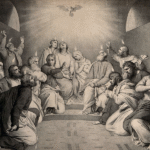
Pentecost is a significant Christian festival celebrated fifty days after Easter Sunday. It commemorates the descent of the Holy Spirit upon the Apostles and other followers of Jesus Christ, as recorded in the Bible.
Scripture Account of Pentecost
The main scripture account of Pentecost is found in the Book of Acts of the Apostles, chapter 2, verses 1 to 41 (Acts 2:1-41).
Key Events of the Pentecost Day
The following are the key events that occurred on the Day of Pentecost:
- There was a sound like a mighty rushing wind that filled the house where the disciples were gathered.
- Tongues as of fire appeared and rested on each of them.
- The disciples were all filled with the Holy Spirit and began to speak in other tongues (languages) as the Spirit enabled them.
- Many people from different nations, who were in Jerusalem, heard the disciples speaking in their own native languages and were amazed.
- Peter stood up and preached a powerful sermon, explaining what was happening.
- About three thousand people were added to their number that day, signifying the birth of the early church.
Lessons and Revelations from the Scriptures about Pentecost
The following are lessons and revelations from the scriptures about Pentecost:
- Pentecost marked the outpouring of the Holy Spirit upon believers.
- It signifies the beginning of the Christian church.
- The Holy Spirit gives believers power to witness for Jesus Christ.
- The Holy Spirit enables believers to understand and speak about God’s wonderful works.
- The events of Pentecost show God’s desire to unite people from all nations through faith in Christ.
Teaching Methods/Instructional Techniques
Discussion, Lecture, Demonstration, Question and Answer, Visual Aids
Instructional Procedures
Step 1: Introduction
Time: 5 minutes
Teaching Skill: Set Induction
Teacher’s Activity: The teacher greets the pupils and reviews the previous lesson briefly. The teacher then asks pupils if they know what happens 50 days after Easter or if they have heard of the Holy Spirit. This leads to the introduction of the topic: The Pentecost.
Pupils’ Activity: Pupils respond to questions and listen attentively to the introduction of the new topic.
Learning Point: Pupils are prepared for the new lesson and connect it to prior knowledge.
Step 2: Explanation of Pentecost
Time: 7 minutes
Teaching Skill: Explanation/Definition
Teacher’s Activity: The teacher defines Pentecost as a Christian festival celebrating the descent of the Holy Spirit upon the Apostles. The teacher explains that it happened 50 days after Easter and is seen as the birth of the church.
Pupils’ Activity: Pupils listen, take notes, and ask questions for clarification.
Learning Point: Pupils understand the meaning and significance of Pentecost.
Step 3: Scripture Reading
Time: 8 minutes
Teaching Skill: Reading/Narration
Teacher’s Activity: The teacher guides the pupils to open their Bibles to Acts 2:1-41. The teacher reads selected verses aloud or asks capable pupils to read, emphasizing the key events described.
Pupils’ Activity: Pupils follow along in their Bibles and listen to the scripture account.
Learning Point: Pupils become familiar with the biblical account of Pentecost.
Step 4: Discussion of Key Events
Time: 7 minutes
Teaching Skill: Discussion/Questioning
Teacher’s Activity: After the reading, the teacher leads a discussion on the key events mentioned in the scripture. The teacher asks questions like: “What sound did they hear?”, “What appeared on their heads?”, “What did they start doing?”. The teacher lists these points on the board.
Pupils’ Activity: Pupils answer questions and contribute to the discussion, identifying the key events.
Learning Point: Pupils identify and understand the main occurrences on the Day of Pentecost.
Step 5: Lessons and Revelations
Time: 6 minutes
Teaching Skill: Explanation/Elaboration
Teacher’s Activity: The teacher explains the lessons and revelations from the Pentecost story, such as the outpouring of the Holy Spirit, the beginning of the church, and the power for witnessing. The teacher connects these to the pupils’ lives.
Pupils’ Activity: Pupils listen and understand the spiritual significance and practical applications of Pentecost.
Learning Point: Pupils grasp the deeper meaning and relevance of Pentecost.
Step 6: Activity
Time: 4 minutes
Teaching Skill: Application
Teacher’s Activity: The teacher asks pupils to discuss in pairs or small groups how the Holy Spirit can help them in their daily lives, based on the lessons learned.
Pupils’ Activity: Pupils discuss and share their ideas on the practical application of the Holy Spirit’s work.
Learning Point: Pupils apply the lesson to their personal experiences.
Step 7: Evaluation/Review
Time: 5 minutes
Teaching Skill: Questioning/Assessment
Teacher’s Activity: The teacher evaluates the learning by asking the following questions:
- What is Pentecost?
- Mention two key events that happened on the Day of Pentecost.
- Name the book of the Bible where the account of Pentecost is found.
- State two lessons we can learn from the story of Pentecost.
Pupils’ Activity: Pupils answer orally and in writing.
Learning Point: Pupils demonstrate understanding of the lesson.
Step 8: Conclusion
Time: 3 minutes
Teaching Skill: Summarization/Assignment
Teacher’s Activity: The teacher summarizes the main points of the lesson, reinforcing the importance of Pentecost and the Holy Spirit. The teacher assigns homework: “Read Acts 2 again and write down one new thing you learned.”
Pupils’ Activity: Pupils listen to the summary and copy down the homework.
Learning Point: Pupils consolidate their learning and prepare for further engagement with the topic.
Home Task: Write three lessons learned about THE PENTECOST and one suitable way to apply the teaching responsibly.
Lesson Keywords
- Pentecost – A Christian festival celebrating the descent of the Holy Spirit on the disciples of Jesus after his Ascension, occurring on the seventh Sunday after Easter.
- Holy Spirit – The third person of the Trinity, believed by Christians to be the spiritual presence of God in the world.
- Tongues of Fire – A visible manifestation of the Holy Spirit’s presence at Pentecost, appearing as flames resting on the heads of the disciples.
- Apostles – The twelve chief disciples of Jesus Christ.
Differentiation
For pupils who grasp concepts quickly, the teacher can encourage them to share additional insights from the scripture or lead a short prayer. For pupils needing more support, the teacher will provide simplified explanations, use visual aids if available, and allow them to answer questions with guidance.
Note for teachers using this lesson plan
Encourage pupils to bring their own Bibles to class. Emphasize the Holy Spirit’s role in empowering believers today. Ensure a calm and respectful environment for discussing spiritual topics. Be prepared to answer questions about the Holy Spirit in a simple, age-appropriate manner.


Community Join the conversation Open discussion +