

Class: Senior Secondary School 2 (SS2 / SSS 2)
Term: First Term
Week: 7
Age: 16 years
Duration: 45 minutes
Subject: Agricultural Science
Curriculum Theme: Crop Production and Protection
Previous Lesson: Crop Disease Symptoms: Meaning, Symptoms and Economic Importance.
Topic: Preventive and Control Measures of diseases
Subject Matter: Meaning of disease control (steps taken to prevent and reduce crop diseases), preventive and control measures (cultural methods, biological methods, chemical methods)
Specific Objectives
By the end of the lesson, pupils should be able to:
Cognitive Domain:
- Define disease control.
- List and explain cultural, biological, and chemical methods of disease control.
- State examples of chemicals used in disease control.
Affective Domain:
- Appreciate the importance of disease control in crop production.
- Recognize the need for safety precautions when using chemicals.
Psychomotor Domain:
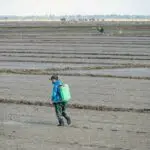
- Demonstrate proper handling of sprayers.
- Apply safety measures during chemical application.
Social Domain:
- Promote environmentally friendly disease control practices.
- Encourage safe chemical handling within the community.
Reference Materials
The following resources were used in planning this lesson:
- Senior Secondary Schools Education Curriculum
- State Unified Scheme of Work
- Essential Agricultural Science for Senior Secondary Schools, by O.A. Iwena
Instructional Materials
The teacher will teach this lesson with the aid of:
- Sprayer
- Sample pesticide containers (labels only)
- Posters on integrated pest management
- Gloves
Rationale for the Lesson
This lesson helps pupils understand how to protect crops from diseases. It enables them to apply effective measures to prevent crop losses and ensure food security.
Prerequisite/Previous Knowledge
Pupils should have basic knowledge of crop diseases and their causes.
Lesson Content/Board Summary
Preventive and Control Measures of Diseases
Meaning of Disease Control
Disease control refers to all the steps taken to prevent the occurrence of diseases in crops and to reduce their spread and severity once they have occurred. The goal is to minimize crop damage and maximize yield.
Methods of Disease Control
The following are common methods used to control crop diseases:
- Cultural Methods: These involve modifying farming practices to create an unfavorable environment for disease development.
- Crop Rotation: Planting different crops in a sequence on the same land to break disease cycles.
- Use of Resistant Varieties: Cultivating crop varieties that are naturally resistant or tolerant to specific diseases.
- Sanitation: Removing and destroying infected plant parts, weeds, or crop residues that can harbor pathogens.
- Timely Planting: Planting crops at the optimal time to avoid periods when disease pressure is high.
- Proper Spacing: Ensuring adequate spacing between plants to improve air circulation and reduce humidity, which can favor disease development.
- Biological Methods: These involve using living organisms to control disease-causing pathogens.
- Use of Natural Enemies: Introducing or encouraging beneficial microorganisms (e.g., fungi, bacteria) that parasitize or compete with plant pathogens.
- Biocontrol Agents: Application of specific biological products containing living organisms or their derivatives to suppress diseases.
- Chemical Methods: These involve the use of synthetic or naturally derived chemicals to kill or inhibit disease pathogens.
- Fungicides: Chemicals specifically designed to kill fungi, which are a major cause of plant diseases (e.g., copper-based fungicides, mancozeb).
- Seed Dressing Chemicals: Chemicals applied to seeds before planting to protect seedlings from soil-borne diseases (e.g., thiram, captan).
Safety Precautions in Chemical Application
When using chemicals for disease control, it is important to observe the following safety rules:
- Read and follow all instructions on the chemical label.
- Wear appropriate personal protective equipment (PPE) such as gloves, masks, goggles, and protective clothing.
- Avoid direct contact with the chemicals.
- Do not eat, drink, or smoke while handling chemicals.
- Calibrate sprayers correctly to ensure proper dosage.
- Dispose of empty containers safely according to regulations.
- Keep chemicals away from children, pets, and food items.
- Wash hands thoroughly after handling chemicals.
Teaching Methods/Instructional Techniques
Discussion, Lecture, Demonstration, Question and Answer, Visual Aids
Instructional Procedures
Step 1: Introduction
Time: 5 minutes
Teaching Skill: Set Induction
Teacher’s Activity: The teacher greets the pupils and asks them to recall some common diseases affecting crops in their community.
Pupils’ Activity: Pupils respond by mentioning diseases like cassava mosaic disease, maize streak, etc.
Learning Point: Pupils are reminded of previous knowledge and introduced to the topic of disease control.
Step 2: Meaning of Disease Control
Time: 5 minutes
Teaching Skill: Explanation
Teacher’s Activity: The teacher explains the meaning of disease control as steps taken to prevent and reduce crop diseases.
Pupils’ Activity: Pupils listen attentively and copy the definition into their notes.
Learning Point: Pupils understand the fundamental concept of disease control.
Step 3: Cultural Control Measures
Time: 10 minutes
Teaching Skill: Illustration/Discussion
Teacher’s Activity: The teacher explains cultural methods of disease control, giving examples like crop rotation, use of resistant varieties, sanitation, and timely planting, illustrating with local examples.
Pupils’ Activity: Pupils listen, ask questions, and take notes on the various cultural methods.
Learning Point: Pupils learn how farming practices can prevent diseases.
Step 4: Biological Control Measures
Time: 5 minutes
Teaching Skill: Explanation
Teacher’s Activity: The teacher explains biological methods, focusing on the use of natural enemies and biocontrol agents.
Pupils’ Activity: Pupils listen and note down the key aspects of biological control.
Learning Point: Pupils understand the role of living organisms in disease management.
Step 5: Chemical Control Measures and Safety
Time: 10 minutes
Teaching Skill: Demonstration/Explanation
Teacher’s Activity: The teacher discusses chemical methods, identifying chemicals like fungicides and seed dressing chemicals. The teacher then uses the sample pesticide labels and gloves to demonstrate safe handling procedures.
Pupils’ Activity: Pupils observe the demonstration, identify chemicals, and discuss safety rules.
Learning Point: Pupils learn about chemical control options and the importance of safety.
Step 6: Practical Discussion/Application
Time: 3 minutes
Teaching Skill: Practical Application
Teacher’s Activity: The teacher displays posters on integrated pest management and leads a brief discussion on combining different control methods.
Pupils’ Activity: Pupils discuss how different control methods can be used together effectively.
Learning Point: Pupils understand the concept of integrated disease management.
Step 7: Evaluation/Review
Time: 5 minutes
Teaching Skill: Questioning/Assessment
Teacher’s Activity: The teacher evaluates the learning by asking the following questions:
- What is disease control?
- Mention three cultural methods of disease control.
- Name two types of chemicals used for disease control.
- State two safety precautions to observe when applying chemicals.
Pupils’ Activity: Pupils answer orally and in writing.
Learning Point: Pupils demonstrate understanding of the lesson.
Step 8: Conclusion
Time: 2 minutes
Teaching Skill: Summarization
Teacher’s Activity: The teacher summarizes the main points of the lesson and assigns homework: “List five common crop diseases in your area and suggest one control measure for each.”
Pupils’ Activity: Pupils listen to the summary and copy the homework.
Learning Point: The lesson is reinforced, and pupils are encouraged to apply their knowledge.
Lesson Keywords
- Disease control – Steps taken to prevent and reduce crop diseases.
- Cultural methods – Farming practices to control diseases.
- Biological methods – Using living organisms to control diseases.
- Chemical methods – Using chemicals like fungicides to control diseases.
- Fungicides – Chemicals that kill fungi.
- Crop rotation – Changing crops on land to break disease cycles.
Differentiation
The teacher will provide additional visual aids for learners who are visual. Group work will be used to allow pupils to discuss and explain concepts to each other, supporting diverse learning styles.
Note for teachers using this lesson plan
Teachers should ensure they have adequate visual aids, especially real-life examples of plant diseases or their symptoms, to make the lesson more practical and engaging. Emphasize the importance of safety when discussing chemical control measures, potentially inviting an agricultural extension worker to discuss safe practices if resources permit. Encourage pupils to relate the methods discussed to their local farming practices.
Community Join the conversation Open discussion +