

Class: Senior Secondary School 2 (SS2 / SSS2)
Term: 2nd Term
Week: 7
Age: 16 years
Duration: 45 minutes
Subject: Agricultural Science
Curriculum Theme: Crop Production and Soil Science
Previous Lesson: Biotic Factors: Meaning and Living Factors Affecting Production.
Topic: Edaphic Factors affecting agricultural production
Subject Matter: Meaning of edaphic factors (soil conditions influencing growth), edaphic factors (soil types, soil pH, soil texture)
Specific Objectives
By the end of the lesson, pupils should be able to:
Cognitive Domain:
- Define edaphic factors.
- Explain the meaning of soil types, soil pH, and soil texture.
- Identify different types of soil based on their characteristics.
Affective Domain:
- Appreciate the importance of edaphic factors in agricultural production.
- Relate specific soil conditions to the performance of different crops.
Psychomotor Domain:
- Differentiate between various soil samples by observation and touch.
- Demonstrate how to test soil pH using pH paper.
Social Domain:
- Discuss with peers how edaphic factors influence farmer’s decisions on crop selection.
Reference Materials
The following resources were used in planning this lesson:
- Senior Secondary Schools Education Curriculum
- State Unified Scheme of Work
- Agricultural Science for Senior Secondary Schools, Book 2.
- FAO Soil Portal
- USDA NRCS Soil Education
Instructional Materials
The teacher will teach this lesson with the aid of:
- Different soil samples (sandy, clayey, loamy)
- pH paper or soil pH testing kit
- Containers for planting (with seedlings if available for demonstration)
- Charts illustrating soil profiles, soil texture triangle, and pH scale
- Whiteboard/chalkboard and markers/chalk
Rationale for the Lesson
Understanding edaphic factors helps pupils know how soil conditions influence plant growth and crop yield. This knowledge enables them to make informed decisions about soil management and crop selection for better agricultural production.
Prerequisite/Previous Knowledge
Pupils should have basic knowledge of soil as a medium for plant growth and some of its general properties from previous lessons.
Lesson Content/Board Summary
Edaphic Factors Affecting Agricultural Production
Meaning of Edaphic Factors
Edaphic factors refer to all physical, chemical, and biological properties of the soil that influence plant growth and development. These factors determine the suitability of soil for different crops.
Types of Edaphic Factors
The main edaphic factors include:
- Soil Type: This refers to the classification of soil based on the proportion of sand, silt, and clay particles present. Different soil types have varying properties that affect plant growth.
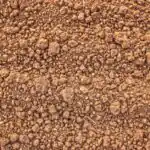
- Sandy Soil: Has large particles, feels gritty. It drains quickly, has low water retention, and is often infertile.
- Clayey Soil: Has very fine particles, feels sticky when wet. It has poor drainage, high water retention, and can be difficult to work.
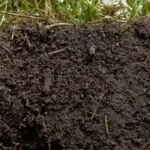
- Loamy Soil: A balanced mixture of sand, silt, and clay. It is considered ideal for agriculture due to good drainage, water retention, and aeration.
- Soil pH: This is a measure of the acidity or alkalinity of the soil, expressed on a scale from 0 to 14.
- pH 7 is neutral.
- pH below 7 is acidic.
- pH above 7 is alkaline (basic).
Soil pH affects the availability of nutrients to plants. Most crops grow best in slightly acidic to neutral soils (pH 6.0-7.0).
- Soil Texture: This refers to the relative proportions of sand, silt, and clay particles in the soil. It determines the soil’s ability to retain water, air, and nutrients, and affects root penetration.
- Sand: Large particles, poor water retention.
- Silt: Medium-sized particles, feels smooth.
- Clay: Smallest particles, feels sticky.
Soil texture influences soil workability, drainage, and aeration.
Teaching Methods/Instructional Techniques
Discussion, Lecture, Demonstration, Question and Answer, Visual Aids
Instructional Procedures
Step 1: Introduction
Time: 5 minutes
Teaching Skill: Set Induction
Teacher’s Activity: The teacher greets the pupils and asks them what plants need to grow well. The teacher then introduces the topic by explaining that soil conditions are very important for plant growth.
Pupils’ Activity: Pupils respond by mentioning water, sunlight, and nutrients. They listen attentively to the introduction.
Learning Point: Pupils recall prior knowledge and are introduced to the lesson’s focus on soil conditions.
Step 2: Meaning of Edaphic Factors
Time: 5 minutes
Teaching Skill: Explanation/Definition
Teacher’s Activity: The teacher defines edaphic factors as all soil properties that affect plant growth, writing the definition on the board.
Pupils’ Activity: Pupils listen, take notes, and repeat the definition of edaphic factors.
Learning Point: Pupils understand and can define edaphic factors.
Step 3: Soil Types as Edaphic Factors
Time: 10 minutes
Teaching Skill: Demonstration/Explanation
Teacher’s Activity: The teacher presents different soil samples (sandy, clayey, loamy) and guides pupils to observe and feel them. The teacher explains the characteristics of each soil type and their implications for plant growth.
Pupils’ Activity: Pupils observe the soil samples, feel their texture, and describe their characteristics. They also ask questions for clarification.
Learning Point: Pupils can identify and explain the properties of different soil types.
Step 4: Soil pH as an Edaphic Factor
Time: 10 minutes
Teaching Skill: Demonstration/Practical
Teacher’s Activity: The teacher explains what soil pH is and its importance for nutrient availability. The teacher then demonstrates how to test the pH of a soil sample using pH paper or a simple pH kit.
Pupils’ Activity: Pupils listen to the explanation of soil pH, observe the demonstration, and note the pH ranges for acidic, neutral, and alkaline soils.
Learning Point: Pupils understand soil pH and its relevance, and can observe a pH test.
Step 5: Soil Texture as an Edaphic Factor
Time: 5 minutes
Teaching Skill: Explanation/Discussion
Teacher’s Activity: The teacher explains soil texture as the proportion of sand, silt, and clay particles. The teacher discusses how texture affects water holding capacity, aeration, and root penetration.
Pupils’ Activity: Pupils listen and contribute by explaining how different particle sizes might affect soil properties.
Learning Point: Pupils understand the concept of soil texture and its impact on soil properties.
Step 6: Relating Edaphic Factors to Crop Performance
Time: 5 minutes
Teaching Skill: Discussion/Application
Teacher’s Activity: The teacher leads a discussion on how different edaphic factors (soil type, pH, texture) affect the growth and yield of various crops. The teacher gives examples of crops suited to specific soil conditions.
Pupils’ Activity: Pupils participate in the discussion, giving examples of crops and the soil conditions they prefer.
Learning Point: Pupils can relate specific soil conditions to crop performance.
Step 7: Evaluation/Review
Time: 5 minutes
Teaching Skill: Questioning/Assessment
Teacher’s Activity: The teacher evaluates the learning by asking the following questions:
- What are edaphic factors?
- List three major types of soil.
- Explain the importance of soil pH in agricultural production.
- How does soil texture influence water retention in soil?
Pupils’ Activity: Pupils answer orally and in writing.
Learning Point: Pupils demonstrate understanding of the lesson.
Step 8: Conclusion
Time: 5 minutes
Teaching Skill: Summarization
Teacher’s Activity: The teacher summarizes the key points of the lesson, reiterating the importance of understanding edaphic factors for successful farming. The teacher assigns homework: research crops that thrive in acidic, neutral, and alkaline soils.
Pupils’ Activity: Pupils listen to the summary and copy down the homework.
Learning Point: Pupils consolidate their learning and prepare for further study.
Lesson Keywords
- Edaphic factors – Soil conditions that affect plant growth.
- Soil type – Classification of soil based on particle composition (sand, silt, clay).
- Soil pH – Measure of soil acidity or alkalinity.
- Soil texture – Relative proportions of sand, silt, and clay in soil.
- Loam – Ideal soil type with balanced proportions of sand, silt, and clay.
Differentiation
For pupils who grasp concepts quickly, the teacher will encourage them to research specific crops and their optimal edaphic requirements. For those needing more support, the teacher will provide simplified definitions and more visual aids, allowing them to handle the soil samples more directly.
Note for teachers using this lesson plan
Ensure a variety of soil samples are available for pupils to touch and observe. Practical demonstrations of pH testing will significantly enhance understanding. Encourage pupils to connect theoretical knowledge to practical agricultural scenarios in their local environment.


Community Join the conversation Open discussion +