

Class: Senior Secondary School 2 (SS2 / SSS2)
Term: First Term
Week: 5
Age: 16 years
Duration: 45 minutes
Subject: Christian Religion Studies
Curriculum Theme: God’s Chosen Leaders
Previous Lesson: Leadership: Joseph’s Life, Character and Leadership Style.
Topic: Moses as a Leader
Subject Matter: Meaning of Moses’ leadership (leading by God’s guidance and courage), early life and call of Moses (Exodus 1:1-3), God equips and sends Moses to lead Israelites out of Egypt (Exodus 4:1-17, Exodus 5:1-5, Exodus 5:22-33, Exodus 6:28-30, Exodus 7:7), Moses leads his people out of Egypt (Exodus 14:1-31, Exodus 32:1-14, Numbers 13:1-33, Numbers 14:1-19)
Specific Objectives
By the end of the lesson, pupils should be able to:
Cognitive Domain:
- Define Moses’ leadership as guided by God and requiring courage.
- Narrate the key events of Moses’ early life and call to leadership.
- Explain how God equipped Moses for his mission to lead the Israelites.
- Describe how Moses led the Israelites out of Egypt.
Affective Domain:
- Appreciate God’s faithfulness in equipping His chosen leaders.
- Value the qualities of humility, obedience, and courage in leadership.
- Recognize the importance of intercession and responsibility in leadership.
Psychomotor Domain:
- List the leadership qualities demonstrated by Moses.
- Identify challenges Moses faced as a leader.
- Compare Moses’ leadership style with a familiar leader.
Social Domain:
- Apply lessons from Moses’ leadership to contemporary leadership situations.
Reference Materials
The following resources were used in planning this lesson:
- Senior Secondary Schools Education Curriculum
- State Unified Scheme of Work
- Christian Religious Studies for Senior Secondary Schools 2
- The Holy Bible (Revised Standard Version or New International Version)
Instructional Materials
The teacher will teach this lesson with the aid of:
- Bible
- Textbook
- Charts depicting Moses’ life journey
Rationale for the Lesson
This lesson enables pupils to understand the nature of divine leadership through the life of Moses. It helps them to appreciate the qualities required for effective leadership and the challenges leaders often face, encouraging them to apply these lessons to their own lives.
Prerequisite/Previous Knowledge
Pupils should have basic knowledge of Old Testament stories, particularly the book of Genesis, and a general understanding of what leadership entails.
Lesson Content/Board Summary
Moses as a Leader
Meaning of Moses’ Leadership
Moses’ leadership was unique because it was primarily guided by God. He was chosen by God to lead the Israelites out of slavery in Egypt. His leadership was characterized by divine direction, courage, humility, and a deep sense of responsibility towards his people and God’s commands.
Moses’ Early Life and Call
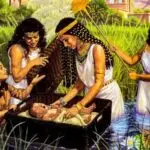
Moses was born an Israelite during a time when Pharaoh ordered all male Hebrew babies to be killed. He was saved by his mother, adopted by Pharaoh’s daughter, and raised in the Egyptian court. After killing an Egyptian, he fled to Midian, where he lived as a shepherd for forty years. God called Moses from a burning bush at Mount Horeb, commissioning him to lead the Israelites out of Egypt. Initially hesitant due to his perceived inadequacies, Moses eventually accepted God’s call.
Bible Reading: Exodus 1:1-3, Exodus 3:1-10
God Equips Moses
God equipped Moses for his daunting task by:
- Giving him miraculous signs to convince the Israelites and Pharaoh (staff turning into a snake, hand becoming leprous, water turning to blood).
- Promising His presence and power to be with Moses.
- Providing Aaron, his brother, as a spokesman due to Moses’ speech impediment.
- Giving Moses courage and authority to confront Pharaoh.
Bible Reading: Exodus 4:1-17
Moses Leads Israelites Out of Egypt
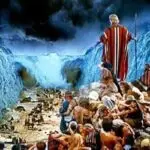
Moses, with Aaron, confronted Pharaoh, demanding the release of the Israelites. Despite Pharaoh’s initial resistance and the ten plagues God sent upon Egypt, Pharaoh finally let the people go after the death of the firstborn. Moses then led the Israelites through the Red Sea, which God miraculously parted, delivering them from Pharaoh’s pursuing army.
Bible Reading: Exodus 5:1-5, Exodus 5:22-33, Exodus 6:28-30, Exodus 7:7, Exodus 14:1-31
Challenges and Intercession in Moses’ Leadership
Moses faced numerous challenges, including the Israelites’ complaints, rebellion, and idolatry (e.g., the golden calf incident). Despite these difficulties, Moses consistently interceded for his people, pleading with God on their behalf and accepting responsibility for their actions. He also faced the challenge of leading a rebellious people through the wilderness for forty years, as seen in the report of the spies and the people’s fear to enter the Promised Land.
Bible Reading: Exodus 32:1-14, Numbers 13:1-33, Numbers 14:1-19
Leadership Qualities of Moses
Moses demonstrated several key leadership qualities:
- Obedience: He obeyed God’s commands, even when difficult.
- Humility: He initially felt inadequate but submitted to God’s will.
- Courage: He confronted Pharaoh and led a vast multitude.
- Patience: He endured the complaints and rebellion of the Israelites.
- Intercession: He consistently prayed and pleaded for his people before God.
- Responsibility: He took his role as leader seriously, guiding and teaching the people.
- Faith: He trusted God’s promises and power throughout the journey.
Memory Verse
Exodus 3:10: “Come now, therefore, and I will send you to Pharaoh that you may bring My people, the children of Israel, out of Egypt.”
Teaching Methods/Instructional Techniques
Discussion, Lecture, Demonstration, Question and Answer, Visual Aids
Instructional Procedures
Step 1: Introduction
Time: 5 minutes
Teaching Skill: Set Induction
Teacher’s Activity: The teacher asks pupils to name some great leaders they know and what qualities make them great. Then, the teacher introduces the topic “Moses as a Leader.”
Pupils’ Activity: Pupils mention various leaders and their qualities. They listen attentively to the introduction of the topic.
Learning Point: Pupils are introduced to the concept of leadership and the focus on Moses.
Step 2: Moses’ Early Life and Call
Time: 10 minutes
Teaching Skill: Narration/Explanation
Teacher’s Activity: The teacher narrates Moses’ early life, from his birth and adoption to his flight to Midian and his call by God from the burning bush, referencing Exodus 1-3.
Pupils’ Activity: Pupils listen to the narration and identify key events in Moses’ early life and call.
Learning Point: Pupils understand the background and divine calling of Moses.
Step 3: God Equips Moses
Time: 7 minutes
Teaching Skill: Explanation/Discussion
Teacher’s Activity: The teacher explains how God equipped Moses with signs, the support of Aaron, and divine authority to overcome his hesitations and confront Pharaoh, referring to Exodus 4.
Pupils’ Activity: Pupils discuss the ways God empowered Moses and recognize the importance of divine equipping for leadership.
Learning Point: Pupils learn that God prepares His chosen leaders for their tasks.
Step 4: Leading Israelites Out of Egypt
Time: 7 minutes
Teaching Skill: Discussion/Narration
Teacher’s Activity: The teacher discusses Moses’ leadership in confronting Pharaoh, the plagues, the Passover, and the miraculous crossing of the Red Sea, referencing Exodus 5-7 and 14.
Pupils’ Activity: Pupils identify God’s power and deliverance through Moses’ leadership.
Learning Point: Pupils understand the pivotal role Moses played in the Exodus.
Step 5: Leadership Challenges and Intercession
Time: 6 minutes
Teaching Skill: Problem-solving/Discussion
Teacher’s Activity: The teacher uses examples from Exodus 32 (golden calf) and Numbers 13-14 (spies’ report and rebellion) to discuss the challenges Moses faced and his role as an intercessor for the people.
Pupils’ Activity: Pupils identify the challenges of leadership and appreciate Moses’ intercessory role and responsibility.
Learning Point: Pupils learn about the difficulties of leadership and the importance of intercession.
Step 6: Moses’ Leadership Qualities
Time: 5 minutes
Teaching Skill: Brainstorming/Listing
Teacher’s Activity: The teacher guides pupils to list and discuss the leadership qualities demonstrated by Moses throughout his journey, such as humility, obedience, courage, and intercession.
Pupils’ Activity: Pupils list Moses’ leadership qualities and explain how he exhibited them.
Learning Point: Pupils identify and appreciate the key virtues of effective leadership.
Step 7: Evaluation/Review
Time: 5 minutes
Teaching Skill: Questioning/Assessment
Teacher’s Activity: The teacher evaluates the learning by asking the following questions:
- Describe Moses’ early life and how he was called by God.
- Mention three ways God equipped Moses for his leadership role.
- Explain how Moses led the Israelites out of Egypt.
- List four leadership qualities demonstrated by Moses.
Pupils’ Activity: Pupils answer orally and in writing.
Learning Point: Pupils demonstrate understanding of the lesson.
Step 8: Conclusion
Time: 1 minute
Teaching Skill: Summarizing
Teacher’s Activity: The teacher summarizes the lesson by reiterating that Moses was a divinely chosen and equipped leader whose life teaches important lessons about faith, obedience, and courage in leadership.
Pupils’ Activity: Pupils listen and note the summary.
Learning Point: The lesson is reinforced and concluded.
Lesson Keywords
- Moses – The divinely chosen leader who led the Israelites out of slavery in Egypt.
- Leadership – The ability to guide or direct people or a group towards a goal.
- Pharaoh – The title for the ancient Egyptian kings who enslaved the Israelites.
- Israelites – The descendants of Jacob, also known as the Hebrews or children of Israel.
- Exodus – The historical event of the Israelites’ departure from Egypt under Moses’ leadership.
- Deliverance – The act of being set free or rescued from danger or oppression.
- Intercession – The act of intervening on behalf of another, especially through prayer.
- Humility – The quality of having a modest or low view of one’s own importance.
- Obedience – Compliance with an order, request, or law; submission to authority.
- Courage – The ability to do something that frightens one; bravery.
Differentiation
For pupils who grasp concepts quickly, the teacher can encourage them to research other biblical leaders and compare their styles and challenges with Moses. For pupils needing more support, the teacher can provide simplified summaries of Bible passages and focus on key events and qualities, using visual aids more extensively.
Note for teachers using this lesson plan
Encourage pupils to actively engage with the Bible passages. Emphasize that Moses’ leadership was not without challenges, but his reliance on God was key to his success. Relate the leadership qualities to contemporary situations to make the lesson more relevant to pupils’ lives.


Community Join the conversation Open discussion +