

Note for teachers using this lesson plan
Before this lesson, gather pictures or, ideally, real examples of simple traditional musical instruments like a small drum, a ‘sekere’ (shaker), or a ‘gong’ (metal bell). Prepare the video to show pupils different instruments and their sounds. The central idea is for pupils to recognise and name some traditional instruments and understand their simple uses in our culture. Successful learning will be observed when pupils can point to and name at least two instruments and explain one way they are used.
Class: Pre-School Level 3
Term: Second Term
Week: 2
Age: 4 years
Duration: 30 minutes
Subject: Social Habits
Curriculum Theme: Social Habits
Previous Lesson: Not separately stated in the scheme.
Topic: TRADITIONAL MUSICAL INSTRUMENTS
Subject Matter: Meaning, examples, making and uses of traditional musical instruments.
Specific Objectives
By the end of the lesson, pupils should be able to:
Cognitive Domain
- Define traditional musical instruments in simple terms.
- Name at least three traditional musical instruments.
- Identify traditional musical instruments from pictures or real objects.
Affective Domain
- Show interest in learning about traditional musical instruments.
- Appreciate the cultural value of traditional instruments.
Psychomotor Domain
- Mime playing some traditional musical instruments.
- Participate in a simple song about traditional instruments.
Social Domain
- Share ideas about instruments with classmates.
- Listen respectfully when others speak about instruments.
Reference Materials
- NAPPS National Unified Teaching Scheme for Pre-School Level 3.
- Relevant Early Childhood Care and Education resources.
- Pictures and charts of Nigerian traditional musical instruments.
Instructional Materials
- Chart showing different traditional musical instruments.
- Posters of people playing traditional instruments.
- Real traditional musical instruments (e.g., small drum, sekere, gong, maraca – if available and safe).
- Pictures of traditional instruments.
- Audio recordings of traditional music.
- Video display for showing educational videos.
Rationale for the Lesson
This lesson helps 4-year-olds connect with their cultural heritage by introducing them to traditional musical instruments. Understanding these instruments fosters an appreciation for local music and traditions, and encourages listening skills and participation in cultural activities from an early age.Prerequisite/Previous Knowledge
Pupils can identify some common sounds and may have seen or heard musical instruments played during celebrations or at home.Lesson Content/Board Summary
Meaning, Examples, Making and Uses of Traditional Musical Instruments
What are Traditional Musical Instruments?
Traditional musical instruments are special tools made a long time ago by our people to make music. They are part of our culture and are often made from natural materials.
Examples of Traditional Musical Instruments:
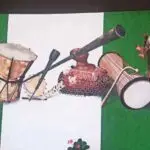
- Talking Drum (Gangan): A drum that can ‘talk’ by changing its sound. Made from wood and animal skin.
- Sekere (Shaker): A gourd covered with beads or cowries. Made from a dried gourd.
- Gong (Ogene): A metal instrument that makes a ringing sound when hit. Made from metal.
- Flute (Fili): A wind instrument made from wood or bamboo.
- Maraca: A rattle instrument, often made from a gourd or coconut shell with seeds inside.
How Traditional Instruments are Made (Simple Ideas):
- Many are made from wood (like drums, flutes).
- Some use animal skin (for drum heads).
- Some use dried gourds or calabashes (for sekere, maracas).
- Some are made from metal (like gongs).
Uses of Traditional Musical Instruments:
- For dancing and celebrations (weddings, festivals).
- For telling stories (talking drum).
- For sending messages.
- For making happy sounds.
Key Words
- Traditional – something from a long time ago, part of our culture.
- Instrument – a tool used to make music.
- Music – sounds that are nice to listen to, often for dancing or singing.
Our Instrument Song
Tune: “Twinkle, Twinkle, Little Star”
Drum, drum, talking drum,
Makes a sound, “Dum, dum, dum.”
Sekere, shake, shake, shake,
Happy music we can make.
Gong, gong, ding, ding, dong,
Sing along, a happy song.
Instruments, our culture’s pride,
Music fills us deep inside!
Actions: Mime playing a drum, shake hands like a sekere, hit palms together like a gong, then clap hands for “music fills us deep inside.”
Watch and Learn About African Instruments
💡 Teacher Guide for Using This Board Summary
How to teach the content: Start by asking pupils what music is and what instruments they know. Use the charts and posters to introduce traditional instruments. Explain the meaning simply, using visual aids. For “making,” point to the materials on the instruments (e.g., “This drum has animal skin here, and this part is wood”). For “uses,” ask pupils when they hear music or see people dancing.
What to show or demonstrate: Display actual instruments or clear pictures. Play short audio clips of traditional music. Demonstrate how each instrument is played (e.g., beating a drum, shaking a sekere). Encourage pupils to mimic the actions.
How to use the rhyme/song: Introduce the “Our Instrument Song” after discussing examples. Sing it slowly first, demonstrating the actions. Repeat it 2-3 times, encouraging pupils to join in and perform the actions.
How to use the video: Introduce the video as a way to see more instruments and hear their sounds. Pause the video to name instruments and ask pupils what sounds they hear. Encourage them to point to instruments they recognise from the lesson. After watching, ask pupils to name one instrument they saw and liked.
What to watch for: Observe if pupils are able to name at least two instruments and if they show curiosity about how they are made or used. Correct any mispronunciations of instrument names gently.
Teaching Methods/Instructional Techniques
Play-based Learning, Demonstration, Guided Practice, Songs and Rhymes, Picture Talk, Question and Answer, Imitation, Manipulation of Objects, Repetition, Video Presentation.Instructional Procedures
Step 1: Introduction
Time: 3 minutes
Teaching Skill: Engagement/Recall
Teacher’s Activity: The teacher greets the pupils and asks them what they know about music. “Who likes music? What sounds do we hear when we play music?” The teacher might play a short, cheerful traditional music clip.
Pupils’ Activity: Pupils respond by raising hands, saying “yes,” or mentioning sounds they like.
Learning Point: Pupils are engaged and thinking about music.
Step 2: Meaning of Traditional Musical Instruments
Time: 4 minutes
Teaching Skill: Explanation/Visual Aid
Teacher’s Activity: The teacher shows pictures of traditional instruments and explains simply, “These are traditional musical instruments. They are special tools our people use to make music, often from things found in nature.”
Pupils’ Activity: Pupils look at the pictures and listen to the explanation.
Learning Point: Pupils understand the basic meaning of traditional musical instruments.
Step 3: Examples of Traditional Musical Instruments
Time: 5 minutes
Teaching Skill: Naming/Identification
Teacher’s Activity: The teacher points to instruments on a chart or uses real instruments (if available), naming each one clearly: “This is a talking drum,” “This is a sekere,” “This is a gong.” The teacher asks pupils to repeat the names.
Pupils’ Activity: Pupils repeat the names of the instruments after the teacher and point to them on the chart.
Learning Point: Pupils can identify and name some traditional musical instruments.
Step 4: How Instruments are Made
Time: 4 minutes
Teaching Skill: Observation/Simple explanation
Teacher’s Activity: The teacher briefly explains how some instruments are made, pointing to materials. “The talking drum is made from wood and animal skin. The sekere is made from a dried gourd with beads.”
Pupils’ Activity: Pupils observe the instruments/pictures and listen to the teacher’s explanation.
Learning Point: Pupils learn about the simple materials used to make traditional instruments.
Step 5: Uses of Traditional Musical Instruments & Rhyme
Time: 5 minutes
Teaching Skill: Discussion/Song
Teacher’s Activity: The teacher asks, “When do we hear these instruments?” and explains their uses: “We use them for dancing, for celebrations like weddings, and sometimes for telling stories.” The teacher then introduces and sings “Our Instrument Song” with actions.
Pupils’ Activity: Pupils share ideas, listen to the uses, and sing along with actions.
Learning Point: Pupils understand the uses of instruments and reinforce learning through song.
Step 6: Video Presentation and Practice
Time: 5 minutes
Teaching Skill: Visual Learning/Mimicry
Teacher’s Activity: The teacher plays the educational video on African musical instruments. After the video, the teacher asks pupils to name an instrument they saw and to mime playing it.
Pupils’ Activity: Pupils watch the video, then name an instrument and mime playing it.
Learning Point: Pupils reinforce their knowledge through visual learning and practical imitation.
Step 7: Evaluation/Review
Time: 4–5 minutes
Teaching Skill: Questioning/Assessment
Teacher’s Activity: The teacher checks pupils’ understanding through short questions and practical tasks.
- “What are traditional musical instruments?” (Prompt for “tools to make music from long ago”).
- “Name one traditional musical instrument.”
- “Point to the talking drum on the chart.”
- “Show me how you play a sekere.”
Pupils’ Activity: Pupils respond orally and demonstrate the required skill where appropriate.
Learning Point: Pupils demonstrate understanding of the lesson.
Step 8: Conclusion
Time: 1 minute
Teaching Skill: Summarisation/Reinforcement
Teacher’s Activity: The teacher praises the pupils and reminds them that traditional instruments are important parts of our culture. “Well done, everyone! Remember our beautiful traditional instruments!”
Pupils’ Activity: Pupils respond with “Thank you, teacher” and clap.
Learning Point: Pupils feel a sense of accomplishment and cultural pride.
Lesson Keywords
- Traditional – something from a long time ago.
- Instrument – a tool for making music.
- Drum – a musical instrument you hit.
- Sekere – a shaker instrument.
- Gong – a metal instrument that rings.
Differentiation
- Support: For pupils who struggle, provide larger pictures, fewer choices, and more one-on-one repetition of instrument names. Use hand-over-hand guidance for miming actions.
- Extension: Encourage advanced pupils to name more than two instruments, describe an instrument’s sound, or explain another use for traditional music (e.g., for storytelling).

Community Join the conversation Open discussion +