

Note for teachers using this lesson plan
Before this lesson, prepare clear pictures or charts showing different types of Nigerian marriage ceremonies (traditional, church, mosque, court) and common activities like dancing, feasting, and dressing up. Gather simple props like scarves or play clothes for role-playing a marriage ceremony. The central idea is for pupils to understand that marriage is a special celebration where two people join together, and to recognise some common activities involved. Successful learning will be observed when pupils can describe a marriage ceremony they have attended and actively participate in the role-play.
Class: Pre-School Level 3
Term: First Term
Week: 7
Age: 4 years
Duration: 30 minutes
Subject: Social Habits
Curriculum Theme: Social Habits
Previous Lesson: Family celebrations and gatherings
Topic: CEREMONIES IN OUR CULTURE (MARRIAGE)
Subject Matter: CEREMONIES IN OUR CULTURE (MARRIAGE).
Specific Objectives
By the end of the lesson, pupils should be able to:
Cognitive Domain
- State a simple meaning of marriage.
- Identify different types of marriage ceremonies from pictures.
- Describe some activities involved in a marriage ceremony.
Affective Domain
- Appreciate marriage as an important cultural ceremony.
- Show interest in discussing family celebrations.
Psychomotor Domain
- Participate in role-play activities depicting a marriage ceremony.
Social Domain
- Share their experiences of attending marriage ceremonies.
- Cooperate with peers during group discussions and role-play.
Reference Materials
- NAPPS National Unified Teaching Scheme for Pre-School Level 3
- Early Childhood Care and Education resources
Instructional Materials
- Chart showing different marriage ceremonies (e.g., traditional, church, mosque, court)
- Posters with pictures of marriage ceremony activities (e.g., dancing, eating, bride and groom)
- Dolls or puppets for role-play
- Play clothes or scarves for dressing up
- Audio player for music
Rationale for the Lesson
Learning about marriage ceremonies helps 4-year-olds understand an important aspect of their culture and community. It introduces them to the concept of family formation and the joy of celebrations, fostering an early appreciation for social traditions and relationships within their environment.
Prerequisite/Previous Knowledge
Pupils can identify members of their family and have attended other family gatherings or celebrations like birthdays.
Lesson Content/Board Summary
CEREMONIES IN OUR CULTURE (MARRIAGE)
What is Marriage?
Marriage is a special celebration where a man and a woman decide to live together as husband and wife. It is a happy time for families and friends to gather and celebrate love.
Types of Marriage Ceremonies
In our culture, people celebrate marriage in different ways:
- Traditional Marriage: This is done according to the customs and traditions of the family or community. People wear traditional clothes, dance to traditional music, and perform special rites.
- Church Marriage: This is done in a church, led by a pastor or priest. The bride usually wears a white gown.
- Mosque Marriage: This is done in a mosque, led by an Imam.
- Court Marriage: This is done in a government office called a court.
Activities in a Marriage Ceremony
Many fun things happen at a marriage ceremony:
- The bride and groom dress up in beautiful clothes.
- Family and friends gather to celebrate.
- There is dancing and music.
- People eat delicious food and drink.
- The bride and groom exchange rings.
- Many pictures are taken to remember the day.
Key Words
- Marriage – A special celebration when a man and woman become husband and wife.
- Ceremony – A special event or celebration.
- Bride – The woman getting married.
- Groom – The man getting married.
- Family – People who are related to each other.
Marriage Celebration Song
Tune: “Twinkle, Twinkle Little Star”
Happy wedding, happy day,
Bride and groom are here to stay.
Dancing, singing, full of cheer,
Families gather, far and near.
Happy wedding, happy day,
Love is celebrated today!
Actions: Clap hands, point to imaginary bride/groom, sway side to side, hug self.
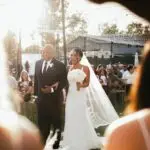
Watch and Learn About Weddings
💡 Teacher Guide for Using This Board Summary
How to teach the content: Begin by showing pictures of marriage ceremonies and asking pupils what they see. Explain marriage simply as a happy celebration. Use the charts and posters to illustrate different types of ceremonies and the activities involved, pointing out key details like traditional attire, dancing, and food. Encourage pupils to share their own observations.
What to show or demonstrate: Display pictures of a bride and groom, different types of marriage ceremonies (traditional, church, mosque, court), and activities like dancing, eating, and exchanging rings. You can briefly demonstrate simple dance steps or pretend to eat from a plate.
How to use the rhyme/song: Introduce the “Marriage Celebration Song” after discussing the activities. Sing it together several times, encouraging pupils to join in with the actions. This helps reinforce the joyful aspect of marriage.
How to use the video: Introduce the video as a way to see more about what happens at a wedding. After watching, discuss what the pupils saw and ask them to compare it to the Nigerian ceremonies discussed earlier. Point out similarities like the bride and groom, guests, and celebration, and differences in attire or specific customs.
What to watch for: Observe if pupils can identify the bride and groom, mention at least one activity, and participate in the role-play. Listen for their understanding of marriage as a happy union.
Teaching Methods/Instructional Techniques
- Play-based Learning
- Demonstration
- Guided Practice
- Picture Talk
- Question and Answer
- Role-play
- Songs and Rhymes
- Discussion
Instructional Procedures
Step 1: Introduction
Time: 3 minutes
Teaching Skill: Engagement/Recall
Teacher’s Activity: The teacher greets the pupils and asks them about happy family events they have attended, like birthdays or parties. “Who has been to a big party with lots of dancing and food?”
Pupils’ Activity: Pupils respond by sharing their experiences of family events.
Learning Point: Pupils recall and share experiences of celebrations.
Step 2: Presentation – Meaning of Marriage
Time: 5 minutes
Teaching Skill: Explanation/Visual Aid
Teacher’s Activity: The teacher shows a picture of a bride and groom and gives a simple meaning of marriage. “Today, we will learn about a very special celebration called marriage. Marriage is when a man and a woman decide to live together as husband and wife, and everyone celebrates with them!”
Pupils’ Activity: Pupils look at the pictures and listen to the explanation.
Learning Point: Pupils understand the basic concept of marriage.
Step 3: Presentation – Types and Activities
Time: 5 minutes
Teaching Skill: Illustration/Discussion
Teacher’s Activity: The teacher uses charts and posters to show different types of marriage ceremonies (traditional, church, mosque, court) and discusses common activities like dancing, eating, and special clothes. “Look at these pictures! Some people get married in a church, some at home with their family’s traditions, and some in a mosque. See how they all dance and eat yummy food?”
Pupils’ Activity: Pupils observe the pictures and identify activities, pointing out what they see.
Learning Point: Pupils recognise different types of marriage ceremonies and common activities.
Step 4: Discussion and Sharing Experiences
Time: 4 minutes
Teaching Skill: Facilitation/Encouragement
Teacher’s Activity: The teacher asks pupils if they have attended any marriage ceremonies and what they remember seeing or doing there. “Has anyone been to a wedding? What did you see? Did you dance?”
Pupils’ Activity: Pupils share their personal experiences and memories of marriage ceremonies they have attended.
Learning Point: Pupils connect the lesson to their personal experiences.
Step 5: Role-play a Marriage Ceremony
Time: 5 minutes
Teaching Skill: Guided Activity/Role-play
Teacher’s Activity: The teacher guides pupils to role-play a simple marriage ceremony. Assign roles like “bride,” “groom,” “guests,” and encourage them to pretend to dance, eat, and take pictures using simple props. “Let’s pretend! Who wants to be the bride? Who will be the groom? Let’s dance like we are at a wedding!”
Pupils’ Activity: Pupils participate actively in the role-play, imitating actions and sounds associated with a marriage ceremony.
Learning Point: Pupils physically demonstrate understanding of marriage ceremony activities.
Step 6: Rhyme and Video Reinforcement
Time: 4 minutes
Teaching Skill: Reinforcement/Media Integration
Teacher’s Activity: The teacher leads the pupils in singing the “Marriage Celebration Song” with actions. Then, the teacher plays the short video about weddings and asks pupils to watch for things they have discussed. After the video, ask “What did you see in the video that we talked about?”
Pupils’ Activity: Pupils sing the song with actions and watch the video, then share observations.
Learning Point: Pupils reinforce learning through song and visual media.
Step 7: Evaluation/Review
Time: 4–5 minutes
Teaching Skill: Questioning/Assessment
Teacher’s Activity: The teacher checks pupils’ understanding through short questions and practical tasks.
- “What is marriage?” (Show picture of bride and groom)
- “Point to a picture of people dancing at a wedding.”
- “Tell me one thing people do at a marriage ceremony.”
- “Who remembers the song we sang about weddings?”
Pupils’ Activity: Pupils respond orally and demonstrate the required skill where appropriate.
Learning Point: Pupils demonstrate understanding of the lesson.
Step 8: Conclusion
Time: 1 minute
Teaching Skill: Summary/Closure
Teacher’s Activity: The teacher praises the pupils for their participation and reminds them that marriage is a happy celebration in our culture. “Well done, everyone! Marriage is a wonderful celebration of love and family. We had so much fun learning about it today!”
Pupils’ Activity: Pupils listen and respond to the teacher’s praise.
Learning Point: Pupils feel a sense of accomplishment and retain the main idea of the lesson.
Lesson Keywords
- Marriage – A happy celebration when a man and woman become husband and wife.
- Ceremony – A special event or celebration.
- Bride – The woman who is getting married.
- Groom – The man who is getting married.
Differentiation
- Support: For pupils who need extra help, use more visual aids and simple, repetitive questions. Guide them hand-over-hand during role-play actions. Focus on identifying just one activity or one type of marriage.
- Extension: For pupils who grasp the concept quickly, encourage them to describe more details of a ceremony they attended or draw a picture of their favourite part of a wedding. Ask them to name more than one activity.
Community Join the conversation Open discussion +