

Class: Junior Secondary School 1 (JSS1, JSS 1)
Term: 1st Term
Week: 3
Age: 12 years
Duration: 45 minutes
Subject: Mathematics
Curriculum Theme: Mathematics
Previous Lesson: Writing numbers in millions, billions and trillions
Topic: Lowest Common Multiple (L.C.M.) And Highest Common Factor (H.C.F.) Of Whole Numbers
Subject Matter: Concepts of L.C.M. and H.C.F, L.C.M. and H.C.F. by Inspection and by Formulae, L.C.M. and H.C.F. of Quantitative Reasoning
Specific Objectives
By the end of the lesson, pupils should be able to:
- Cognitive Domain:
(a) State the meaning of L.C.M. and H.C.F. of whole numbers.
(b) Solve problems on L.C.M. and H.C.F. using inspection and formula. - Affective Domain:
(a) Develop interest in solving mathematical problems through cooperation and accuracy. - Psychomotor Domain:
(a) Practise calculating L.C.M. and H.C.F. using prime factorization and division methods. - Social Domain:
(a) Work in groups to compare answers to problems on L.C.M. and H.C.F.
Reference Materials
The following resources were used in planning this lesson:
- 9 Years Basic Education Curriculum
- Lagos State Unified Scheme of work for Junior Secondary Schools
- Math is Fun – “Lowest Common Multiple” (https://www.mathsisfun.com/least-common-multiple.html)
- Relevant Textbooks
Instructional Materials
The teacher will teach this lesson with the aid of:
- Multiplication tables chart
- Factor tree diagrams
- Flash cards showing examples of numbers
- Whiteboard and markers
- Projector/printed problem exercises
Rationale for the Lesson
This lesson helps pupils understand L.C.M. and H.C.F., which are essential in simplifying fractions, solving word problems, and applying quantitative reasoning in mathematics.
Prerequisite/Previous Knowledge
Pupils have been introduced to multiplication tables, factors, and multiples of whole numbers in earlier lessons.
Lesson Content/Board Summary
Lowest Common Multiple (L.C.M.) and Highest Common Factor (H.C.F.) of Whole Numbers
Concept of L.C.M.
The Lowest Common Multiple (L.C.M.) of two or more numbers is the smallest number that is a multiple of all the given numbers. It is used when adding or subtracting fractions and in solving time interval problems.
The following are ways of finding L.C.M.:
- Listing the multiples of each number until a common one appears.
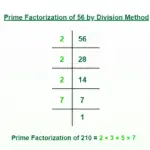
- Using the prime factorization method.
- Using the division method.
Concept of H.C.F.
The Highest Common Factor (H.C.F.) of two or more numbers is the largest number that divides each of them exactly without remainder. It is useful in simplifying fractions and grouping items into equal parts.
The following are ways of finding H.C.F.:
- Listing all the factors of the numbers and identifying the greatest.
- Using the prime factorization method.
- Using the division method.
L.C.M. and H.C.F. by Formulae
There is a relationship between L.C.M. and H.C.F. of two numbers, given by:
L.C.M. × H.C.F. = Product of the two numbers
This formula is useful for solving word problems quickly.
Application in Quantitative Reasoning
Problems in daily life often require L.C.M. or H.C.F. For example, L.C.M. is used to find when two events will happen together, while H.C.F. is used in dividing items into groups equally without leftovers.
Examples include:
- Finding when two buses that leave at different intervals will meet again.
- Sharing oranges equally among groups of children without remainder.
Teaching Methods/Instructional Techniques:
Discussion, Lecture, Explanation, Demonstration, Drill and Practice, Group Work, Question and Answer
Instructional Procedures
To deliver this lesson, the teacher will adopt the following steps:
Step 1: Introduction
Time: 5 minutes
Teaching Skill: Set Induction
Teacher’s Activity: Teacher asks pupils to recall factors and multiples of small numbers (e.g., 6 and 8) and introduces the need for finding common multiples and common factors.
Pupils’ Activity: Pupils respond by stating factors and multiples of given numbers.
Learning Point: Pupils connect prior knowledge of factors and multiples to L.C.M. and H.C.F.
Step 2: Concept of L.C.M.
Time: 10 minutes
Teaching Skill: Explanation
Teacher’s Activity: Teacher defines and explains L.C.M. with worked examples on the board.
Pupils’ Activity: Pupils listen, take notes, and solve similar examples in class.
Learning Point: Pupils understand how to find L.C.M.
Step 3: Concept of H.C.F.
Time: 10 minutes
Teaching Skill: Discussion
Teacher’s Activity: Teacher defines H.C.F., demonstrates with factor trees, and explains different methods of finding H.C.F.
Pupils’ Activity: Pupils practise solving H.C.F. problems in groups.
Learning Point: Pupils understand how to calculate H.C.F.
Step 4: L.C.M. and H.C.F. by Formula and Application
Time: 10 minutes
Teaching Skill: Demonstration
Teacher’s Activity: Teacher explains the relationship L.C.M. × H.C.F. = Product of two numbers and solves word problems from quantitative reasoning.
Pupils’ Activity: Pupils follow examples and solve guided problems.
Learning Point: Pupils apply the formula to real-life problem solving.
Step 5: Note-Taking
Time: 5 minutes
Teaching Skill: Explanation
Teacher’s Activity: Teacher dictates or writes board summary for pupils to copy.
Pupils’ Activity: Pupils copy notes into their exercise books.
Learning Point: Pupils keep a written record of the lesson.
Step 6: Evaluation/Review
Time: 3 minutes
Teaching Skill: Questioning
Teacher’s Activity: The teacher evaluates the learning by asking the following questions:
- Define L.C.M. and H.C.F.
- List two methods of finding L.C.M. and H.C.F.
- What is the relationship between L.C.M. and H.C.F. of two numbers?
- Solve: Find the L.C.M. and H.C.F. of 12 and 18.
Pupils’ Activity: Pupils answer the questions orally and on the board.
Learning Point: Pupils confirm their understanding of lesson objectives.
Step 7: Conclusion
Time: 2 minutes
Teaching Skill: Reinforcement
Teacher’s Activity: Teacher summarizes main points and emphasizes importance of L.C.M. and H.C.F. in real-life applications.
Pupils’ Activity: Pupils listen attentively and ask questions.
Learning Point: Pupils appreciate the usefulness of L.C.M. and H.C.F. in mathematics and daily life.
Home Task: Solve three new exercises on Lowest Common Multiple (L.C.M.) And Highest Common Factor (H.C.F.) Of Whole Numbers. Show each step and check each answer.
Lesson Keywords
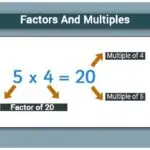
- Factor – a number that divides another number exactly
- Multiple – the result of multiplying a number by integers
- Prime Factorization – breaking a number into factors that are prime
- L.C.M. – the smallest common multiple of two or more numbers
- H.C.F. – the largest number that divides two or more numbers exactly
Differentiation
The teacher supports weaker learners by using simpler numbers and visual aids, while advanced learners solve higher-level word problems in groups.
Note for teachers using this lesson plan
Encourage pupils to master multiplication tables as it makes finding L.C.M. and H.C.F. easier. Use real-life examples to show applications and sustain pupils’ interest.

Community Join the conversation Open discussion +