

Class: Senior Secondary School 1 (SS1, SS 1, SSS1, SSS 1)
Term: Second Term
Week: 4
Age: 15 years
Duration: 45 minutes
Subject: Metal Work
Curriculum Theme: Pre-Vocational Studies
Previous Lesson: Accidents in Metal Workshop: Types, Causes and Prevention.
Topic: Workshop Safety Wears and Equipment
Subject Matter: Safety wears such as overalls, safety boots, hand gloves, goggles, and welding shields; safety equipment such as fire extinguishers, fire alarm, and sand buckets; uses of safety wears and equipment; basic fire extinguisher operation.
Specific Objectives
By the end of the lesson, pupils should be able to:
Cognitive Domain:
- Define workshop safety wears and equipment.
- Identify various workshop safety wears and equipment.
- State the uses of each safety wear and equipment.
- Explain the basic operation of a fire extinguisher.
Affective Domain:
- Appreciate the importance of workshop safety.
- Develop a positive attitude towards using safety wears and equipment.
Psychomotor Domain:
- Correctly wear common workshop safety wears.
- Demonstrate the basic steps for operating a fire extinguisher.
Social Domain:
- Promote a culture of safety among peers in the workshop.
Reference Materials
The following resources were used in planning this lesson:
- 9 Years Basic Education Curriculum for Metal Work (Senior Secondary Education).
- State Unified Scheme of Work for Metal Work.
- Basic Metalwork for Senior Secondary Schools by E.A. Obike.
Instructional Materials
The teacher will teach this lesson with the aid of:
- Samples of overalls, safety boots, hand gloves, goggles, and a welding shield.
- A fire extinguisher (for demonstration).
- A sand bucket.
- Charts showing different safety wears and equipment.
- Pictures or diagrams of a workshop with safety measures.
Rationale for the Lesson
This lesson helps pupils understand the importance of personal safety in a workshop environment. It enables them to identify and properly use safety wears and equipment, which is essential for preventing accidents and ensuring their well-being during practical metalwork activities.
Prerequisite/Previous Knowledge
Pupils have some basic knowledge of general safety rules and may have seen some safety items in their daily lives or in other subjects.
Lesson Content/Board Summary
Workshop Safety Wears and Equipment
Definition of Workshop Safety
Workshop safety refers to the practices and measures taken to prevent accidents, injuries, and health hazards in a workshop environment. It involves using appropriate safety wears and equipment, following safety rules, and maintaining a safe working space.
Workshop Safety Wears
Workshop safety wears are personal protective equipment (PPE) designed to protect individuals from specific hazards encountered in a workshop.
The following are common workshop safety wears and their uses:
- Overalls: Protect clothing from dirt, oil, and sparks. They also prevent loose clothing from getting caught in machinery.
- Safety Boots: Protect feet from falling objects, crushing injuries, and punctures from sharp materials.
- Hand Gloves: Protect hands from cuts, abrasions, burns, chemicals, and extreme temperatures. Different types are used for different tasks (e.g., welding gloves, work gloves).
- Goggles/Safety Glasses: Protect eyes from flying debris, dust, sparks, and chemical splashes.
- Welding Shields/Helmets: Protect the face and eyes from intense light, ultraviolet radiation, infrared radiation, heat, and sparks during welding operations.
Workshop Safety Equipment
Workshop safety equipment refers to devices or systems installed in a workshop to prevent or control hazards and respond to emergencies.
The following are common workshop safety equipment and their uses:
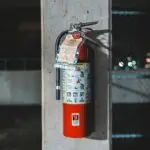
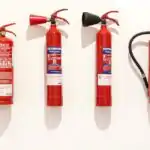
- Fire Extinguishers: Used to put out small fires. Different types are available for different classes of fire (e.g., water, foam, CO2, dry powder).
- Fire Alarm: Alerts occupants to the presence of fire, prompting evacuation.
- Sand Buckets: Used to smother small fires, especially those involving flammable liquids or electrical fires, where water might be dangerous.
- First Aid Box: Contains materials for treating minor injuries and providing immediate care before professional medical help arrives.
Basic Fire Extinguisher Operation (PASS Method)
Operating a fire extinguisher effectively involves following a simple four-step process known as PASS:
- P – Pull: Pull the pin. This unlocks the operating lever and allows you to discharge the extinguisher.
- A – Aim: Aim the nozzle at the base of the fire. Directing the extinguishing agent at the base of the fire, not the flames, is most effective.
- S – Squeeze: Squeeze the handle. This releases the extinguishing agent.
- S – Sweep: Sweep the nozzle from side to side at the base of the fire until it is extinguished.
Teaching Methods/Instructional Techniques
Discussion, Lecture, Demonstration, Question and Answer, Visual Aids
Instructional Procedures
Step 1: Introduction
Time: 5 minutes
Teaching Skill: Set Induction
Teacher’s Activity: The teacher greets the pupils and reminds them of the importance of safety in all aspects of life. The teacher asks pupils if they have ever seen anyone get injured in a workshop or at home due to carelessness. The teacher then introduces the topic: “Workshop Safety Wears and Equipment.”
Pupils’ Activity: Pupils respond to the teacher’s questions and listen attentively to the introduction.
Learning Point: Pupils are prepared for the lesson and understand its relevance to their safety.
Step 2: Presentation of Workshop Safety Wears
Time: 10 minutes
Teaching Skill: Explanation/Demonstration
Teacher’s Activity: The teacher defines workshop safety wears and presents samples or charts of various safety wears (overalls, safety boots, hand gloves, goggles, welding shields). The teacher explains and demonstrates how each item is worn.
Pupils’ Activity: Pupils observe the samples and demonstrations, identify the safety wears, and attempt to wear them correctly if samples are available.
Learning Point: Pupils identify and understand the appearance of different workshop safety wears.
Step 3: Discussion of Uses of Workshop Safety Wears
Time: 7 minutes
Teaching Skill: Discussion/Questioning
Teacher’s Activity: The teacher facilitates a discussion on the specific uses and protective functions of each safety wear, asking pupils questions like “What does an overall protect you from?” or “Why are safety boots important?”
Pupils’ Activity: Pupils state the uses of each safety wear and contribute to the discussion.
Learning Point: Pupils understand the purpose and importance of each safety wear.
Step 4: Presentation of Workshop Safety Equipment
Time: 5 minutes
Teaching Skill: Explanation/Visual Aids
Teacher’s Activity: The teacher defines workshop safety equipment and presents samples or charts of common safety equipment (fire extinguisher, sand bucket, fire alarm). The teacher briefly explains what each item is.
Pupils’ Activity: Pupils observe the samples/charts and identify the safety equipment.
Learning Point: Pupils recognize different types of workshop safety equipment.
Step 5: Discussion of Uses of Workshop Safety Equipment
Time: 5 minutes
Teaching Skill: Discussion/Questioning
Teacher’s Activity: The teacher leads a discussion on the uses of each piece of safety equipment, emphasizing their role in emergency response and hazard control.
Pupils’ Activity: Pupils explain the uses of the safety equipment and participate in the discussion.
Learning Point: Pupils understand how various safety equipment are used to prevent or respond to hazards.
Step 6: Demonstration of Fire Extinguisher Operation
Time: 5 minutes
Teaching Skill: Demonstration
Teacher’s Activity: The teacher demonstrates the basic operation of a fire extinguisher using the PASS method (Pull, Aim, Squeeze, Sweep) and explains each step clearly. The teacher also highlights when it is appropriate to use an extinguisher and when to evacuate.
Pupils’ Activity: Pupils observe the demonstration carefully and ask questions for clarification.
Learning Point: Pupils learn the correct procedure for operating a fire extinguisher.
Step 7: Evaluation/Review
Time: 5 minutes
Teaching Skill: Questioning/Assessment
Teacher’s Activity: The teacher evaluates the learning by asking the following questions:
- What is workshop safety?
- Mention three workshop safety wears and state the use of each.
- List two workshop safety equipment and their functions.
- Explain the basic steps of operating a fire extinguisher using the PASS method.
Pupils’ Activity: Pupils answer orally and in writing.
Learning Point: Pupils demonstrate understanding of the lesson.
Step 8: Conclusion
Time: 3 minutes
Teaching Skill: Summarization
Teacher’s Activity: The teacher summarizes the key learning points about workshop safety wears and equipment, reiterating the importance of practicing safety in the workshop. The teacher assigns homework: “Draw and label three workshop safety wears and two workshop safety equipment.”
Pupils’ Activity: Pupils listen to the summary and copy the homework.
Learning Point: The lesson is reinforced, and pupils are given an opportunity to practice what they have learned.
Lesson Keywords
- Safety wears – Personal protective equipment used to protect individuals from hazards.
- Safety equipment – Devices or systems used to prevent or control hazards and respond to emergencies.
- Overalls – Protective clothing worn over regular clothes to prevent dirt and injury.
- Goggles – Protective eyewear to shield the eyes from debris or chemicals.
- Fire extinguisher – A device used to put out small fires.
- PASS method – An acronym (Pull, Aim, Squeeze, Sweep) for operating a fire extinguisher.
Differentiation
For pupils who are fast learners, the teacher can encourage them to research different types of fire extinguishers and their appropriate uses. For pupils who need more support, the teacher can provide simplified diagrams and allow for peer-assisted learning during practical demonstrations.
Note for teachers using this lesson plan
Ensure all safety samples are clean and in good condition for demonstration. If a live fire extinguisher demonstration is not feasible, use a video or detailed step-by-step visuals. Emphasize that practical application of safety is paramount, not just theoretical knowledge. Encourage pupils to ask questions about safety concerns they may have.


Community Join the conversation Open discussion +