

Class: Senior Secondary School 1 (SS1, SS 1, SSS1, SSS 1)
Term: 2nd Term
Week: 1
Age: 15 years
Duration: 45 minutes
Subject: Metal Work
Curriculum Theme: Pre-Vocational Studies
Previous Lesson: .
Topic: Description of workshop and workshop layout, General layout of typical metal workshop
Subject Matter: definition of a metal workshop, description of a typical metal workshop, general layout of a metal workshop, drawing a simple workshop layout
Specific Objectives
By the end of the lesson, pupils should be able to:
Cognitive Domain:
- Define a metal workshop.
- Describe the features of a typical metal workshop.
- State the reasons for a good workshop layout.
Affective Domain:
- Appreciate the importance of a well-organized workshop.
- Show interest in learning about workshop safety and arrangement.
Psychomotor Domain:
- Draw a simple layout of a metal workshop.
Social Domain:
- Collaborate effectively with peers during workshop observation and discussion.
Reference Materials
The following resources were used in planning this lesson:
- 9 Years Basic Education Curriculum for Metal Work (Senior Secondary).
- State Unified Scheme of Work for Metal Work SSS 1.
- Oluwole, A. O. (2018). Metalwork Technology for Senior Secondary Schools. Evans Brothers (Nigeria Publishers) Limited.
Instructional Materials
The teacher will teach this lesson with the aid of:
- A visit to the school metal workshop.
- A chart showing a typical workshop layout.
- Drawing materials (drawing sheets, pencils, rulers).
Rationale for the Lesson
Understanding a metal workshop and its layout is important for pupils to work safely and efficiently. It helps them to identify different work areas and tools, which is necessary for practical metalwork operations and for maintaining an organized environment.
Prerequisite/Previous Knowledge
Pupils are expected to have basic knowledge of simple hand tools used in metalwork and general safety rules in a workshop environment.
Lesson Content/Board Summary
Description of Metal Workshop and its Layout
Definition of a Metal Workshop
A metal workshop is a designated area or building equipped with tools, machines, and facilities specifically for working with metals. This includes processes like cutting, shaping, joining, and finishing metal materials.
Description of a Typical Metal Workshop
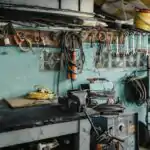
A typical metal workshop is usually a spacious, well-lit, and well-ventilated area designed to accommodate various metalworking operations. It often has a strong concrete floor to support heavy machinery and is organized into different sections for specific tasks.
The following are common features of a typical metal workshop:
- Workbenches with vices for manual operations.
- Various hand tools and measuring instruments.
- Power tools and machinery (e.g., drilling machines, grinding machines, welding equipment).
- Storage areas for raw materials, finished products, and tools.
- Safety equipment such as fire extinguishers, first aid kits, and personal protective equipment (PPE).
- Adequate lighting and ventilation systems.
General Layout of a Metal Workshop
The layout of a metal workshop refers to the arrangement of machines, workbenches, tools, and storage areas within the workshop space. A good layout promotes safety, efficiency, and ease of movement.
A general layout typically divides the workshop into functional zones. These zones include:
- Marking Out and Measurement Area: Where materials are measured and marked for operations.
- Bench Work Area: Equipped with workbenches and vices for manual filing, sawing, and fitting.
- Machine Area: Houses power-driven machines like drilling machines, grinding machines, and lathes.
- Welding Area: A designated space for welding operations, often screened off for safety.
- Finishing Area: For operations like polishing, painting, or assembly.
- Material Storage Area: For storing raw materials and stock.
- Tool Storage Area: For organizing and storing hand tools and machine accessories.
- Safety and First Aid Area: Contains safety equipment and first aid facilities.
Importance of a Good Workshop Layout
A well-planned workshop layout is important for several reasons:
- It enhances safety by reducing accidents and hazards.
- It improves workflow and efficiency, saving time and effort.
- It allows for easy movement of materials and personnel.
- It promotes better supervision and control of activities.
- It optimizes space utilization within the workshop.
- It helps in maintaining cleanliness and orderliness.
Drawing a Simple Workshop Layout
Drawing a workshop layout involves representing the different zones, machines, and work areas on paper using appropriate symbols and scale. This helps in planning and visualizing the arrangement of the workshop.
Teaching Methods/Instructional Techniques
Discussion, Lecture, Demonstration, Question and Answer, Visual Aids
Instructional Procedures
Step 1: Introduction
Time: 5 minutes
Teaching Skill: Set Induction
Teacher’s Activity: The teacher welcomes pupils to the new term and introduces the topic by asking pupils if they have ever seen a place where metals are cut, shaped, or joined. The teacher then announces the topic for the day: “Description of Metal Workshop and its Layout.”
Pupils’ Activity: Pupils respond to the questions and listen attentively to the teacher.
Learning Point: Pupils are prepared for the lesson and understand the topic.
Step 2: Definition of a Metal Workshop
Time: 7 minutes
Teaching Skill: Explanation/Definition
Teacher’s Activity: The teacher defines what a metal workshop is, using simple and clear language. The teacher may refer to the school’s metal workshop as an example. The teacher writes the definition on the board.
Pupils’ Activity: Pupils listen, take notes, and ask questions for clarification.
Learning Point: Pupils understand the definition of a metal workshop.
Step 3: Description of a Typical Metal Workshop
Time: 7 minutes
Teaching Skill: Observation/Description
Teacher’s Activity: The teacher takes the pupils on a brief guided tour of the school’s metal workshop (if available) or uses a chart to describe the features of a typical metal workshop. The teacher points out various sections, tools, and equipment.
Pupils’ Activity: Pupils observe the workshop or the chart, listen to the descriptions, and identify different features.
Learning Point: Pupils can describe the characteristics of a metal workshop.
Step 4: General Layout of a Metal Workshop
Time: 8 minutes
Teaching Skill: Explanation/Illustration
Teacher’s Activity: The teacher explains the concept of workshop layout and discusses the different functional zones found in a well-arranged metal workshop. The teacher uses the layout chart to illustrate these zones (e.g., marking out area, bench work area, machine area, welding area, storage).
Pupils’ Activity: Pupils listen, ask questions, and study the layout chart.
Learning Point: Pupils understand the importance of a structured layout and can identify different zones.
Step 5: Importance of a Good Workshop Layout
Time: 5 minutes
Teaching Skill: Elaboration/Discussion
Teacher’s Activity: The teacher leads a discussion on why a good workshop layout is important, highlighting benefits such as safety, efficiency, and ease of movement. The teacher encourages pupils to contribute their ideas.
Pupils’ Activity: Pupils participate in the discussion and note down the key points on the importance of a good layout.
Learning Point: Pupils can state the reasons for having a good workshop layout.
Step 6: Drawing a Simple Workshop Layout
Time: 5 minutes
Teaching Skill: Demonstration/Guidance
Teacher’s Activity: The teacher briefly demonstrates on the board how to draw a simple workshop layout, showing how to represent different areas. The teacher instructs pupils to attempt drawing a simple layout of a metal workshop on their drawing sheets.
Pupils’ Activity: Pupils observe the demonstration and begin to draw a simple workshop layout.
Learning Point: Pupils practice drawing a basic workshop layout.
Step 7: Evaluation/Review
Time: 5 minutes
Teaching Skill: Questioning/Assessment
Teacher’s Activity: The teacher evaluates the learning by asking the following questions:
- Define a metal workshop.
- Mention three features of a typical metal workshop.
- List four functional zones commonly found in a metal workshop layout.
- State two reasons why a good workshop layout is important.
Pupils’ Activity: Pupils answer orally and in writing.
Learning Point: Pupils demonstrate understanding of the lesson.
Step 8: Conclusion
Time: 3 minutes
Teaching Skill: Summarization/Assignment
Teacher’s Activity: The teacher summarizes the main points of the lesson, reiterating the definition, description, layout, and importance of a metal workshop. The teacher assigns homework: “Draw a detailed layout of your school’s metal workshop and label all the areas.”
Pupils’ Activity: Pupils listen to the summary and copy down the homework.
Learning Point: The lesson is concluded, and pupils have an assignment to reinforce learning.
Lesson Keywords
- Workshop – A place where manual or industrial work is done.
- Metal Workshop – A specialized workshop equipped for working with metals.
- Layout – The way in which the parts of something are arranged or laid out.
- Functional Zones – Designated areas within a workshop for specific types of tasks or operations.
- Efficiency – Achieving maximum productivity with minimum wasted effort or expense.
Differentiation
For pupils who grasp concepts quickly, the teacher will encourage them to research different types of workshop layouts (e.g., product layout, process layout). For pupils needing more support, the teacher will provide simplified diagrams and offer one-on-one guidance during the drawing activity, focusing on identifying main areas rather than precise details.
Note for teachers using this lesson plan
Ensure that the workshop visit (if conducted) adheres to all safety regulations. Emphasize safety throughout the lesson. Encourage pupils to ask questions and share their observations. The drawing activity can be completed as homework if time is limited during the lesson.



Community Join the conversation Open discussion +