

Class: Senior Secondary School 1 (SS1, SS 1, SSS1, SSS 1)
Term: 3rd Term
Week: 1
Age: 15 years
Duration: 45 minutes
Subject: Metal Work
Curriculum Theme: Pre-Vocational Studies
Previous Lesson: .
Topic: Machine Tools
Subject Matter: Definition of machine tools, functions of machine tools, classification of machine tools, types of machine tools such as power hacksaw, centre lathe, grinding, milling, planning, shaping and slotting machines, classification by cutting agent and surfaces produced.
Specific Objectives
By the end of the lesson, pupils should be able to:
Cognitive Domain:
- Define machine tools.
- State at least three functions of machine tools.
- Classify machine tools based on purpose and cutting agent.
- Identify various types of machine tools.
Affective Domain:
- Appreciate the importance of machine tools in modern production.
- Show interest in learning about the operation of different machine tools.
Psychomotor Domain:
- Identify different machine tools when presented with examples or pictures.
- Sketch a simple machine tool.
Social Domain:
- Collaborate with peers in identifying and discussing machine tools.
Reference Materials
The following resources were used in planning this lesson:
- 9 Years Basic Education Curriculum for Metal Work.
- State Unified Scheme of Work for Senior Secondary Metal Work.
- Metal Work Technology for Senior Secondary Schools by A. O. Olarinoye.
- Relevant charts and diagrams of machine tools.
Instructional Materials
The teacher will teach this lesson with the aid of:
- Workshop machine tools (if available or accessible).
- Charts showing different types of machine tools.
- Labeled photographs of machine tools.
- Whiteboard and markers.
Rationale for the Lesson
Understanding machine tools is important because they are fundamental to manufacturing and production processes. This lesson helps pupils to know the basic machines used in shaping metal and how they are categorized, which is essential for further studies in technical fields and for appreciating industrial processes.
Prerequisite/Previous Knowledge
Pupils are expected to have basic knowledge of hand tools, workshop safety rules, and an understanding of different types of metals.
Lesson Content/Board Summary
Machine Tools
Definition of Machine Tools
Machine tools are power-driven mechanical devices used to cut, shape, or form metal or other rigid materials by removing unwanted material to achieve a desired shape or size. They are essential for producing precise components.
Functions of Machine Tools
The following are the functions of machine tools:
- To remove material (e.g., cutting, drilling, grinding).
- To shape materials to specific dimensions and forms.
- To produce parts with high accuracy and precision.
- To reduce manual effort and increase production efficiency.
- To create complex geometries that are difficult to achieve with hand tools.
Classification of Machine Tools
Machine tools can be classified based on various criteria, including their purpose, the cutting agent used, and the surfaces they produce.
The following are ways to classify machine tools:
- By Purpose or Operation: This classification groups machines by the primary operation they perform.
- Turning machines (e.g., Centre Lathe)
- Drilling machines (e.g., Drilling Machine)
- Milling machines (e.g., Milling Machine)
- Grinding machines (e.g., Surface Grinder)
- Shaping, Planning, and Slotting machines (e.g., Shaper, Planer, Slotter)
- Sawing machines (e.g., Power Hacksaw)
- By Cutting Agent: This refers to the type of cutting tool used.
- Single-point cutting tools (e.g., Lathe tools, Shaper tools)
- Multi-point cutting tools (e.g., Milling cutters, Drills, Reamers)
- Abrasive cutting tools (e.g., Grinding wheels)
- By Surfaces Produced: This classification considers the geometry of the work produced.
- Machines for producing flat surfaces (e.g., Planer, Shaper, Surface Grinder)
- Machines for producing cylindrical surfaces (e.g., Centre Lathe, Cylindrical Grinder)
- Machines for producing irregular surfaces (e.g., Milling Machine)
Examples of Machine Tools
Common examples of machine tools include:
- Power Hacksaw
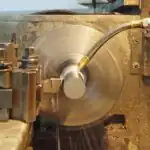
- Centre Lathe
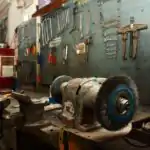
- Grinding Machine
- Milling Machine
- Planning Machine
- Shaping Machine
- Slotting Machine
- Drilling Machine
Teaching Methods/Instructional Techniques
Discussion, Lecture, Demonstration, Question and Answer, Visual Aids
Instructional Procedures
Step 1: Introduction
Time: 5 minutes
Teaching Skill: Set Induction
Teacher’s Activity: The teacher greets the pupils and asks them to mention some common tools they know and their uses. The teacher then guides the discussion towards tools that are powered by electricity or motors, leading to the topic of machine tools.
Pupils’ Activity: Pupils respond to the questions, mentioning hand tools and discussing power tools.
Learning Point: Pupils recall previous knowledge about tools and are introduced to the lesson topic.
Step 2: Definition of Machine Tools
Time: 7 minutes
Teaching Skill: Explanation/Definition
Teacher’s Activity: The teacher defines what machine tools are, emphasizing their power-driven nature and function in shaping materials by removing metal. The teacher may show pictures or actual examples if available.
Pupils’ Activity: Pupils listen attentively, take notes, and ask questions for clarification.
Learning Point: Pupils learn the definition of machine tools.
Step 3: Functions of Machine Tools
Time: 7 minutes
Teaching Skill: Explanation/Illustration
Teacher’s Activity: The teacher explains the various functions of machine tools, such as cutting, drilling, grinding, and shaping, using simple examples to illustrate each function. The teacher highlights how they contribute to precision and efficiency.
Pupils’ Activity: Pupils listen, observe examples, and note down the functions.
Learning Point: Pupils understand the purposes and benefits of using machine tools.
Step 4: Classification of Machine Tools
Time: 10 minutes
Teaching Skill: Classification/Categorization
Teacher’s Activity: The teacher explains the different ways machine tools are classified: by purpose/operation, by cutting agent, and by surfaces produced. The teacher provides examples for each category, using charts or diagrams.
Pupils’ Activity: Pupils listen, observe the charts, and participate in discussions about the classifications.
Learning Point: Pupils learn how machine tools are categorized based on different criteria.
Step 5: Examples of Machine Tools
Time: 8 minutes
Teaching Skill: Identification/Demonstration
Teacher’s Activity: The teacher presents various examples of machine tools like the Power Hacksaw, Centre Lathe, Grinding Machine, and Milling Machine using pictures, charts, or actual workshop tools. The teacher briefly describes what each machine does.
Pupils’ Activity: Pupils identify the machines, ask questions about their appearance or basic function, and note down the names.
Learning Point: Pupils can identify and name different types of machine tools.
Step 6: Class Activity/Discussion
Time: 3 minutes
Teaching Skill: Group Work/Collaboration
Teacher’s Activity: The teacher divides pupils into small groups and asks them to discuss which classification category a drilling machine would fall under and why. The teacher then calls on groups to share their answers.
Pupils’ Activity: Pupils discuss in groups and present their findings to the class.
Learning Point: Pupils apply their understanding of machine tool classification in a collaborative setting.
Step 7: Evaluation/Review
Time: 5 minutes
Teaching Skill: Questioning/Assessment
Teacher’s Activity: The teacher evaluates the learning by asking the following questions:
- Define a machine tool.
- Mention three functions of machine tools.
- List two ways machine tools can be classified.
- Give two examples of machine tools.
Pupils’ Activity: Pupils answer orally and in writing.
Learning Point: Pupils demonstrate understanding of the lesson.
Step 8: Conclusion
Time: 3 minutes
Teaching Skill: Summarization/Consolidation
Teacher’s Activity: The teacher summarizes the key points of the lesson, reiterating the definition, functions, and classification of machine tools. The teacher assigns homework, asking pupils to draw and label any two machine tools discussed in class.
Pupils’ Activity: Pupils listen to the summary and copy the homework assignment.
Learning Point: Pupils consolidate their learning and prepare for further study.
Lesson Keywords
- Machine Tool – A power-driven mechanical device used to shape or form materials by removing unwanted material.
- Lathe – A machine tool that rotates a workpiece about an axis to perform various operations like cutting, sanding, knurling, drilling, or deformation.
- Milling Machine – A machine tool that uses rotary cutters to remove material from a workpiece by advancing it into the cutter.
- Grinding Machine – A machine tool that uses an abrasive wheel as the cutting tool to remove material from a workpiece.
- Shaping Machine – A machine tool that moves a cutting tool linearly against a stationary workpiece to create flat surfaces.
Differentiation
For visual learners, the use of charts, diagrams, and actual workshop tools will be emphasized. For pupils who may struggle, the teacher will provide simplified definitions and more direct examples, offering additional support during class activities. Advanced learners will be encouraged to research specific machine tool operations and their applications in industry.
Note for teachers using this lesson plan
Teachers should prioritize safety when showing actual machine tools in the workshop and ensure pupils do not operate them without proper supervision and training. Visual aids are very important for this topic, especially if access to a fully equipped workshop is limited. Encourage pupils to ask questions and share any relevant experiences they might have.


Community Join the conversation Open discussion +