

Class: Senior Secondary School 1 (SS1, SS 1, SSS1, SSS 1)
Term: First Term
Week: 1
Age: 15 years
Duration: 45 minutes
Subject: Metal Work
Curriculum Theme: Pre-Vocational Studies
Previous Lesson: .
Topic: General Overview of Metal Work
Subject Matter: Historical background of metal and metal work, metal work as a profession, definition of metal, importance of metal
Specific Objectives
By the end of the lesson, pupils should be able to:
Cognitive Domain:
- Explain the historical background of metal and metal work.
- Define metal.
- State at least three reasons for the importance of metal.
- Describe metal work as a profession.
Affective Domain:
- Appreciate the historical development and significance of metal work.
- Develop an interest in metal work as a potential profession.
Psychomotor Domain:
- Identify different samples of metal.
Social Domain:
- Participate actively in class discussions about metal work.
Reference Materials
The following resources were used in planning this lesson:
- 9 Years Basic Education Curriculum for Senior Secondary Schools (Metal Work).
- State Unified Scheme of Work for Senior Secondary School Metal Work.
- Basic Metalwork for Senior Secondary Schools by A. O. Ojo.
Instructional Materials
The teacher will teach this lesson with the aid of:
- Metal samples (e.g., iron, copper, aluminum).
- Pictures or charts showing various metal work jobs and products.
- Chalkboard.
Rationale for the Lesson
This lesson helps pupils understand the origins and significance of metal and metal work in society. It enables them to see how metal work contributes to daily life and offers career opportunities, which can guide their future choices and appreciation for the subject.
Prerequisite/Previous Knowledge
Pupils are expected to have some basic knowledge of materials and tools from their Introductory Technology classes in Junior Secondary School.
Lesson Content/Board Summary
General Overview of Metal Work
Historical Background of Metal and Metal Work
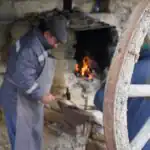
Metal work has a long history, dating back thousands of years. Early humans discovered how to extract and shape metals like copper, bronze, and iron, leading to significant advancements in tools, weapons, and art. This development marked different ages of human civilization, such as the Bronze Age and Iron Age.
Metal Work as a Profession
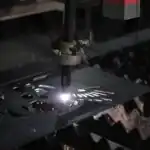
Metal work involves shaping and fabricating metal to create useful products. It is a skilled profession that includes various specializations such as welding, blacksmithing, sheet metal work, machining, and jewelry making. Metal workers are employed in construction, manufacturing, automotive, and artistic industries.
Definition of Metal
Metal is a material that is typically hard, opaque, shiny, and has good electrical and thermal conductivity. Metals are generally malleable (can be hammered into shape) and ductile (can be drawn into wires).
Importance of Metal
The following are reasons why metal is important:
- Construction: Metals like steel and aluminum are used in building structures, bridges, and skyscrapers.
- Transportation: Metals are essential for manufacturing cars, airplanes, ships, and trains.
- Tools and Machinery: Most tools, machines, and industrial equipment are made from various metals.
- Electrical Appliances: Metals like copper are used for electrical wiring due to their conductivity.
- Household Items: Many everyday items such as pots, pans, cutlery, and furniture contain metal.
- Ornaments and Jewelry: Precious metals like gold and silver are used for decorative purposes.
- Defense: Metals are used in the production of weapons and protective gear.
Teaching Methods/Instructional Techniques
Discussion, Lecture, Demonstration, Question and Answer, Visual Aids
Instructional Procedures
Step 1: Introduction
Time: 5 minutes
Teaching Skill: Set Induction
Teacher’s Activity: The teacher greets the pupils, reviews the previous lesson briefly, and then asks pupils to mention items in their classroom or homes that are made of metal. This leads to the introduction of the topic: “General Overview of Metal Work.”
Pupils’ Activity: Pupils respond to the teacher’s questions and listen attentively to the introduction of the new topic.
Learning Point: Pupils connect the new topic to their immediate environment and prior knowledge.
Step 2: Historical Background of Metal and Metal Work
Time: 10 minutes
Teaching Skill: Explanation/Lecture
Teacher’s Activity: The teacher explains the historical background of how metals were discovered and used by early humans, highlighting the progression through different ages (e.g., Bronze Age, Iron Age) and their impact on human civilization. The teacher may use charts or pictures to illustrate.
Pupils’ Activity: Pupils listen, observe the charts, and take notes.
Learning Point: Pupils understand the origins and evolution of metal and metal work.
Step 3: Metal Work as a Profession
Time: 10 minutes
Teaching Skill: Discussion/Demonstration
Teacher’s Activity: The teacher discusses metal work as a viable profession, explaining different specializations within the field (e.g., welding, blacksmithing, fabrication). The teacher shows pictures of metal workers in action and various metal products to illustrate career opportunities.
Pupils’ Activity: Pupils observe the pictures, ask questions about the different professions, and contribute to the discussion.
Learning Point: Pupils recognize the scope and career prospects within the metal work profession.
Step 4: Definition of Metal
Time: 5 minutes
Teaching Skill: Explanation/Questioning
Teacher’s Activity: The teacher provides a clear definition of metal, explaining its general properties like hardness, luster, and conductivity. The teacher shows actual metal samples (e.g., iron, copper, aluminum) for pupils to observe.
Pupils’ Activity: Pupils listen to the definition, observe the metal samples, and attempt to define metal in their own words.
Learning Point: Pupils can define metal and identify its key characteristics.
Step 5: Importance of Metal
Time: 5 minutes
Teaching Skill: Explanation/Brainstorming
Teacher’s Activity: The teacher explains the importance of metal by listing and discussing its various uses in daily life and industries, such as construction, transportation, tools, and electrical applications. The teacher encourages pupils to brainstorm more examples.
Pupils’ Activity: Pupils listen, contribute examples of metal uses, and discuss the importance of metal.
Learning Point: Pupils enumerate and understand the widespread importance of metal in modern society.
Step 6: Class Activity/Discussion
Time: 5 minutes
Teaching Skill: Group Discussion
Teacher’s Activity: The teacher divides pupils into small groups and asks them to discuss and list local examples of metal work they have seen or heard about in their community. The teacher monitors and provides guidance.
Pupils’ Activity: Pupils discuss in groups, share their findings, and present them to the class.
Learning Point: Pupils relate the lesson content to their local environment and reinforce understanding through peer interaction.
Step 7: Evaluation/Review
Time: 5 minutes
Teaching Skill: Questioning/Assessment
Teacher’s Activity: The teacher evaluates the learning by asking the following questions:
- Briefly explain the historical background of metal work.
- Define metal in your own words.
- Mention three important uses of metal.
- List two professions related to metal work.
Pupils’ Activity: Pupils answer orally and in writing.
Learning Point: Pupils demonstrate understanding of the lesson.
Step 8: Conclusion
Time: 2 minutes
Teaching Skill: Summarization
Teacher’s Activity: The teacher summarizes the key points of the lesson, reiterating the historical background, definition, importance, and professional aspects of metal work. The teacher assigns homework, asking pupils to find out about different types of metals.
Pupils’ Activity: Pupils listen to the summary and note down the homework.
Learning Point: Pupils reinforce their understanding of the main concepts taught in the lesson.
Lesson Keywords
- Metal – A hard, shiny, opaque material that conducts heat and electricity.
- Metal Work – The process of shaping and fabricating metal to create useful products.
- Profession – An occupation requiring special education, training, or skills.
- Historical Background – The past events and developments related to a subject.
- Importance – The quality or state of being significant or valuable.
Differentiation
For pupils who grasp concepts quickly, the teacher can provide additional questions on specific types of metals or advanced applications. For those needing more support, the teacher can offer simplified explanations, visual aids, or pair them with a peer for collaborative learning during discussions.
Note for teachers using this lesson plan
Teachers should encourage pupils to bring in small metal items from home to share and discuss their uses. Emphasize the safety precautions required when working with metals in practical sessions. Relate the lesson to local industries and artisans who work with metal to make it more relevant to pupils’ experiences.

Community Join the conversation Open discussion +