

Class: Primary 5
Term: First Term
Week: 10
Age: 10 years
Duration: 45 minutes
Subject: Islamic Religion Studies
Curriculum Theme: Islamic Religion Studies
Previous Lesson: Short History of Asiya the Wife of Fir’aun.
Topic: Transliteration and Lessons from Suratul Qariah
Subject Matter: FROM SURATUL QARIAH
Specific Objectives
By the end of the lesson, pupils should be able to:
Cognitive Domain:
- Recite Suratul Qariah correctly.
- State the meaning of Suratul Qariah.
- Identify the key themes and messages of the Surah.
Affective Domain:
- Appreciate the importance of preparing for the Day of Judgment.
- Show willingness to reflect on their deeds.
- Develop a sense of accountability for their actions.
Psychomotor Domain:
- Write down the transliteration of Suratul Qariah.
- Write the translation of Suratul Qariah.
- Practice reciting the Surah from memory.
Social Domain:
- Discuss the lessons learned from Suratul Qariah with peers.
- Demonstrate respectful behavior in reflecting on Islamic teachings.
Reference Materials
The following resources were used in planning this lesson:
- 9 Years Basic Education Curriculum
- State Unified Scheme of Work
- Islamic Religion Studies for Primary 5
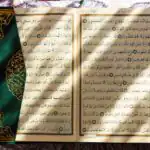
- A copy of the Holy Quran
Instructional Materials
The teacher will teach this lesson with the aid of:
- A copy of the Holy Quran (or a large chart with Suratul Qariah written on it)
- Chalkboard/Whiteboard
- Chalk/Markers
- Pictures depicting scenes of the Day of Judgment (optional)
Rationale for the Lesson
This lesson is important for pupils to understand the concept of the Day of Judgment and their accountability before Allah. It helps them to reflect on their actions, strive to do good deeds, and prepare for the afterlife, which is a fundamental aspect of Islamic faith and practice.
Prerequisite/Previous Knowledge
Pupils have basic knowledge of the Holy Quran and have learned some other short Surahs.
Lesson Content/Board Summary
Transliteration and Lessons from Suratul Qariah
Introduction to Suratul Qariah
Suratul Qariah is the 101st Surah of the Holy Quran. It is a Meccan Surah, meaning it was revealed in Makkah before the Hijrah. It has 11 verses. The word “Al-Qariah” means “The Striking Calamity” or “The Disaster,” referring to the Day of Judgment.
Quranic Reading
Pupils should refer to the Arabic text of Suratul Qariah in the Holy Quran (Chapter 101).
Transliteration of Suratul Qariah
- Al-Qari’ah
- Mal-Qari’ah
- Wa ma adraka mal-qari’ah
- Yawma yakunun-nasu kal-farashil-mabthuth
- Wa takunul-jibalu kal-‘ihnil-manfush
- Fa amma man thaqulat mawazinuh
- Fa huwa fi ‘ishatir radiyah
- Wa amma man khaffat mawazinuh
- Fa ummuhu hawiya
- Wa ma adraka ma hiyah
- Narum hamiyah
Translation of Suratul Qariah
- The Striking Calamity!
- What is the Striking Calamity?
- And what will make you understand what the Striking Calamity is?
- It is the Day when mankind will be like scattered moths,
- And the mountains will be like carded wool.
- Then as for he whose scales are heavy [with good deeds] –
- He will be in a pleasing life.
- But as for he whose scales are light –
- His refuge will be an abyss.
- And what will make you understand what that is?
- [It is] a fiercely burning Fire.
Memory Verses
“Yawma yakunun-nasu kal-farashil-mabthuth. Wa takunul-jibalu kal-‘ihnil-manfush.” (Suratul Qariah, 101:4-5)
Lessons from Suratul Qariah
The following are important lessons from Suratul Qariah:
- The Day of Judgment is a real and terrifying event.
- Mankind will be in a state of confusion and helplessness on that Day.
- Mountains, which seem so strong, will be like light, scattered wool.
- Everyone will be judged based on their deeds, weighed in a balance.
- Those whose good deeds outweigh their bad deeds will enter Paradise.
- Those whose bad deeds outweigh their good deeds will be cast into Hellfire.
- It is important to do good deeds and avoid bad deeds in this life to prepare for the afterlife.
- The Surah reminds us to be mindful of Allah and our accountability.
Teaching Methods/Instructional Techniques
Discussion, Lecture, Demonstration, Question and Answer, Visual Aids
Instructional Procedures
Transliteration and Lessons from Suratul Qariah
Step 1: Introduction
Time: 5 minutes
Teaching Skill: Set Induction
Teacher’s Activity: The teacher greets the pupils, reviews the previous lesson briefly, and asks them if they know what “The Day of Judgment” means.
Pupils’ Activity: Pupils respond to the teacher’s questions and share their understanding of the Day of Judgment.
Learning Point: Pupils recall prior knowledge and are prepared for the new topic.
Step 2: Presentation – Introduction to Suratul Qariah
Time: 7 minutes
Teaching Skill: Explanation/Introduction
Teacher’s Activity: The teacher introduces Suratul Qariah, stating its name, meaning (“The Striking Calamity”), where it was revealed (Meccan), and its main theme (Day of Judgment). The teacher writes the meaning of “Al-Qariah” on the board.
Pupils’ Activity: Pupils listen attentively and copy the information from the board.
Learning Point: Pupils learn the basic details and context of Suratul Qariah.
Step 3: Presentation – Recitation and Transliteration
Time: 8 minutes
Teaching Skill: Demonstration/Repetition
Teacher’s Activity: The teacher recites Suratul Qariah clearly, verse by verse, and then provides the transliteration. The teacher guides pupils to repeat after him/her for correct pronunciation.
Pupils’ Activity: Pupils listen to the recitation, repeat after the teacher, and try to follow the transliteration.
Learning Point: Pupils learn to recite Suratul Qariah and understand its transliteration.
Step 4: Presentation – Translation of Suratul Qariah
Time: 8 minutes
Teaching Skill: Explanation/Interpretation
Teacher’s Activity: The teacher explains the meaning of each verse of Suratul Qariah in simple English, ensuring pupils understand the message. The teacher writes the translation of key verses on the board.
Pupils’ Activity: Pupils listen, ask questions for clarity, and copy the translation from the board.
Learning Point: Pupils understand the full meaning of Suratul Qariah.
Step 5: Presentation – Discussion of Lessons
Time: 7 minutes
Teaching Skill: Discussion/Analysis
Teacher’s Activity: The teacher leads a discussion on the lessons derived from Suratul Qariah, focusing on accountability, the importance of good deeds, and the reality of the Day of Judgment. The teacher lists these lessons on the board.
Pupils’ Activity: Pupils participate in the discussion, sharing their thoughts and copying the lessons from the board.
Learning Point: Pupils identify and understand the moral and spiritual lessons from the Surah.
Step 6: Activity – Recitation and Reflection
Time: 5 minutes
Teaching Skill: Practice/Application
Teacher’s Activity: The teacher asks pupils to recite the Surah individually or in groups and encourages them to reflect on how the lessons apply to their daily lives.
Pupils’ Activity: Pupils practice reciting the Surah and briefly discuss the application of its lessons.
Learning Point: Pupils reinforce their learning through practice and personal reflection.
Step 7: Evaluation/Review
Time: 5 minutes
Teaching Skill: Questioning/Assessment
Teacher’s Activity: The teacher evaluates the learning by asking the following questions:
- What is the meaning of “Al-Qariah”?
- Recite the first three verses of Suratul Qariah.
- According to Suratul Qariah, how will mankind be on the Day of Judgment?
- What will determine if a person’s end is pleasing or an abyss?
Pupils’ Activity: Pupils answer orally and in writing.
Learning Point: Pupils demonstrate understanding of the lesson.
Step 8: Conclusion
Time: 3 minutes
Teaching Skill: Summarization/Assignment
Teacher’s Activity: The teacher summarizes the main points of the lesson, emphasizing the importance of doing good deeds. The teacher assigns pupils to memorize Suratul Qariah and write its translation in their notebooks.
Pupils’ Activity: Pupils listen to the summary and note down the homework.
Learning Point: Pupils consolidate their understanding and are given tasks for further practice.
Home Task: Write three lessons learned about Transliteration and Lessons from Suratul Qariah and one suitable way to apply the teaching responsibly.
Lesson Keywords
- Al-Qariah – The Striking Calamity, a name for the Day of Judgment.
- Day of Judgment – The day when all people will be judged by Allah for their deeds.
- Balance (Mizan) – The scale on which a person’s good and bad deeds will be weighed.
- Deeds – Actions, both good and bad, performed by individuals.
- Hellfire (Hawiya) – A fiercely burning fire, the punishment for those whose bad deeds outweigh their good deeds.
- Paradise – A pleasing life, the reward for those whose good deeds outweigh their bad deeds.
Differentiation
For pupils who are fast learners, the teacher can ask them to explain the deeper implications of the Surah’s message or research other verses related to the Day of Judgment. For slow learners, the teacher will provide extra support by pairing them with more proficient pupils for recitation practice and offering simplified explanations of the translation.
Note for teachers using this lesson plan
Ensure a calm and reflective atmosphere when discussing the Day of Judgment, as the topic can be sensitive. Encourage pupils to internalize the message and apply it to their daily behavior. Use visual aids like a large print Quran or a chart with the Surah to help pupils follow along. Emphasize correct pronunciation and memorization of the Surah.


Community Join the conversation Open discussion +