

Class: Primary Six
Term: First term
Subject: Pre-vocational studies
Curriculum Theme: Agricultural Science
Previous Lesson: Methods Of Farm Produce Preservation, Refrigerating and canning
Topic: Methods of farm Produce Preservation
content/learning Area: Bagging and Bottling
Time Allocation: 40 minutes
Performance Objectives
By the end of the lesson, pupils should be able to:
- Cognitive Domain:
1. Explain bagging and bottling as methods of preserving farm produce.
- Affective Domain:
1. Appreciate the importance of proper preservation of farm produce.
- Psychomotor Domain:
1. Demonstrate how to bag and bottle farm produce.
- Social Domain:
1. Work collaboratively in groups to identify local examples of farm produce that can be preserved by bagging and bottling.
Reference Materials
- 9 – Years Basic Education Curriculum
- Abuja Educational Resource Center Scheme of Work
- NAPPS National Unified Scheme of work
- Online Facts from PostHarvest Technologies – Top 9 ways to preserve your fruits & vegetables
- Relevant Textbooks
Instructional Materials
To deliver this lesson, the teacher will use the following materials:
- Pictures of farm produce stored in bags and bottles
- Samples of farm produce (e.g., grains and fruits)
- real bags and bottles for presentation
- Chart displaying different methods of preservation
Rationale for the Lesson
This lesson teaches practical preservation methods, reducing food waste and improving food security. These skills are valuable for home and community use,promoting resourcefulness and sustainability.
Prerequisite/Previous Knowledge
The teacher will begin by showing pictures of both spoiled and preserved farm produce, asking pupils to identify the differences and discuss why preservation is important. This will spark interest and lead into the lesson on bagging and bottling.
Lesson Content
Methods Of Farm Produce Preservation: Bagging And Bottling
Preserving farm produce like grains, fruits, and vegetables prevents spoilage and extends their lifespan. Bagging and bottling are two common methods.
- Bagging:
##### Storing Grains
Bagging involves placing produce like grains (rice,beans,maize) in sacks or bags. This protects them from moisture and pests, keeping them fresh for extended periods.
- Bottling:
##### Preserving Fruits and Vegetables
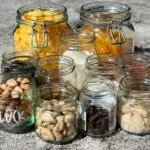
bottling is ideal for fruits and vegetables. Produce is placed in glass or plastic bottles,often after processing or cooking. The sealed bottle prevents air from entering,maintaining freshness.
Bagging and Bottling
Clean dry bags protect suitable grains or dried produce from dirt and handling loss; clean food-grade bottles hold suitable liquids or processed foods. The container must match the product and protect it from moisture, pests and breakage.
Label the product and date, seal correctly and store under recommended conditions. Packaging alone does not preserve a wet or contaminated product.
Teaching Methods
To deliver this lesson, the teacher will adopt the following methods: Discussion, Exhibition, Group Activity, and Note-Taking.
Instructional Procedures
To deliver this lesson, the teacher will adopt the following steps:
Step 1: Introduction
Time: 5 minutes
Teaching Skill: set Induction
Teacher’s Activity: Shows pictures of spoiled and preserved farm produce, asks pupils to identify and discuss.pupils’ Activity: Identify spoiled and preserved produce, participate in discussion.
Step 2: Clarification of Bagging
Time: 8 minutes
teaching Skill: Clarification and Demonstration
Teacher’s Activity: Explains and demonstrates bagging techniques for grains.
pupils’ Activity: Observe the demonstration and ask questions.
Step 3: Explanation of Bottling
Time: 8 minutes
Teaching skill: Explanation and Demonstration
Teacher’s Activity: Explains and demonstrates bottling techniques for fruits.
Pupils’ Activity: Observe the demonstration and ask questions.
Step 4: Group Activity
Time: 10 minutes
Teaching Skill: Monitoring and guiding
Teacher’s Activity: Divides class into groups, provides materials for practice.
Pupils’ Activity: Work in groups to bag and bottle samples of produce.
Step 5: Note-Taking
Time: 4 minutes
Teaching Skill: Dictation
Teacher’s Activity: Dictates key points for pupils to write down.
Pupils’ activity: Copy notes from the board.
Step 6: Evaluation/Review
Time: 3 minutes
Teaching Skill: Questioning
Teacher’s Activity: Asks questions to review key concepts.
Pupils’ Activity: Answer questions orally.
Objective-aligned checks:
- Explain bagging and bottling as methods of preserving farm produce.
- Demonstrate how to bag and bottle farm produce.
Step 7: Conclusion
Time: 2 minutes
Teaching Skill: Summarizing
Teacher’s Activity: Summarizes the lesson and emphasizes the importance of preservation.
Pupils’ Activity: Listen to the concluding remarks.
Lesson Keywords
- Bagging – Storing farm produce in sacks or bags to protect from moisture and pests.
- Bottling – Preserving fruits and vegetables in glass or plastic bottles to prevent air from entering.
- Preservation – Methods used to prevent spoilage and extend the lifespan of farm produce.
- Spoilage – The process by which food deteriorates and becomes unfit for consumption.
- Grains – Seeds of cereal crops such as rice, beans, and maize.
Lesson Evaluation
to evaluate the learning, the teacher asks pupils to:
- what is the importance of bagging as a method of preserving farm produce?
- Explain the process of bottling in farm produce preservation.
- Why do we need to preserve farm produce?
- Mention two examples of farm produce that can be preserved through bagging.
- Describe how bottling preserves food and prevents spoilage.
Assignment/Homework
- Research other methods of food preservation used in Nigeria.
- List three types of fruits that can be preserved by bottling.
- Explain the difference between bagging and bottling.
Differentiation
- For slower learners: The teacher will provide one-on-one assistance during the group activity.
- For advanced learners: More advanced pupils can research additional preservation methods and present their findings to the class.
- For visual/auditory/kinesthetic learners: Use visual aids, verbal explanations, and hands-on activities to cater to different learning styles.
Note for Teachers
Ensure to provide practical demonstrations and hands-on activities to enhance pupils’ understanding of bagging and bottling techniques. Encourage pupils to share their experiences wiht food preservation at home to make the lesson more relatable.
Community Join the conversation Open discussion +