

Class: primary Six
Term: First Term
Subject: Pre-vocational studies
Curriculum Theme: Agricultural Science
Previous Lesson: Methods Of Farm Produce Preservation, Smoking, Salting, Frying
Topic: Methods of farm produce preservation
Content/Learning Area: refrigerating & Canning
Time Allocation: 40 minutes
Performance Objectives
By the end of the lesson, pupils should be able to:
- Cognitive Domain:
– define and explain the processes of refrigerating and canning as methods of preserving farm produce.
- Affective Domain:
– Appreciate the importance of farm produce preservation methods in reducing waste.
- Psychomotor Domain:
– Demonstrate how to prepare fruits for canning.
- Social Domain:
– discuss in groups the benefits of preserving food using refrigeration and canning.
Reference Materials
- 9 – Years Basic Education Curriculum
- Abuja Educational Resource Centre Scheme of Work
- NAPPS National unified Scheme of Work
- Online Data from Britannica – Canning | Home Preservation, Safety & Benefits
- Relevant Textbooks
Instructional Materials
To deliver this lesson, the teacher will employ the help of the following materials:
- Diagrams showing canning and refrigeration
- A small refrigerator model
- Canning equipment (e.g., cans, lids, etc.)
- Fresh fruits and vegetables for presentation
Rationale for the Lesson
Understanding refrigeration and canning is crucial for reducing food waste, ensuring food safety, and promoting sustainable agricultural practices. This knowledge is applicable in daily life for effective food storage.
Prerequisite/Previous Knowledge
Pupils are familiar with basic food storage practices at home.
Lesson Content
Methods of Farm Produce Preservation: Refrigerating & Canning
Refrigeration
Refrigeration keeps food cool to slow bacterial growth, extending its freshness. Fruits, vegetables, and dairy products are often preserved this way.
Canning
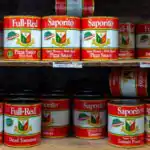
Canning involves sealing food in airtight containers and heating them to kill bacteria, preventing spoilage. This method preserves food for months or years.Fruits, vegetables, and sauces are commonly canned.
Refrigeration and Canning
Refrigeration slows microbial growth but does not kill every germ, so the cold chain and cleanliness matter. Canning places prepared food in a sealed container and applies a validated heat process to destroy dangerous organisms and prevent re-entry.
Home canning errors can be dangerous. Pupils should learn the principle, while trained adults follow tested procedures and reject bulging, leaking or badly rusted cans.
Refrigeration and Canning
Refrigeration slows the growth of many microorganisms but does not sterilise food. Produce should be clean, covered, labelled and stored at a suitable temperature without mixing raw food with ready-to-eat food.
Canning places prepared food in a sealed container and uses controlled heat to destroy harmful microorganisms. Home canning requires tested procedures and adult expertise. Swollen, leaking, badly rusted or foul-smelling cans must not be tasted.
Teaching Methods
To deliver this lesson, the teacher will adopt the following methods: Interactive,expository,Exhibition,collaborative.
Instructional Procedures
To deliver this lesson, the teacher will adopt the following steps:
Step 1: Introduction
Time: 5 mins
Teaching Skill: Set Induction
Teacher’s activity: Introduce the topic by asking pupils how their families preserve food at home.
Pupils’ Activity: Pupils answer and share examples.
Step 2: Explanation of Refrigeration
Time: 7 mins
Teaching Skill: Explanation
Teacher’s activity: Explain refrigeration as a cooling process that slows down spoilage.
Pupils’ Activity: Pupils listen and take notes.
Step 3: Explanation of Canning
Time: 7 mins
Teaching Skill: Demonstration
Teacher’s Activity: Demonstrate canning by sealing food in airtight containers.
Pupils’ Activity: Pupils observe and take notes.
Step 4: Group Discussion on Benefits
Time: 6 mins
Teaching Skill: Facilitation
Teacher’s Activity: Organize group discussions on the benefits of refrigeration and canning.
Pupils’ Activity: Pupils engage in group discussions.
Step 5: Demonstration of Fruit Canning
Time: 8 mins
Teaching Skill: Demonstration
Teacher’s activity: Show pupils how to prepare fruits for canning.
Pupils’ Activity: pupils observe, ask questions, and participate.
Step 6: Note-Taking
Time: 4 mins
Teaching Skill: Guided writing
Teacher’s Activity: Guide pupils to take structured notes.
Pupils’ Activity: pupils copy notes.
Step 7: Evaluation/Review
Time: 3 mins
Teaching Skill: Summarizing
teacher’s Activity: Summarize the lesson and ask questions to assess comprehension.Pupils’ Activity: Pupils respond to questions.
Step 8: Conclusion
Time: 3 mins
Teaching Skill: Summarizing
teacher’s Activity: Summarize the lesson and assign homework.
Pupils’ Activity: Pupils listen and note homework.
lesson Keywords
- Refrigeration – Cooling process to slow down food spoilage.
- Canning – Sealing food in airtight containers and heating to kill bacteria.
- Preservation – Methods to extend the shelf life of food.
- spoilage – The process by which food becomes unfit for consumption.
- Airtight – Impermeable to air or gas.
Lesson Evaluation
To evaluate the learning, the teacher asks pupils to:
- Define refrigeration as a method of farm produce preservation.
- List two advantages of using canning to preserve food.
- Describe the process of canning.
- Explain why it is indeed vital to preserve farm produce.
- Mention two foods that can be preserved by refrigeration.
assignment/Homework
- Research and write about another method of food preservation not discussed in class.
- List three types of food commonly preserved in your home and the methods used.
- Interview a family member about their experiences with food preservation and write a short summary.
Differentiation
- For slower learners: provide one-on-one assistance and simplified explanations.
- For advanced learners: Encourage research on additional preservation methods and their scientific principles.
- For visual/auditory/kinesthetic learners: use diagrams, videos, and hands-on activities to demonstrate the processes.
Note for Teachers
Ensure all materials for demonstration are prepared in advance. Encourage active participation by all pupils during discussions and demonstrations. Provide clear and concise explanations, using real-life examples to enhance understanding.
Community Join the conversation Open discussion +