

Class: Primary Six
Term: First Term
Subject: Pre-vocational Studies
Curriculum Theme: Agricultural Science
Previous Lesson:
Topic: Meaning Of Farm Produce Preservation
Content/Learning Area: Meaning Of Farm Produce Preservation
Time Allocation: 40 minutes
Performance Objectives
By the end of the lesson, pupils should be able too:
- Cognitive Domain:
1. Define the meaning of farm produce preservation.
2. Identify five farm produce and the suitable types of preservation for each.
- affective Domain:
1. Appreciate the importance of preserving farm produce to reduce waste and support sustainable agriculture.
- Psychomotor Domain:
1. Demonstrate a simple method of preserving farm produce through drying or refrigeration.
- Social Domain:
1. Share responsibilities in a group task to classify different preservation methods for selected farm produce.
Reference Materials
- 9 – Years Basic Education Curriculum
- Abuja Educational Resource Centre scheme of Work
- NAPPS National Unified Scheme of work
- Online Information from thrive.org.uk – Preserving and storing your produce
- Relevant Textbooks
Instructional Materials
To deliver this lesson,the teacher will use the following materials:
- Flashcards with farm produce names
- Pictures showing different methods of preservation
- Fresh fruits,vegetables,and grains for demonstration
- A poster showing the benefits of preservation techniques
Rationale for the Lesson
This lesson is crucial for teaching pupils about food sustainability and reducing waste. Understanding preservation methods helps ensure food availability and improves food security, impacting their future and the community.
Prerequisite/previous Knowledge
Pupils are expected to have basic knowledge of different types of farm produce and their uses.
Lesson Content
Meaning of Farm Produce Preservation
Farm produce preservation involves using methods to keep farm produce fresh and safe for later use. This ensures the produce lasts longer and remains in good condition.
Examples are:
- Tomatoes – can be preserved by drying or refrigeration.
- Maize – is best preserved through drying or storage in silos.
- Carrots – can be preserved using refrigeration.
- Cassava – can be processed into flour or dried to preserve it.
- Fish – is commonly preserved by smoking or drying.
- Beans – can be preserved through drying and proper storage in airtight containers.
- Yam – can be preserved by storing in a cool, dry place or processing into yam flour.
Meaning of Farm-produce Preservation
Farm-produce preservation uses suitable methods to slow spoilage, reduce waste and keep produce useful for longer. It acts on moisture, temperature, air, pests or microorganisms, depending on the food.
Preservation does not improve already spoiled food. Start with sound produce, clean tools and a method suited to the crop or animal product.
Teaching Methods
To deliver this lesson, the teacher will adopt the following methods: Direct instruction, demonstration, group work, discussion, and question and answer.
Instructional procedures
To deliver this lesson, the teacher will adopt the following steps:
Step 1: Introduction
Time: 5 mins
Teaching Skill: Set Induction
Teacher’s Activity: Introduces farm produce with flashcards, asking pupils what they know about food preservation.
Pupils’ Activity: Respond and name farm produce they know.
Step 2: Definition of Farm Produce Preservation
time: 5 mins
Teaching Skill: Clarification
Teacher’s Activity: Explains the meaning of preservation and it’s importance using a poster.
Pupils’ Activity: Listen and take notes.
step 3: Types of Farm Produce and Preservation Methods
Time: 10 mins
teaching Skill: Demonstration
Teacher’s Activity: Displays fruits, vegetables, and grains, showing suitable preservation methods (e.g., drying, refrigeration).
Pupils’ Activity: Observe and engage in group discussion.
Step 4: Benefits of Preserving Farm Produce
Time: 5 mins
Teaching Skill: Discussion
Teacher’s Activity: Leads a discussion on why it is indeed critically crucial to preserve farm produce (economic, health, sustainability).
Pupils’ Activity: Share their thoughts and learn from peers.
step 5: Group Activity
Time: 5 mins
Teaching Skill: Group Work
Teacher’s Activity: Organizes pupils into groups to classify farm produce and preservation techniques.Pupils’ Activity: Classify and share their group findings.
Step 6: Note-Taking
Time: 5 mins
Teaching Skill: Note-taking
Teacher’s activity: Instruct pupils to wriet the main points in their notes.Pupils’ activity: Write down the key points in their notebooks.
Step 7: Conclusion and Evaluation
Time: 5 mins
Teaching Skill: Q&A
Teacher’s Activity: Concludes by asking pupils questions to assess their understanding of the lesson.
Pupils’ Activity: Answer the evaluation questions orally.
Lesson Keywords
- Preservation – Keeping food fresh for later use.
- Farm Produce – Agricultural products grown on a farm.
- Refrigeration – Cooling food to keep it fresh.
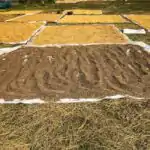
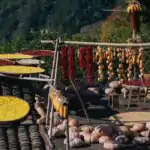
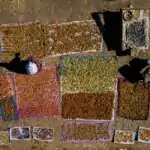
- Drying – Removing moisture from food to preserve it.
- Sustainability – Maintaining resources for future use.
Lesson Evaluation
To evaluate the learning, the teacher asks pupils to:
- What is the meaning of farm produce preservation?
- Name five different farm produce and explain the suitable preservation methods for each.
- Why is it important to preserve farm produce?
- describe how to preserve fish using the smoking method.
- List the benefits of preserving farm produce.
Assignment/homework
- List five additional farm produce items and describe how each can be preserved.
- Research and write a short paragraph on the importance of food preservation in Nigeria.
- interview a family member about their traditional methods of preserving food and write a brief report.
differentiation
- for slower learners: Provide one-on-one assistance and simplified explanations.
- For advanced learners: Research additional preservation methods and present their findings to the class.
- For visual/auditory/kinesthetic learners: Use visual aids, discussions, and hands-on activities to cater to different learning styles.
Note for Teachers
Ensure to use local examples of farm produce and preservation methods familiar to the pupils. Encourage active participation and group collaboration to enhance learning.
Community Join the conversation Open discussion +