

Class: Senior Secondary School 1 (SS1, SS 1, SSS1, SSS 1)
Term: First Term
Week: 10
Age: 15 years
Duration: 45 minutes
Subject: Technical Drawing
Curriculum Theme: Technical Drawing
Previous Lesson: Circle Construction: Inscribed, Circumscribed and Ascribed Circles.
Topic: QUADRILATERALS
Subject Matter: Definition of quadrilaterals, types of quadrilaterals including square, rectangle, kite and parallelogram, properties of sides, angles and diagonals for each type.
Specific Objectives
By the end of the lesson, pupils should be able to:
Cognitive Domain:
- Define a quadrilateral.
- List at least four types of quadrilaterals.
- State the properties of sides, angles, and diagonals for a square, rectangle, parallelogram, and kite.
Affective Domain:
- Appreciate the importance of understanding different quadrilaterals in technical drawing.
- Participate actively in discussions about quadrilaterals.
Psychomotor Domain:
- Identify different quadrilaterals from given drawings or models.
- Sketch basic quadrilaterals based on their properties.
Social Domain:
- Collaborate with peers to identify and discuss properties of quadrilaterals.
Reference Materials
The following resources were used in planning this lesson:
- 9 Years Basic Education Curriculum for Technical Drawing
- State Unified Scheme of Work for Technical Drawing (SSS 1)
- Technical Drawing for Senior Secondary Schools by A.B. Oluyemi.
- https://nigeriancurriculum.com/technical-drawing-sss1
Instructional Materials
The teacher will teach this lesson with the aid of:
- Models of various quadrilaterals (square, rectangle, parallelogram, kite).
- Charts showing different quadrilaterals and their properties.
- Posters with drawings of quadrilaterals.
- Drawings of quadrilaterals on a whiteboard or chalkboard.
Rationale for the Lesson
This lesson helps pupils to understand basic geometric shapes that are common in technical drawing and everyday objects. Knowing the properties of quadrilaterals enables pupils to accurately draw and interpret technical designs involving these shapes, which is important for various practical applications.
Prerequisite/Previous Knowledge
Pupils are assumed to have prior knowledge of basic geometric concepts such as lines, angles, and polygons.
Lesson Content/Board Summary
QUADRILATERALS
Definition of Quadrilaterals
A quadrilateral is a plane figure (a two-dimensional shape) that has four straight sides and four interior angles. The sum of the interior angles of any quadrilateral is 360 degrees.
Types of Quadrilaterals
Common types of quadrilaterals include:
- Square
- Rectangle
- Parallelogram
- Kite
- Rhombus
- Trapezium (or Trapezoid)
Properties of Specific Quadrilaterals
Square
A square is a quadrilateral with four equal sides and four right angles (90 degrees each).
The properties of a square are:
- All four sides are equal in length.
- All four interior angles are 90 degrees.
- Opposite sides are parallel.
- Diagonals are equal in length.
- Diagonals bisect each other at 90 degrees.
- Diagonals bisect the angles of the square.
Rectangle
A rectangle is a quadrilateral with four right angles (90 degrees each) and opposite sides that are equal in length.
The properties of a rectangle are:
- Opposite sides are equal in length.
- All four interior angles are 90 degrees.
- Opposite sides are parallel.
- Diagonals are equal in length.
- Diagonals bisect each other.
Parallelogram
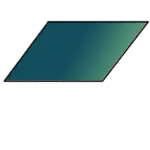
A parallelogram is a quadrilateral with two pairs of parallel sides.
The properties of a parallelogram are:
- Opposite sides are equal in length.
- Opposite sides are parallel.
- Opposite angles are equal.
- Consecutive angles are supplementary (add up to 180 degrees).
- Diagonals bisect each other.
Kite
A kite is a quadrilateral where two pairs of adjacent sides are equal in length.
The properties of a kite are:
- Two pairs of adjacent sides are equal in length.
- One pair of opposite angles are equal (the angles between the unequal sides).
- The diagonals are perpendicular to each other.
- One diagonal bisects the other diagonal.
- One diagonal bisects the angles at the vertices it connects.
Teaching Methods/Instructional Techniques
Discussion, Lecture, Demonstration, Question and Answer, Visual Aids
Instructional Procedures
Step 1: Introduction
Time: 5 minutes
Teaching Skill: Set Induction
Teacher’s Activity: The teacher greets the pupils and asks them to mention any four-sided shapes they know from everyday life or previous lessons. The teacher then introduces the topic “Quadrilaterals” as the general name for all four-sided shapes.
Pupils’ Activity: Pupils respond by mentioning shapes like tables, doors, books, and discuss their number of sides. They listen attentively to the introduction.
Learning Point: Pupils are mentally prepared for the lesson and recall prior knowledge of shapes.
Step 2: Definition of Quadrilaterals
Time: 7 minutes
Teaching Skill: Explanation/Definition
Teacher’s Activity: The teacher defines a quadrilateral as a closed plane figure with four straight sides and four interior angles. The teacher emphasizes that the sum of interior angles is 360 degrees and draws a general quadrilateral on the board.
Pupils’ Activity: Pupils listen, take notes, and ask questions for clarification. They observe the drawing on the board.
Learning Point: Pupils understand the fundamental definition of a quadrilateral.
Step 3: Types of Quadrilaterals
Time: 8 minutes
Teaching Skill: Listing/Classification
Teacher’s Activity: The teacher presents different types of quadrilaterals using charts, models, and drawings. The teacher mentions square, rectangle, parallelogram, and kite, and briefly explains what makes each one distinct.
Pupils’ Activity: Pupils observe the charts and models, identify the shapes, and listen to the teacher’s explanations. They list the types of quadrilaterals.
Learning Point: Pupils can identify and name various types of quadrilaterals.
Step 4: Properties of Square and Rectangle
Time: 8 minutes
Teaching Skill: Demonstration/Explanation
Teacher’s Activity: The teacher uses models and drawings of a square and a rectangle to demonstrate and explain their specific properties regarding sides, angles, and diagonals. The teacher draws attention to the equality of sides, angles, and how diagonals interact.
Pupils’ Activity: Pupils observe the demonstration, participate in identifying properties, and take notes. They may be asked to measure sides or angles on charts.
Learning Point: Pupils learn and can state the specific properties of squares and rectangles.
Step 5: Properties of Parallelogram and Kite
Time: 7 minutes
Teaching Skill: Explanation/Comparison
Teacher’s Activity: The teacher continues by demonstrating and explaining the properties of a parallelogram and a kite using relevant instructional materials. The teacher highlights similarities and differences between these shapes and others discussed.
Pupils’ Activity: Pupils listen, observe the demonstrations, and compare the properties of these shapes with previously discussed ones. They record the properties in their notebooks.
Learning Point: Pupils understand and can state the specific properties of parallelograms and kites.
Step 6: Class Activity/Practice
Time: 5 minutes
Teaching Skill: Application/Observation
Teacher’s Activity: The teacher presents various unlabeled drawings of quadrilaterals and asks pupils to identify each type and mention one key property. The teacher provides guidance and feedback.
Pupils’ Activity: Pupils identify the quadrilaterals and state their properties orally or by quickly sketching and labeling them.
Learning Point: Pupils apply their knowledge to identify and describe quadrilaterals.
Step 7: Evaluation/Review
Time: 5 minutes
Teaching Skill: Questioning/Assessment
Teacher’s Activity: The teacher evaluates the learning by asking the following questions:
- Define a quadrilateral.
- List any three types of quadrilaterals.
- State two properties of a square.
- Mention one difference between a rectangle and a parallelogram.
Pupils’ Activity: Pupils answer orally and in writing.
Learning Point: Pupils demonstrate understanding of the lesson.
Step 8: Conclusion
Time: 1 minute
Teaching Skill: Summarization
Teacher’s Activity: The teacher summarizes the key points of the lesson, reiterating the definition, types, and properties of quadrilaterals. The teacher assigns homework, asking pupils to draw and label a square, rectangle, parallelogram, and kite, indicating one property for each.
Pupils’ Activity: Pupils listen to the summary and copy down the homework.
Learning Point: Pupils consolidate their learning and are given tasks to reinforce understanding.
Lesson Keywords
- Quadrilateral – A four-sided plane figure with four interior angles.
- Square – A quadrilateral with four equal sides and four right angles.
- Rectangle – A quadrilateral with four right angles and opposite sides equal.
- Parallelogram – A quadrilateral with two pairs of parallel sides.
- Kite – A quadrilateral with two pairs of adjacent sides equal.
- Diagonal – A line segment connecting two non-adjacent vertices of a polygon.
Differentiation
For pupils who grasp concepts quickly, the teacher can challenge them to identify additional properties or draw more complex quadrilaterals like rhombuses and trapeziums. For pupils needing more support, the teacher will provide simplified charts, one-on-one guidance, and focus on identifying only two key properties for each shape.
Note for teachers using this lesson plan
Ensure that all instructional materials are prepared before the lesson begins. Encourage active pupil participation through questions and hands-on activities with models where possible. Emphasize drawing neat and accurate diagrams as it is fundamental to technical drawing.


Community Join the conversation Open discussion +