

Class: Senior Secondary School 1 (SS1, SS 1, SSS1, SSS 1)
Term: 2nd Term
Week: 6
Age: 15 years
Duration: 45 minutes
Subject: Commerce
Curriculum Theme: Commerce
Previous Lesson: Production, Types, Importance and Factors.
Topic: Documents Used in Foreign Trade
Subject Matter: Mail transfer, documentary credit, letter of hypothecation, foreign bill of exchange, travelers cheque, telegraphic transfer, functions of customs and excise, functions of Nigerian Export Promotion Council
Specific Objectives
By the end of the lesson, pupils should be able to:
Cognitive Domain:
- Define mail transfer, telegraphic transfer, and travelers cheque.
- Explain documentary credit and identify its main purpose in foreign trade.
- Define letter of hypothecation and state its use in trade finance.
- Define foreign bill of exchange and state how it is used for payment.
- List key functions of customs and excise in foreign trade.
- List key functions of the Nigerian Export Promotion Council.
Affective Domain:
- Show appreciation for proper documentation and honesty in international transactions.
- Demonstrate willingness to follow rules and regulations guiding import and export.
Psychomotor Domain:
- Examine sample documents and identify visible features such as dates, names, amounts, and signatures where applicable.
- Match each foreign trade document to its correct purpose using a chart.
Social Domain:
- Work in groups to classify documents into payment documents and supporting/trade finance documents.
- Participate in group presentation on the roles of customs and excise and the Nigerian Export Promotion Council.
Reference Materials
The following resources were used in planning this lesson:
- 9 Years Basic Education Curriculum
- State Unified Scheme of Work
- Essential Commerce for Senior Secondary Schools (relevant chapter on foreign trade documents and agencies)
- World Trade Organization: Overview of International Trade
- International Chamber of Commerce: Banking and Trade Finance
- Nigerian Export Promotion Council: Official Website
Instructional Materials
The teacher will teach this lesson with the aid of:
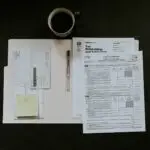
- Sample documents or printed templates (bill of exchange, letter of credit outline, travelers cheque sample, transfer form sample)
- Charts showing documents and their purposes
- Flash cards of key terms (mail transfer, telegraphic transfer, documentary credit, hypothecation)
- Whiteboard/marker board and markers
Rationale for the Lesson
This lesson helps pupils understand how payment and supporting documents make international buying and selling safe and organized. It also helps pupils know the work of trade agencies that control imports and support exports.
Prerequisite/Previous Knowledge
Pupils have basic knowledge of foreign trade, export, import, and common trade terms used in international transactions.
Lesson Content/Board Summary
Documents Used in Foreign Trade
Mail Transfer
Mail transfer is a method of payment in foreign trade where a bank sends payment instructions to another bank by mail to pay the seller or beneficiary.
The following are features of mail transfer:
- Uses postal mail to send instructions.
- Usually slower than telegraphic transfer.
- Payment is made through banks.
Telegraphic Transfer
Telegraphic transfer is a method of payment where a bank sends payment instructions electronically (through secure messaging) to another bank to pay the beneficiary.
The following are features of telegraphic transfer:
- Faster method of payment than mail transfer.
- Payment is made through banks.
- Often attracts service charges.
Travelers Cheque
Travelers cheque is a prepaid cheque issued by a bank or financial institution that can be used for payment or cashed while traveling, including in foreign transactions.
The following are advantages of travelers cheque:
- Safer than carrying large cash.
- Can be replaced if lost when properly reported.
- Accepted in many countries through banks and exchange outlets.
Documentary Credit
Documentary credit is a bank arrangement where a bank, on the request of an importer, promises to pay an exporter when the exporter presents the required shipping and trade documents that meet the stated conditions.
The following are key points of documentary credit:
- Payment depends on correct documents, not on physical inspection of goods by the bank.
- It reduces payment risk for the exporter.
- It assures the importer that documents proving shipment will be provided.
Letter of Hypothecation
Letter of hypothecation is a document by which goods are pledged as security for a loan while the borrower keeps possession of the goods. The lender has a right over the goods if the borrower fails to pay.
The following are uses of letter of hypothecation:
- Used to obtain short-term finance for trade.
- Used when goods are used as security for credit.
- Helps banks reduce lending risk.
Foreign Bill of Exchange
A foreign bill of exchange is a written order drawn by a seller (exporter) on a buyer (importer) in another country, instructing the buyer to pay a stated amount either immediately or at a future date.
The following are key features of a foreign bill of exchange:
- It states the amount, payer, payee, and due date.
- It can be a sight bill (payable immediately) or a time bill (payable later).
- It may be used through banks for collection and settlement.
Functions of Customs and Excise
The following are functions of customs and excise in foreign trade:
- Collects customs duties and other charges on imported and exported goods.
- Examines and clears goods at ports, airports, and border stations.
- Prevents smuggling and illegal importation or exportation.
- Enforces import and export regulations, prohibitions, and restrictions.
- Ensures correct documentation and valuation of goods for duty assessment.
- Protects the economy by controlling entry of harmful or prohibited goods.
Functions of Nigerian Export Promotion Council
The following are functions of the Nigerian Export Promotion Council:
- Promotes non-oil exports and encourages export-oriented production.
- Provides export information, guidance, and support services to exporters.
- Organizes training, seminars, and capacity building for exporters.
- Assists in market development and access to international buyers.
- Encourages quality standards and proper packaging for export goods.
- Coordinates export promotion activities and supports export expansion policies.
Teaching Methods/Instructional Techniques
Discussion, Lecture, Demonstration, Question and Answer, Visual Aids
Instructional Procedures
Step 1: Introduction
Time: 5 minutes
Teaching Skill: Set Induction
Teacher’s Activity: The teacher asks pupils to mention what makes international buying and selling safe and how sellers receive payment from buyers in another country. The teacher introduces foreign trade documents as tools for payment, proof, and control.
Pupils’ Activity: Pupils respond and mention examples such as invoices, bank payment, and shipping documents.
Learning Point: Foreign trade requires documents to support payment and movement of goods.
Step 2: Mail Transfer and Telegraphic Transfer
Time: 7 minutes
Teaching Skill: Explanation
Teacher’s Activity: The teacher explains mail transfer and telegraphic transfer and highlights the difference in speed and method. The teacher displays a simple payment instruction template on a chart.
Pupils’ Activity: Pupils copy definitions and state one difference between mail transfer and telegraphic transfer.
Learning Point: Bank transfers can be done by mail or electronically for international payments.
Step 3: Travelers Cheque
Time: 5 minutes
Teaching Skill: Demonstration
Teacher’s Activity: The teacher shows a sample or picture of a travelers cheque and explains how it is used and why it is safer than cash.
Pupils’ Activity: Pupils identify the document and list advantages of travelers cheque from the lesson notes.
Learning Point: Travelers cheque is a safer payment instrument for travel and foreign transactions.
Step 4: Documentary Credit
Time: 7 minutes
Teaching Skill: Explanation and Illustration
Teacher’s Activity: The teacher explains documentary credit and uses a simple flow diagram to show importer, importer’s bank, exporter, and exporter’s bank, emphasizing that payment depends on correct documents.
Pupils’ Activity: Pupils draw the simple diagram and state the main purpose of documentary credit.
Learning Point: Documentary credit reduces payment risk by linking payment to documents.
Step 5: Letter of Hypothecation and Foreign Bill of Exchange
Time: 8 minutes
Teaching Skill: Explanation
Teacher’s Activity: The teacher explains letter of hypothecation and foreign bill of exchange, highlighting security for loans and payment instruction to an importer. The teacher uses short examples to show sight and time bills.
Pupils’ Activity: Pupils copy notes and match each document to its purpose using a class chart.
Learning Point: Some foreign trade documents support financing and payment agreements.
Step 6: Functions of Customs and Excise and Nigerian Export Promotion Council
Time: 8 minutes
Teaching Skill: Discussion
Teacher’s Activity: The teacher leads discussion on the role of customs and excise in controlling imports/exports and the role of the Nigerian Export Promotion Council in promoting exports. Key points are listed on the board.
Pupils’ Activity: Pupils list functions of both bodies and give simple examples of how each affects trade.
Learning Point: Trade agencies support control, revenue collection, and export promotion.
Step 7: Evaluation/Review
Time: 5 minutes
Teaching Skill: Questioning/Assessment
Teacher’s Activity: The teacher evaluates the learning by asking the following questions:
- Define mail transfer and telegraphic transfer.
- Explain documentary credit and state its main purpose.
- Define foreign bill of exchange and state two types of bills.
- List two functions of customs and excise and two functions of the Nigerian Export Promotion Council.
Pupils’ Activity: Pupils answer orally and in writing.
Learning Point: Pupils demonstrate understanding of the lesson.
Step 8: Conclusion
Time: 5 minutes
Teaching Skill: Summarization
Teacher’s Activity: The teacher summarizes the key foreign trade documents and their uses and revises the functions of customs and excise and the Nigerian Export Promotion Council. The teacher gives classwork to match documents to purposes and to list functions of the two agencies.
Pupils’ Activity: Pupils copy the board summary and complete the classwork.
Learning Point: Foreign trade uses payment and finance documents, and trade agencies support control and export promotion.
Lesson Keywords
- Mail transfer – Bank payment instruction sent by mail to pay a beneficiary.
- Telegraphic transfer – Bank payment instruction sent electronically for quick payment.
- Travelers cheque – Prepaid cheque used for payment or cashing while traveling.
- Documentary credit – Bank promise to pay an exporter when required documents are presented correctly.
- Letter of hypothecation – Document pledging goods as security for a loan while the borrower keeps possession.
- Foreign bill of exchange – Written order for an importer in another country to pay a stated amount.
- Customs and excise – Government body that controls imports/exports and collects duties.
- Nigerian Export Promotion Council – Body that promotes and supports non-oil exports in Nigeria.
Differentiation
Pupils who need support will use a guided matching table that lists each document and a set of purpose options, while faster learners will create a short scenario showing an importer using documentary credit and identify where customs and excise and export promotion support may apply.
Note for teachers using this lesson plan
Use clear samples or templates and keep explanations short and exam-focused. Emphasize correct matching of each document to its purpose and ensure pupils can list agency functions as separate points.

Community Join the conversation Open discussion +