

Class: Junior Secondary School 2 (JSS 2 / JS2)
Term: 3rd Term
Week: 9
Age: 13 years
Duration: 45 minutes
Subject: Basic Science and Technology
Curriculum Theme: Basic Technology
Previous Lesson: Setting Out: Definition, Tools Used During Setting Out.
Topic: Building Services
Subject Matter: Taps: Water supply
Specific Objectives
By the end of the lesson, pupils should be able to:
Cognitive Domain:
- Define what a tap is.
- Explain the function of taps in water supply.
- Identify different types of taps.
- State the importance of clean water supply.
Affective Domain:
- Appreciate the need for proper maintenance of taps.
- Value the importance of conserving water.
Psychomotor Domain:
- Identify the major parts of a tap.
- Demonstrate how to properly turn a tap on and off.
Social Domain:
- Discuss ways to conserve water in their homes and communities.
- Explain the proper use of public water taps.
Reference Materials
The following resources were used in planning this lesson:
- 9 Years Basic Education Curriculum
- State Unified Scheme of Work
- Basic Science and Technology for Junior Secondary Schools Book 2
- https://en.wikipedia.org/wiki/Tap
- https://www.britannica.com/technology/tap-plumbing
Instructional Materials
The teacher will teach this lesson with the aid of:
- Actual examples of different types of taps (e.g., kitchen tap, garden tap).
- Diagrams or charts showing a cross-section of a tap and a simple water supply system.
- Pictures of various tap designs and components.
Rationale for the Lesson
This lesson helps pupils understand the essential role of taps in providing clean water for various uses in buildings. It enables them to identify different types of taps and appreciate the importance of water conservation for sustainable living.
Prerequisite/Previous Knowledge
Pupils have seen and used taps in their homes and schools and have a basic understanding of water usage.
Lesson Content/Board Summary
BUILDING SERVICES: TAPS AND WATER SUPPLY
What are Taps?
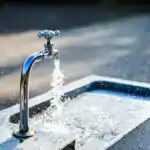
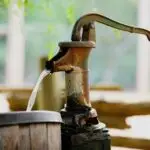
A tap is a device used to control the flow of a liquid or gas from a pipe or container. In building services, taps are commonly used to control the flow of water.
Function of Taps
The main functions of taps include:
- To regulate the flow of water from pipes.
- To start and stop the supply of water when needed.
- To mix hot and cold water to achieve a desired temperature.
Types of Taps
Taps come in various types and designs, including:
- Pillar Taps: These are single taps that provide either hot or cold water, often seen on washbasins.
- Mixer Taps: These taps combine hot and cold water from separate pipes into a single spout, allowing for temperature control.
- Ball Taps: These taps use a rotating ball with a hole to control water flow, common in kitchens.
- Disc Taps: These taps use ceramic discs to control water flow and are known for their durability.
- Compression Taps: These are traditional taps that use a rubber washer to stop the flow of water.
- Sensor Taps: These taps use sensors to detect hands and automatically turn on and off, promoting hygiene and water saving.
Components of a Tap (Compression Tap Example)
A typical compression tap has several key parts:
- Handle: Used to turn the tap on or off.
- Spindle/Stem: Connects the handle to the washer mechanism.
- Valve Seat: The opening through which water flows.
- Washer: A rubber disc that presses against the valve seat to stop water flow.
- Gland Nut/Packing: Prevents water from leaking around the spindle.
- Spout: The part where water comes out.
Importance of Clean Water Supply
Clean water is essential for:
- Drinking and cooking, to prevent waterborne diseases.
- Personal hygiene (bathing, washing hands).
- Cleaning (laundry, dishes, household surfaces).
- Sanitation (flushing toilets).
- Agriculture and industrial uses.
Water Conservation Tips
Conserving water is important to ensure its availability for everyone. Ways to conserve water include:
- Turning off taps tightly after use to prevent leaks.
- Fixing leaky taps promptly.
- Using a bucket and sponge for washing cars instead of a hosepipe.
- Taking shorter showers instead of baths.
- Collecting rainwater for gardening.
- Reusing water where possible (e.g., water from washing vegetables for plants).
Teaching Methods/Instructional Techniques
Discussion, Lecture, Demonstration, Question and Answer, Visual Aids
Instructional Procedures
Step 1: Introduction
Time: 5 minutes
Teaching Skill: Set Induction
Teacher’s Activity: The teacher greets the pupils and asks them what devices they use to get water from pipes in their homes and schools.
Pupils’ Activity: Pupils respond by mentioning “taps” or “faucets.”
Learning Point: Pupils recall prior knowledge and are introduced to the lesson topic.
Step 2: Explanation of Taps and Their Function
Time: 5 minutes
Teaching Skill: Explanation/Definition
Teacher’s Activity: The teacher defines what a tap is and explains its primary function in controlling water flow in buildings, using simple language.
Pupils’ Activity: Pupils listen attentively and take notes on the definition and function of taps.
Learning Point: Pupils understand the basic concept and purpose of a tap.
Step 3: Identification of Types of Taps
Time: 10 minutes
Teaching Skill: Demonstration/Classification
Teacher’s Activity: The teacher displays various types of taps (actual or pictures) and explains the differences and uses of each type, such as pillar taps, mixer taps, and garden taps.
Pupils’ Activity: Pupils observe the taps, ask questions, and identify the different types discussed by the teacher.
Learning Point: Pupils can distinguish between different types of taps and their common applications.
Step 4: Components of a Tap
Time: 10 minutes
Teaching Skill: Illustration/Analysis
Teacher’s Activity: The teacher uses a diagram or a disassembled tap to show and explain the main components of a tap (e.g., handle, spindle, washer, spout) and their roles.
Pupils’ Activity: Pupils identify the parts of the tap as shown by the teacher and understand how they work together.
Learning Point: Pupils learn the internal structure and working mechanism of a tap.
Step 5: Importance of Clean Water Supply and Conservation
Time: 5 minutes
Teaching Skill: Discussion/Awareness
Teacher’s Activity: The teacher leads a discussion on why clean water is important for health and daily life, and then introduces simple ways to conserve water.
Pupils’ Activity: Pupils contribute ideas on water conservation and discuss the importance of clean water.
Learning Point: Pupils understand the value of clean water and the need for conservation.
Step 6: Practical Application/Demonstration
Time: 5 minutes
Teaching Skill: Practical Application
Teacher’s Activity: The teacher demonstrates how to properly turn a tap on and off and asks a few pupils to practice, emphasizing gentle handling.
Pupils’ Activity: Pupils observe the demonstration and some volunteer to practice turning taps on and off correctly.
Learning Point: Pupils gain practical experience in operating taps correctly and safely.
Step 7: Evaluation/Review
Time: 5 minutes
Teaching Skill: Questioning/Assessment
Teacher’s Activity: The teacher evaluates the learning by asking the following questions:
- What is a tap?
- State two functions of taps.
- Mention three types of taps.
- List two components of a tap.
- Why is it important to conserve water?
Pupils’ Activity: Pupils answer orally and in writing.
Learning Point: Pupils demonstrate understanding of the lesson.
Step 8: Conclusion
Time: 5 minutes
Teaching Skill: Summarization
Teacher’s Activity: The teacher summarizes the key points of the lesson, emphasizing the importance of taps in daily life and the need for water conservation. The teacher then gives pupils an assignment to draw and label a simple tap.
Pupils’ Activity: Pupils listen to the summary and copy down the assignment.
Learning Point: The lesson is reinforced, and pupils are given a task to consolidate their learning.
Lesson Keywords
- Tap – A device for controlling the flow of liquid or gas from a pipe.
- Water supply – The provision of water to homes and other buildings.
- Plumbing – The system of pipes, tanks, fittings, and other apparatus required for the water supply, heating, and sanitation in a building.
- Valve – A device for controlling the passage of fluid or air through a pipe or duct.
- Conservation – The careful preservation and protection of something, especially planned management of a natural resource.
Differentiation
For pupils who are struggling, the teacher will provide simplified diagrams and offer one-on-one guidance during practical activities. Advanced pupils will be encouraged to research different tap materials and their advantages or disadvantages, or investigate how a water purification system works before water reaches the tap.
Note for teachers using this lesson plan
Teachers should ensure that actual taps or clear, large diagrams are available for pupils to observe and interact with. Emphasize the practical aspects of water conservation that pupils can apply in their daily lives. Encourage questions and discussions to foster a deeper understanding of building services.
Community Join the conversation Open discussion +