

Class: Senior Secondary School 2 (SS2 / SSS2)
Term: Third Term
Week: 9
Age: 16 years
Duration: 45 minutes
Subject: Auto Mechanic Work
Curriculum Theme: Mechanical Systems
Previous Lesson: Wheels and Tyre Service—Vulcanized Tubes and Tubeless Tyres: Tyre Wear Causes and Remedies.
Topic: WHEEL AND TYRE SERVICE—WHEEL CONSTRUCTION
Subject Matter: Meaning of WHEEL AND TYRE SERVICE—WHEEL CONSTRUCTION (definition of wheel construction topic), wheel construction (wheel parts, wheel rims, build structure)
Specific Objectives
By the end of the lesson, pupils should be able to:
Cognitive Domain:
- Define wheel construction.
- Identify and name the major parts of a wheel.
- Differentiate between various types of wheel rims and build structures.
Affective Domain:
- Appreciate the importance of correct wheel construction for vehicle safety.
- Show interest in learning about different vehicle components.
- Value the knowledge gained for future practical applications.
Psychomotor Domain:
- Point to and identify different parts of a wheel on a live vehicle or model.
- Sketch a basic diagram of a wheel showing its main components.
- Demonstrate how a wheel is mounted to a vehicle hub.
Social Domain:
- Collaborate with peers to discuss and identify wheel components.
- Share ideas and observations about wheel construction.
- Participate actively in group discussions regarding vehicle safety.
Reference Materials
The following resources were used in planning this lesson:
- Senior Secondary Schools Education Curriculum
- State Unified Scheme of Work
- Auto Mechanic Work for Senior Secondary Schools, Book 2
Instructional Materials
The teacher will teach this lesson with the aid of:
- Actual wheels and wheel rims (of different types if possible)
- A live vehicle (if available, for demonstration)
- Relevant workshop equipment
- Charts or diagrams illustrating wheel construction
Rationale for the Lesson
This lesson helps pupils understand the fundamental structure of vehicle wheels, which is essential for vehicle maintenance, repair, and safety. Understanding wheel construction enables pupils to identify issues and appreciate the design considerations that contribute to a vehicle’s performance and stability.
Prerequisite/Previous Knowledge
Pupils should have basic knowledge of vehicle components and their general functions, as well as an understanding of the importance of vehicle safety.
Lesson Content/Board Summary
WHEEL AND TYRE SERVICE—WHEEL CONSTRUCTION
Meaning of Wheel Construction
Wheel construction refers to the design, materials, and assembly of a vehicle’s wheel, which connects the tyre to the vehicle’s axle. It includes all components that form the wheel, such as the rim, disc or spokes, and the hub mounting area.
Wheel Parts
The main parts of a wheel include:
- Rim: The outer circular part of the wheel onto which the tyre is mounted. It includes the bead seat, flange, and well.
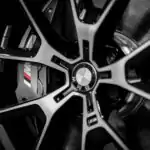
- Spokes or Disc: The central part that connects the rim to the hub. It can be made of spokes (wire wheels) or a solid disc (most modern wheels).
- Hub Area: The central hole of the wheel that fits over the vehicle’s hub, allowing the wheel to be bolted on.
- Mounting Points: The holes through which lug nuts or bolts pass to secure the wheel to the vehicle’s hub.
- Valve Stem Hole: A small opening in the rim where the tyre valve stem is installed for inflation.
- Bead Seat: The part of the rim where the tyre beads rest, forming an airtight seal.
Wheel Rims
Wheel rims are critical for holding the tyre. They can be constructed from various materials and designs:
- Steel Rims: These are typically heavier, more durable, and less expensive. They are often used on commercial vehicles and entry-level passenger cars.
- Alloy Rims (Aluminum Alloy): Lighter than steel, offering better heat dissipation, improved aesthetics, and often better handling characteristics. They are common on most modern passenger cars.
Wheel Build Structure
Wheels can be constructed in different ways based on their design and manufacturing process:
- One-Piece Wheels: Most common type, where the rim and spokes/disc are cast or forged as a single unit. They are generally strong and cost-effective.
- Two-Piece Wheels: Consist of two main parts, typically a centre disc and a rim barrel, which are bolted or welded together. This allows for more design flexibility.
- Three-Piece Wheels: Composed of three separate parts: an inner barrel, an outer barrel, and a centre disc. These parts are bolted together, allowing for customisation and easy repair of individual components.
Teaching Methods/Instructional Techniques
Discussion, Lecture, Demonstration, Question and Answer, Visual Aids
Instructional Procedures
Step 1: Introduction
Time: 5 minutes
Teaching Skill: Set Induction
Teacher’s Activity: The teacher greets the pupils and asks them to identify the parts of a vehicle that help it move. The teacher then focuses on the wheel and tyre, asking what they know about their structure.
Pupils’ Activity: Pupils respond by mentioning various vehicle parts and share their initial ideas about wheels and tyres.
Learning Point: Pupils are introduced to the topic of wheel and tyre service, specifically wheel construction.
Step 2: Explanation of Wheel Construction
Time: 10 minutes
Teaching Skill: Explanation/Lecture
Teacher’s Activity: The teacher defines what wheel construction means, explaining that it involves the design and assembly of the various components that make up a wheel. The teacher uses diagrams or an actual wheel to illustrate.
Pupils’ Activity: Pupils listen attentively, observe the diagrams/wheel, and take notes on the definition of wheel construction.
Learning Point: Pupils understand the fundamental concept of wheel construction.
Step 3: Identification of Wheel Parts
Time: 10 minutes
Teaching Skill: Demonstration/Identification
Teacher’s Activity: The teacher uses a real wheel, wheel rim, or a detailed chart to point out and explain each major part of the wheel, such as the rim, disc/spokes, hub area, and mounting points. The teacher ensures pupils understand the function of each part.
Pupils’ Activity: Pupils observe the demonstration, ask questions, and identify the parts as the teacher names them. They also sketch or label parts in their notes.
Learning Point: Pupils can identify and name the different components of a wheel.
Step 4: Discussion on Wheel Rims
Time: 5 minutes
Teaching Skill: Discussion/Questioning
Teacher’s Activity: The teacher leads a discussion on different types of wheel rims (e.g., steel and alloy), explaining their characteristics, advantages, and disadvantages. The teacher encourages pupils to share their observations from vehicles they know.
Pupils’ Activity: Pupils participate in the discussion, sharing their thoughts and asking questions about wheel rim materials and their uses.
Learning Point: Pupils learn about the types of materials used for wheel rims and their properties.
Step 5: Explanation of Wheel Build Structure
Time: 5 minutes
Teaching Skill: Explanation/Lecture
Teacher’s Activity: The teacher explains the different build structures of wheels (one-piece, two-piece, three-piece), detailing how each type is assembled and their respective applications. Visual aids are used to clarify.
Pupils’ Activity: Pupils listen and take notes on the various wheel build structures, asking for clarification where needed.
Learning Point: Pupils understand the different ways wheels are constructed and assembled.
Step 6: Practical Demonstration/Observation
Time: 5 minutes
Teaching Skill: Practical Demonstration
Teacher’s Activity: If a live vehicle is available, the teacher demonstrates how a wheel is mounted to the vehicle hub, pointing out the lug nuts and the secure fitting. If not, the teacher uses a wheel and explains the process.
Pupils’ Activity: Pupils observe the demonstration carefully and ask questions about the mounting process and safety.
Learning Point: Pupils gain practical insight into how wheels are attached to a vehicle.
Step 7: Evaluation/Review
Time: 5 minutes
Teaching Skill: Questioning/Assessment
Teacher’s Activity: The teacher evaluates the learning by asking the following questions:
- Define wheel construction in your own words.
- Mention any four major parts of a wheel.
- Differentiate between steel rims and alloy rims.
- List three common wheel build structures.
Pupils’ Activity: Pupils answer orally and in writing.
Learning Point: Pupils demonstrate understanding of the lesson.
Step 8: Conclusion
Time: 5 minutes
Teaching Skill: Summarization
Teacher’s Activity: The teacher summarizes the key learning points about wheel construction, emphasizing its importance for vehicle performance and safety. The teacher assigns homework, asking pupils to draw and label a simple diagram of a wheel.
Pupils’ Activity: Pupils listen to the summary, ask any final questions, and note down the homework assignment.
Learning Point: Pupils consolidate their understanding and are given an activity to reinforce learning.
Lesson Keywords
- Wheel – A circular component that rotates on an axle, enabling a vehicle to move.
- Tyre – A rubber covering fitted around the rim of a wheel.
- Rim – The outer edge of a wheel, holding the tyre.
- Hub – The central part of a wheel or propeller that attaches to the axle.
- Spokes – Rods connecting the hub to the rim of a wheel.
- Disc – A solid central plate connecting the hub to the rim in many modern wheels.
- Bead Seat – The part of the wheel rim where the tyre bead rests and seals.
- Valve Stem – A small tube through which air is put into a tyre.
Differentiation
For pupils who grasp concepts quickly, the teacher can provide additional challenges, such as researching different wheel finishes or specialized wheel designs. For pupils requiring more support, the teacher can provide simplified diagrams, extra one-on-one explanations, or peer tutoring opportunities.
Note for teachers using this lesson plan
Teachers should ensure that actual wheels or clear visual aids are available for this lesson to facilitate practical understanding. Emphasize safety aspects related to wheel construction and maintenance. Encourage pupils to relate the lesson to real-world vehicle examples.



Community Join the conversation Open discussion +