

Class: Senior Secondary School 2 (SS2 / SSS2)
Term: First Term
Week: 4
Age: 16 years
Duration: 45 minutes
Subject: Auto Mechanic Work
Curriculum Theme: Internal Combustion Engines
Previous Lesson: Petrol Engine – Advantages of Four Stroke and Two Stroke: Differences.
Topic: DIESEL ENGINE—TWO STROKE CYCLE AND FOUR STROKE CYCLE.
Subject Matter: Meaning of DIESEL ENGINE—TWO STROKE CYCLE AND FOUR STROKE CYCLE (definition of compression ignition engine cycles), principles of operation of two stroke cycle engines (sequence of operation, compression ignition), principles of operation of four stroke cycle engines (sequence of operation, compression ignition), difference between the two (layout, advantages).
Specific Objectives
By the end of the lesson, pupils should be able to:
Cognitive Domain:
- Define a diesel engine cycle.
- Explain the principles of operation for a two-stroke cycle diesel engine.
- Explain the principles of operation for a four-stroke cycle diesel engine.
- State the key differences between two-stroke and four-stroke diesel engines.
Affective Domain:
- Appreciate the importance of understanding different engine cycles in auto mechanics.
- Show interest in the working mechanisms of internal combustion engines.
Psychomotor Domain:
- Observe and describe the operational sequence of two-stroke and four-stroke cycles using charts or a live engine.
- Distinguish between the layouts and operational advantages of the two engine types.
Social Domain:
- Collaborate with peers in discussing the operational principles of diesel engines.
Reference Materials
The following resources were used in planning this lesson:
- Senior Secondary Schools Education Curriculum
- State Unified Scheme of Work
- Auto Mechanic Work for Senior Secondary Schools by various authors
Instructional Materials
The teacher will teach this lesson with the aid of:
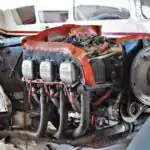
- Live engine of a compression ignition engine (CIE)
- Two-stroke and four-stroke cycle charts
Rationale for the Lesson
This lesson helps pupils understand the fundamental working principles of diesel engines, which are widely used in vehicles and heavy machinery. Understanding these cycles enables pupils to diagnose engine faults and appreciate the different applications of each engine type in real-world scenarios.
Prerequisite/Previous Knowledge
Pupils have basic knowledge of internal combustion engines and engine components.
Lesson Content/Board Summary
DIESEL ENGINE: TWO-STROKE AND FOUR-STROKE CYCLES
Meaning of Diesel Engine Cycles
A diesel engine, also known as a compression-ignition engine (CIE), operates by compressing air to a very high temperature, which then ignites injected diesel fuel. The engine cycle refers to the sequence of events that occur repeatedly to convert fuel energy into mechanical power.
Principles of Operation of Two-Stroke Cycle Diesel Engine
A two-stroke diesel engine completes a full power cycle in two strokes of the piston (one revolution of the crankshaft). It uses ports instead of valves for intake and exhaust.
The two strokes are:
- Stroke 1: Upward Stroke (Compression and Scavenging)
- The piston moves upwards, compressing the air above it.
- Near the bottom of the stroke, fresh air (scavenging air) enters the cylinder through intake ports, pushing out exhaust gases through exhaust ports.
- Fuel is injected towards the end of the compression stroke and ignites due to the high temperature of the compressed air.
- Stroke 2: Downward Stroke (Power and Exhaust)
- The burning fuel-air mixture expands rapidly, pushing the piston downwards (power stroke).
- As the piston moves down, it uncovers the exhaust ports, allowing exhaust gases to escape.
- Further down, it uncovers the intake ports, allowing fresh air to enter and begin the scavenging process for the next cycle.
Principles of Operation of Four-Stroke Cycle Diesel Engine
A four-stroke diesel engine completes a full power cycle in four strokes of the piston (two revolutions of the crankshaft). It uses valves for intake and exhaust.
The four strokes are:
- Stroke 1: Intake Stroke
- The piston moves downwards, creating a vacuum.
- The intake valve opens, drawing fresh air into the cylinder.
- The exhaust valve remains closed.
- Stroke 2: Compression Stroke
- Both intake and exhaust valves are closed.
- The piston moves upwards, compressing the air in the cylinder to a very high pressure and temperature.
- Towards the end of this stroke, fuel is injected into the hot compressed air, igniting it.
- Stroke 3: Power Stroke
- Both intake and exhaust valves remain closed.
- The rapidly expanding hot gases from combustion push the piston downwards, generating power.
- Stroke 4: Exhaust Stroke
- The exhaust valve opens.
- The piston moves upwards, pushing the burnt exhaust gases out of the cylinder through the exhaust valve.
- The intake valve remains closed.
Differences Between Two-Stroke and Four-Stroke Diesel Engines
The following are key differences between two-stroke and four-stroke diesel engines:
| Feature | Two-Stroke Diesel Engine | Four-Stroke Diesel Engine |
|---|---|---|
| Cycle Completion | 1 crankshaft revolution, 2 piston strokes | 2 crankshaft revolutions, 4 piston strokes |
| Power Strokes | One power stroke per crankshaft revolution | One power stroke per two crankshaft revolutions |
| Valves/Ports | Uses ports (intake and exhaust) | Uses valves (intake and exhaust) |
| Power Output | Higher power-to-weight ratio (more frequent power strokes) | Lower power-to-weight ratio |
| Complexity | Simpler design (fewer moving parts like camshafts, valves) | More complex design (valves, camshaft, timing gears) |
| Fuel Efficiency | Generally less fuel-efficient (some fuel/air mixture can escape during scavenging) | Generally more fuel-efficient |
| Exhaust Scavenging | Less efficient (simultaneous intake and exhaust) | More efficient (separate intake and exhaust strokes) |
| Applications | Marine engines, generators, some heavy machinery | Automobiles, trucks, buses, most industrial applications |
| Lubrication | Often mixes oil with fuel or uses a total loss system (older designs) | Separate lubrication system (sump) |
Teaching Methods/Instructional Techniques
Discussion, Lecture, Demonstration, Question and Answer, Visual Aids
Instructional Procedures
Step 1: Introduction
Time: 5 minutes
Teaching Skill: Set Induction
Teacher’s Activity: The teacher greets the pupils and asks them to recall what they know about engines in general and diesel engines specifically.
Pupils’ Activity: Pupils respond to the teacher’s questions, sharing their prior knowledge about engines.
Learning Point: Pupils activate prior knowledge and are prepared for the new topic.
Step 2: Meaning of Diesel Engine Cycles
Time: 7 minutes
Teaching Skill: Explanation/Definition
Teacher’s Activity: The teacher defines a diesel engine (compression-ignition engine) and explains what an engine cycle represents. The teacher may use the live engine to point out key components.
Pupils’ Activity: Pupils listen attentively and ask questions for clarification.
Learning Point: Pupils understand the basic definition of a diesel engine and its operational cycle.
Step 3: Principles of Operation of Two-Stroke Cycle Diesel Engine
Time: 10 minutes
Teaching Skill: Illustration/Explanation
Teacher’s Activity: The teacher uses the two-stroke engine chart to explain the two strokes (upward and downward) and the events occurring in each, emphasizing port operation, compression ignition, and scavenging.
Pupils’ Activity: Pupils observe the chart and listen to the explanation, taking notes.
Learning Point: Pupils grasp the sequence of operations in a two-stroke diesel engine.
Step 4: Principles of Operation of Four-Stroke Cycle Diesel Engine
Time: 10 minutes
Teaching Skill: Illustration/Explanation
Teacher’s Activity: The teacher uses the four-stroke engine chart to explain the four strokes (intake, compression, power, exhaust) and the events in each, highlighting valve operation and compression ignition.
Pupils’ Activity: Pupils observe the chart, compare it with the two-stroke, and take notes.
Learning Point: Pupils understand the sequence of operations in a four-stroke diesel engine.
Step 5: Differences Between Two-Stroke and Four-Stroke Diesel Engines
Time: 8 minutes
Teaching Skill: Comparison/Discussion
Teacher’s Activity: The teacher guides a discussion on the differences between the two engine types, focusing on layout, advantages, disadvantages, injection timing, and port/valve operation. The teacher draws a comparison table on the board.
Pupils’ Activity: Pupils contribute to the discussion and copy the comparison table into their notes.
Learning Point: Pupils can differentiate between two-stroke and four-stroke diesel engines based on key features.
Step 6: Evaluation/Review
Time: 5 minutes
Teaching Skill: Questioning/Assessment
Teacher’s Activity: The teacher evaluates the learning by asking the following questions:
- What is a compression-ignition engine?
- State the two strokes of a two-stroke diesel engine and what happens in each.
- List the four strokes of a four-stroke diesel engine and briefly describe each.
- Mention three key differences between two-stroke and four-stroke diesel engines.
Pupils’ Activity: Pupils answer orally and in writing.
Learning Point: Pupils demonstrate understanding of the lesson.
Step 7: Conclusion
Time: 3 minutes
Teaching Skill: Summarization
Teacher’s Activity: The teacher summarizes the main points of the lesson, reiterating the principles of both engine types and their differences. The teacher assigns homework: “Draw and label the operational cycles of a two-stroke and a four-stroke diesel engine.”
Pupils’ Activity: Pupils listen to the summary and copy the homework.
Learning Point: Pupils consolidate their understanding of the lesson.
Lesson Keywords
- Diesel Engine – An internal combustion engine that ignites fuel by compressing air to a high temperature.
- Two-Stroke Cycle – An engine cycle completed in two piston strokes and one crankshaft revolution.
- Four-Stroke Cycle – An engine cycle completed in four piston strokes and two crankshaft revolutions.
- Compression Ignition – The process of igniting fuel by the heat generated from compressing air.
- Ports – Openings in the cylinder wall used for intake and exhaust in two-stroke engines.
- Valves – Mechanical components that open and close to control the flow of gases into and out of the cylinder in four-stroke engines.
- Scavenging – The process of clearing exhaust gases from the cylinder and filling it with fresh air.
Differentiation
For visual learners, the teacher will extensively use the engine charts and point out parts on a live engine. Auditory learners will benefit from the detailed explanations and discussions. Kinesthetic learners will be encouraged to interact with the live engine components (if safe and available for handling) to understand the mechanics.
Note for teachers using this lesson plan
Ensure the charts are clear and visible to all pupils. When demonstrating with a live engine, prioritize safety and clearly point out the components relevant to the discussion. Encourage pupils to ask questions and foster a collaborative learning environment. Emphasize the practical applications of each engine type.


Community Join the conversation Open discussion +