

Note for teachers using this lesson plan
Before this lesson, gather a variety of objects with different textures (e.g., soft fabric, rough stone, smooth plastic, warm cup, cold bottle) and some sound-making objects (e.g., bell, drum, shakers). Prepare a blindfold for a touch game. The central idea is for pupils to actively identify their ears and skin and understand their functions for hearing and touch. Successful learning will be observed when pupils can point to their ears and skin, describe what they do, and differentiate between various sounds and textures.
Class: Pre-School Level 2
Term: Second Term
Week: 3
Age: 3 years
Duration: 30 minutes
Subject: Pre-Science
Curriculum Theme: Not separately stated in the scheme.
Previous Lesson: Introduction to Sense Organs
Topic: SENSE ORGANS: EARS AND SKIN FOR HEARING AND TOUCH
Subject Matter: IDENTIFYING the SENSES, the ORGANS and THEIR USES. The Sense of Sight: Eyes. The Sense of Smell: Nose. The Sense of Hearing: Ears. The Sense of Touch: Skin. The Sense of Taste: Tongue. Weekly focus: Sense Organs: Ears and Skin for Hearing and Touch.
Specific Objectives
By the end of the lesson, pupils should be able to:
Cognitive Domain
- Identify their ears and skin.
- State that ears are used for hearing.
- State that skin is used for touching and feeling.
- Recognise different sounds.
- Identify different textures (e.g., smooth, rough, soft, hard).
Affective Domain
- Show care for their ears and skin.
- Participate actively in listening and touching activities.
Psychomotor Domain
- Point to their ears and skin.
- Demonstrate listening to sounds.
- Demonstrate touching and feeling objects.
- Observe objects to tell if they are near or far, straight or bent.
Social Domain
- Take turns during group activities.
- Listen respectfully when others speak.
Reference Materials
- NAPPS National Unified Teaching Scheme for Pre-School Level 2
- Early Childhood Care and Education resources
- Relevant early-years science workbooks
Instructional Materials
- Video clips on sense organs
- Charts showing sense organs
- Posters with pictures of different sounds and textures
- Real objects: bell, drum, shakers, soft fabric, rough stone, smooth plastic, warm cup, cold bottle, toy car (near/far), ruler (straight), bent wire (bent)
- Blindfold
Rationale for the Lesson
Understanding sense organs helps children explore and make sense of the world around them. This lesson specifically focuses on ears and skin, enabling 3-year-olds to appreciate how they hear sounds and feel different sensations, which are fundamental to their daily interactions and safety. It also encourages them to observe their environment more closely.
Prerequisite/Previous Knowledge
Pupils can identify some parts of their body and may have a basic awareness of what their eyes and nose do.
Lesson Content/Board Summary
SENSE ORGANS: EARS AND SKIN FOR HEARING AND TOUCH
We have five sense organs that help us understand the world:
- Eyes for seeing
- Nose for smelling
- Ears for hearing
- Tongue for tasting
- Skin for touching and feeling
Today, we will learn about our Ears and Skin.
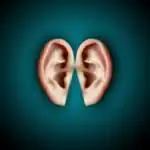
Our Ears for Hearing
Our ears help us to hear. We hear many different sounds every day.
- We hear music.
- We hear people talking.
- We hear birds singing.
- We hear a car horn.
- We hear a bell ring.
Some sounds are loud, and some are soft. Some sounds are happy, and some are warning sounds.
Our Skin for Touching and Feeling
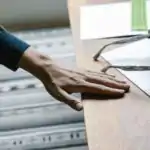
Our skin covers our whole body. It helps us to touch and feel things.
- We can feel if something is smooth or rough.
- We can feel if something is soft or hard.
- We can feel if something is hot or cold.
- We can feel if something is wet or dry.
Our skin helps us to know about the things around us when we touch them.
Observing Objects with Our Senses
We use our senses to learn about objects. While our eyes help us see if objects are:
- Near (close to us) or Far (a long way off)
- Straight (not bent) or Bent (curved or folded)
Our skin (touch) can also help us feel if an object is straight or bent, especially if we close our eyes or if it’s close enough to hold.
Sense Organs Rhyme
Tune: Twinkle, Twinkle Little Star
My little ears, they help me hear,
Sounds so soft and sounds so clear.
A bird’s sweet song, a drum’s loud beat,
Ears help me hear with happy feet!
My soft skin, I use to touch,
Things that feel so very much!
Smooth and rough, hot and cold,
My skin helps stories to be told!
Actions: Point to ears, cup hand behind ear, clap. Point to skin, rub arms, shiver, fan self.
Watch and Learn About Our Senses
Key Words
- Ears – body parts used for hearing sounds.
- Skin – the covering of our body used for touching and feeling.
- Hear – to perceive sound with our ears.
- Touch – to feel something with our skin.
- Near – close by.
- Far – a long distance away.
- Straight – not curved or bent.
- Bent – curved or folded.
💡 Teacher Guide for Using This Board Summary
How to teach the content: Begin by reviewing the five senses briefly, then focus on ears and skin. Use the chart/poster to point to the ears and skin. Explain their functions using simple, clear language and lots of examples. Ask pupils to point to their own ears and skin. For ‘observing objects’, explain that while eyes are primary for near/far/straight/bent, our skin helps us feel “straight” or “bent” when we touch things.
What to show or demonstrate: Show pictures of different sounds (e.g., crying baby, ringing phone, dog barking) and textures (e.g., fluffy cloud, rough sand, smooth glass). Demonstrate making different sounds with objects (bell, shakers) and have pupils listen. Demonstrate touching various objects (soft fabric, rough stone, warm cup, cold bottle) and describe how they feel. Show a toy car moving near and far, and a ruler (straight) versus a bent wire (bent).
How to use the rhyme/song: Teach the “Sense Organs Rhyme” line by line, demonstrating the actions. Repeat it several times with enthusiasm. Encourage pupils to sing along and perform the actions. This helps reinforce the functions of ears and skin in a fun, memorable way.
How to use the video: Introduce the video as a fun way to learn about our senses. Play the YouTube video “The Five Senses Song” by The Kiboomers. Encourage pupils to sing along and do the actions, especially for the parts about hearing and touching. After the video, ask pupils what they saw about ears and skin.
What to watch for: Observe if pupils can correctly identify their ears and skin and if they can associate them with hearing and touching. Check if they can distinguish between different sounds and textures. Ensure they are actively participating and showing curiosity.
Teaching Methods/Instructional Techniques
- Play-based Learning
- Demonstration
- Guided Practice
- Songs and Rhymes
- Picture Talk
- Question and Answer
- Manipulation of Objects
- Repetition
- Practical Activity
Instructional Procedures
Step 1: Introduction
Time: 3 minutes
Teaching Skill: Engagement/Recall
Teacher’s Activity: The teacher greets the pupils and asks them to name some body parts. The teacher then reminds them about the five senses they may have heard about before and introduces today’s focus on ears and skin.
Pupils’ Activity: Pupils respond to greetings, name body parts, and listen attentively.
Learning Point: Pupils recall body parts and are introduced to the lesson topic.
Step 2: Exploring Ears and Hearing
Time: 5 minutes
Teaching Skill: Explanation/Demonstration
Teacher’s Activity: The teacher points to their ears and asks, “What are these? What do we use them for?” The teacher explains that ears help us hear. The teacher then makes different sounds (e.g., rings a bell, claps hands, whispers, speaks loudly) and asks pupils to identify them.
Pupils’ Activity: Pupils point to their ears, say “ears,” and listen to and identify the sounds made by the teacher.
Learning Point: Pupils identify ears and understand their function for hearing.
Step 3: Exploring Skin and Touch
Time: 5 minutes
Teaching Skill: Explanation/Practical Activity
Teacher’s Activity: The teacher points to their skin (e.g., on their arm) and asks, “What is this? What do we use it for?” The teacher explains that skin helps us touch and feel. The teacher then presents various objects with different textures (soft fabric, rough stone, smooth plastic) and guides pupils to touch them and describe how they feel.
Pupils’ Activity: Pupils point to their skin, say “skin,” and touch the objects, describing their textures (e.g., “soft,” “rough,” “smooth”).
Learning Point: Pupils identify skin and understand its function for touching and feeling different textures.
Step 4: Rhyme and Movement Reinforcement
Time: 4 minutes
Teaching Skill: Song/Action
Teacher’s Activity: The teacher leads the pupils in singing the “Sense Organs Rhyme” from the Board Summary, encouraging them to perform the actions (pointing to ears, cupping hands, pointing to skin, rubbing arms).
Pupils’ Activity: Pupils sing the rhyme and perform the actions, reinforcing the functions of ears and skin.
Learning Point: Pupils reinforce learning through song and movement.
Step 5: Touch and Feel Game (Blindfolded)
Time: 4 minutes
Teaching Skill: Game/Sensory Exploration
Teacher’s Activity: The teacher blindfolds a pupil (or asks them to close their eyes) and gives them an object to touch (e.g., a warm cup, a cold bottle, a toy). The teacher asks, “What does it feel like? Is it hot or cold? Smooth or rough?” The teacher repeats with a few more pupils.
Pupils’ Activity: Pupils take turns feeling objects while blindfolded and describe what they feel using their skin.
Learning Point: Pupils use their sense of touch to identify and describe objects without sight.
Step 6: Observing Objects (Near/Far, Straight/Bent)
Time: 3 minutes
Teaching Skill: Observation/Comparison
Teacher’s Activity: The teacher uses a toy car, moving it near and far, asking pupils to identify its position. The teacher then shows a ruler (straight) and a bent wire, asking pupils to observe and describe if they are straight or bent. The teacher highlights how eyes help us see this, and how touch can also confirm if something is straight or bent.
Pupils’ Activity: Pupils observe the toy car and identify “near” or “far.” They observe the ruler and wire, identifying “straight” or “bent.”
Learning Point: Pupils use their senses (primarily sight, with touch for reinforcement) to observe and describe object properties.
Step 7: Evaluation/Review
Time: 4–5 minutes
Teaching Skill: Questioning/Assessment
Teacher’s Activity: The teacher checks pupils’ understanding through short questions and practical tasks.
- “Point to your ears. What do we use our ears for?”
- “Point to your skin. What do we use our skin for?”
- “Listen to this sound (e.g., a clap). What did you hear?”
- “Touch this (e.g., a soft cloth). How does it feel?”
- “Is this ruler straight or bent?” (Show a ruler)
Pupils’ Activity: Pupils respond orally and demonstrate the required skill where appropriate.
Learning Point: Pupils demonstrate understanding of the lesson.
Step 8: Conclusion
Time: 2 minutes
Teaching Skill: Summarisation/Reinforcement
Teacher’s Activity: The teacher summarises the lesson by reminding pupils that their ears help them hear and their skin helps them touch and feel. The teacher encourages them to take care of their ears and skin. The teacher plays the “Five Senses Song” one more time as pupils tidy up.
Pupils’ Activity: Pupils listen to the summary, sing along to the song, and help tidy the classroom.
Learning Point: Pupils consolidate their learning and are encouraged to care for their sense organs.
Lesson Keywords
- Ears – body parts used for hearing.
- Skin – the covering of our body used for touching.
- Hear – to listen to sounds.
- Touch – to feel with our skin.
- Near – close.
- Far – distant.
- Straight – not curved.
- Bent – curved or folded.
Differentiation
- Support: For pupils struggling to identify sounds or textures, provide more direct examples and one-on-one guidance. Use larger, more distinct objects for touching. Repeat the rhyme and actions more frequently.
- Extension: Encourage advanced pupils to describe sounds and textures with more detail (e.g., “It’s a soft, fluffy cloth,” “I hear a loud, fast drum”). Ask them to identify other objects in the classroom that are near/far or straight/bent.
Community Join the conversation Open discussion +