

Class: Junior Secondary School 1 (JSS1)
Term: First Term
Week: 4
Age: 12 years
Duration: 45 minutes
Subject: History
Curriculum Theme: History
Previous Lesson: Differences between History and storytelling (fiction)
Topic: Primary Sources: Oral Tradition and Artifacts
Subject Matter: Primary Sources: Oral Tradition and Artifacts
Specific Objectives
By the end of the lesson, learners should be able to:
- explain oral tradition and artifacts as primary sources;
- identify information each source can provide;
- state strengths and limitations of oral testimony and material evidence;
- record provenance questions for an artifact or oral account;
Reference Materials
- 9-Year Basic Education Curriculum for History
- Approved JSS1 History textbook and state scheme of work
- Teacher-checked library, museum or archive material relevant to the topic
Instructional Materials
- photograph or replica of an artifact
- short attributed oral account
- provenance and testimony question cards
Rationale for the Lesson
Oral traditions and artifacts are important for studying societies whose histories are not fully represented in written records. Learners must use them respectfully while asking who created, used, preserved or narrated them.
Prerequisite/Previous Knowledge
Learners can describe an old object and can retell information received from an older relative or community member.
Lesson Content/Board Summary
Primary Sources
A primary source gives direct evidence from the period, person or activity being studied. It may be written, oral, visual, material or digital. Examples include official records, letters, newspapers from the time, eyewitness interviews, photographs, buildings, tools, pottery and artworks.
Oral Tradition
Oral tradition is knowledge passed from one generation to another through spoken accounts, songs, praise poetry, genealogies, proverbs and performances. It can preserve viewpoints missing from written records. The historian records who spoke, the speaker’s connection to the account, when it was recorded and how versions differ.
Artifacts
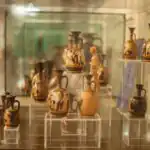
An artifact is a movable object made, modified or used by people, such as a tool, coin, bead, pot or textile. Its material, design, wear, location and relationship to other finds may reveal technology, trade or daily life. Removing an artifact from its site without proper recording destroys context. Primary sources can be incomplete or biased, so oral accounts and artifacts should be compared with other evidence.
Provenance and Context
Provenance is the documented history of where an object came from and how it moved between owners or collections. Context includes the exact place, layer and nearby finds at a site. A bronze vessel found with beads and ritual objects may support a different conclusion from an identical vessel found in a modern market with no record. Historians must also obtain consent for interviews and preserve the speaker’s words accurately.
Teaching Methods/Instructional Techniques
Source-based enquiry, guided observation, modelling, comparison, collaborative analysis and evidence-focused questioning.
Instructional Procedures
Step 1: Object Observation
Time: 5 minutes
Teacher’s Activity: Displays an object image without its label.
Learners’ Activity: Record observations separately from guesses.
Learning Check: The teacher checks the stated product or explanation before moving on.
Step 2: Oral Tradition
Time: 9 minutes
Teacher’s Activity: Explains narrator, transmission, audience and purpose.
Learners’ Activity: Identify what the account says and who says it.
Learning Check: The teacher checks the stated product or explanation before moving on.
Step 3: Artifact Evidence
Time: 10 minutes
Teacher’s Activity: Models questions about material, maker, date, use and place found.
Learners’ Activity: Complete an artifact record.
Learning Check: The teacher checks the stated product or explanation before moving on.
Step 4: Strength and Limitation
Time: 9 minutes
Teacher’s Activity: Compares what the two source types reveal and omit.
Learners’ Activity: Write one strength and one limitation for each.
Learning Check: The teacher checks the stated product or explanation before moving on.
Step 5: Review
Time: 7 minutes
Teacher’s Activity: Presents a new oral or material source.
Learners’ Activity: Classify it and propose a corroborating source.
Learning Check: The teacher checks the stated product or explanation before moving on.
Objective-aligned checks:
- explain oral tradition and artifacts as primary sources.
- identify information each source can provide.
- state strengths and limitations of oral testimony and material evidence.
Step 6: Conclusion
Time: 5 minutes
Teacher’s Activity: Summarises the lesson through the research question and corrects unsupported claims.
Learners’ Activity: State one conclusion, its supporting evidence and one remaining question.
Lesson Keywords
- history — evidence-based study of the past
- source — material from which information is obtained
- evidence — information used to support or question a claim
- interpretation — an explanation based on selected evidence
- context — the circumstances surrounding a source or event
Lesson Evaluation
- Define oral tradition and artifact.
- Give three examples of artifacts.
- State two questions to ask about an oral account.
- State one strength and one limitation of material evidence.
- Explain how two sources could be used together.
Assignment/Homework
Choose one safe household object with a known history. Record its material, maker or owner if known, use, approximate age, information source and one fact that still needs checking.
Differentiation
- Support: Provide labelled source cards, sentence starters and a partially completed evidence table.
- Extension: Learners distinguish observation from inference in an artifact description.
- Accessibility: Permit paired reading, oral recording, enlarged print or tactile-safe replicas where appropriate.
Note for Teachers
Never invent a date, maker or community for an object. Record ‘unknown’ where evidence is absent and explain how the missing information might be investigated.
Community Join the conversation Open discussion +