

Note for teachers using this lesson plan
This lesson focuses on identifying cultural festivals and museums as important sources of history and understanding their role in informed decision-making. Prepare by gathering relevant images or short video clips of cultural festivals and museum artifacts. Encourage students to actively participate in group discussions and online searches. By the end of the lesson, students should be able to state and identify various historical sources and explain their uses in making sound decisions.
Class: JSS 1
Term: First Term
Week: 8
Age: 12 years
Duration: 45 minutes
Subject: Nigerian History
Curriculum Theme: Concept of History
Focal competence: Demonstrate knowledge of the meaning of history, its sources and importance to informed decision-making; Identifying sources of history for appropriate decision making
Key competencies/values: Collaboration; Information literacy; Responsibility
Skills:
- Identification of the sources of history
- Distinguishing primary, secondary, and tertiary sources of history
Previous Lesson: Accessing Historical Sources through Exhibitions and Libraries
Topic: Sources Of History: Accessing The Sources Of History: Cultural Festivals
Subject Matter: Accessing the sources of History, Use of sources in decision making Examples
Specific Objectives
By the end of the lesson, pupils/students should be able to:
Cognitive Domain
- State cultural festivals as a source of History.
- State museums and other sources of History.
- State the uses of sources in decision making for individuals or groups.
- Identify the use of sources in decision-making for individuals or groups.
Affective Domain
- Appreciate the importance of collaboration in historical research.
- Value information literacy in accessing historical sources.
- Demonstrate responsibility in using historical information for decision-making.
Psychomotor Domain
- Identify various sources of history, including cultural festivals and museums.
- Distinguish between different types of historical sources (primary, secondary, tertiary).
Social Domain
- Participate actively in group discussions about historical sources.
- Share findings from online searches on historical sources with peers.
Reference Materials
The following resources were used in planning this lesson:
- 2025 Revised 9 Years Basic Education Curriculum
- Relevant State Unified Scheme of Work
- The HeadTeacher Scheme of work
- A suitable Nigerian History textbook for JSS 1
Instructional Materials
The teacher will teach this lesson with the aid of:
- Computers
- Internet access
- Archival materials (e.g., old photographs, documents if available)
- Sample artifacts (e.g., traditional carving, pottery)
- Biographies (short excerpts)
- Charts showing examples of historical sources
- Pictures or videos of Nigerian cultural festivals
- Pictures of museum exhibits
Rationale for the Lesson
This lesson is important because it teaches students how to find and use historical information from various sources, such as cultural festivals and museums. Understanding these sources helps students make informed decisions in their personal lives and as members of a community. It also fosters critical thinking and an appreciation for Nigeria’s rich cultural heritage.
Prerequisite/Previous Knowledge
Students should have a basic understanding of what history is and why it is studied.
Lesson Content/Board Summary
Sources Of History: Accessing The Sources Of History: Cultural Festivals
Sources of History
Sources of history are the materials or information from which historians learn about the past. They are like clues that help us reconstruct events, understand people’s lives, and explain how societies developed over time. Reliable sources are essential for accurate historical understanding.
Cultural Festivals as Sources of History
Cultural festivals are vibrant celebrations that reflect the traditions, beliefs, and history of a people. They serve as valuable historical sources because they preserve and transmit knowledge through:
- Rituals and Ceremonies: Many festivals involve rituals that reenact historical events, ancestral practices, or significant moments in a community’s past.
- Oral Traditions: During festivals, elders often share stories, myths, legends, and songs that contain historical information about the community’s origins, heroes, and challenges.
- Costumes and Regalia: The attire, masks, and regalia worn during festivals often have historical significance, representing past leaders, deities, or specific periods.
- Music and Dance: Traditional music and dance forms performed at festivals can tell stories of historical battles, migrations, or social structures.
- Art and Craft: Objects displayed or used during festivals, such as carvings, pottery, and textiles, can provide insights into the artistic skills, beliefs, and economic activities of past generations.
Museums as Sources of History
Museums are institutions that collect, preserve, interpret, and display objects of historical, scientific, artistic, or cultural significance. They are crucial sources of history because they:
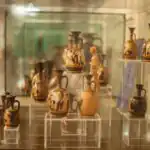
- Preserve Artifacts: Museums house physical objects (artifacts) from different periods, such as tools, weapons, clothing, pottery, and artworks, which provide direct evidence of past human activity.
- Conserve Documents: Many museums also preserve historical documents, manuscripts, maps, and photographs that offer written or visual accounts of the past.
- Provide Context: Exhibits in museums are often arranged to tell a story or explain a historical period, helping visitors understand the context and significance of the displayed items.
- Facilitate Research: Museums provide resources for historians, archaeologists, and researchers to study and learn from the preserved collections.
Other Sources of History
Beyond cultural festivals and museums, other important sources of history include:
- Oral Traditions: Stories, proverbs, songs, and genealogies passed down verbally from one generation to another.
- Archaeological Sites: Places where remains of past human activity are found, such as ancient settlements, tools, and monuments.
- Written Records: Books, letters, diaries, government documents, newspapers, and archival materials.
- Biographies and Autobiographies: Accounts of individuals’ lives that shed light on historical periods and events.
- Historical Sites and Monuments: Places like ancient city walls, battlegrounds, or shrines that mark significant historical events.
Use of Historical Sources in Decision Making
Accessing and understanding historical sources is vital for making good decisions because history provides lessons from the past. By examining how people faced challenges, succeeded, or failed in the past, we can gain insights to guide our present and future choices.
- Learning from Past Mistakes: History shows us the consequences of certain actions, helping us avoid repeating errors.
- Understanding Context: Historical sources provide background information that helps us understand the roots of current issues and make more informed decisions.
- Identifying Patterns: By studying historical trends, we can better predict potential outcomes of various decisions.
- Informing Policy: Governments and organizations use historical data to develop policies that address societal needs and challenges effectively.
Examples of Using Historical Sources in Decision Making
- Individual Decision Making:
- A student researching their family history (using oral accounts, old photos, family documents) to understand their heritage and make personal choices about their identity or career path.
- An individual studying the history of a particular investment (using financial records, economic reports) to decide whether to invest in it today.
- Group/Community Decision Making:
- A community planning a new development project might consult historical maps, land records, and oral traditions to understand traditional land use, avoid sacred sites, or preserve historical landmarks.
- A government deciding on a new educational policy might review historical education reforms (using archival documents, past policy reports) to learn what worked and what didn’t in previous attempts.
Teaching Methods/Instructional Techniques
Discussion, Explanation, Question and Answer, Group Work, Online Search, Chart Analysis
Instructional Procedures
Step 1: Introduction
Time: 5 minutes
Teaching Skill: Activating Prior Knowledge
Teacher’s Activity: The teacher greets the students and asks them to recall what history is and why it is important. The teacher then introduces the topic: “Sources of History: Accessing the Sources of History: Cultural Festivals,” explaining that today they will learn where we get historical information from, focusing on festivals and museums.
Pupils’ Activity: Students respond to questions about history and listen attentively to the introduction of the new topic.
Learning Point: Introduction to historical sources
Step 2: Sources of History
Time: 7 minutes
Teaching Skill: Explanation/Discussion
Teacher’s Activity: The teacher explains what sources of history are, emphasizing that they are the raw materials historians use. The teacher then asks students to brainstorm examples of things that can tell us about the past. The teacher also briefly introduces the idea of primary, secondary, and tertiary sources.
Pupils’ Activity: Students suggest various items (e.g., old pictures, stories, old buildings) and listen to the explanation of historical sources.
Learning Point: Definition of historical sources
Step 3: Cultural Festivals as Sources
Time: 8 minutes
Teaching Skill: Illustration/Discussion
Teacher’s Activity: The teacher shows pictures or a short video clip of a Nigerian cultural festival. The teacher then explains how cultural festivals serve as sources of history, discussing elements like rituals, oral traditions, costumes, music, and dance. The teacher encourages students to share festivals they know and what historical information they convey.
Pupils’ Activity: Students observe the pictures/video, share knowledge of local festivals, and discuss how festivals carry historical information.
Learning Point: Festivals as historical sources
Step 4: Museums as Sources
Time: 7 minutes
Teaching Skill: Explanation/Visual Aid
Teacher’s Activity: The teacher displays pictures of a museum and some artifacts typically found there. The teacher explains how museums preserve artifacts and documents, provide context, and facilitate research, making them invaluable historical sources.
Pupils’ Activity: Students look at the pictures and listen to the explanation of museums as historical sources.
Learning Point: Museums as historical sources
Step 5: Other Sources of History
Time: 5 minutes
Teaching Skill: Enumeration/Briefing
Teacher’s Activity: The teacher briefly lists and explains other important sources of history such as oral traditions, archaeological sites, written records, biographies, and historical sites, ensuring students distinguish between them.
Pupils’ Activity: Students listen and ask questions for clarification on various sources.
Learning Point: Various historical sources
Step 6: Use of Sources in Decision Making
Time: 5 minutes
Teaching Skill: Application/Discussion
Teacher’s Activity: The teacher leads a discussion on why accessing and using historical sources is important for making decisions. The teacher provides simple examples for both individual and group decision-making, such as learning from past mistakes or informing community development plans.
Pupils’ Activity: Students participate in the discussion, offering ideas on how historical knowledge can influence decisions.
Learning Point: Sources for decision making
Step 7: Evaluation/Review
Time: 5 minutes
Teaching Skill: Questioning/Assessment
Teacher’s Activity: The teacher evaluates the learning by asking the following questions:
- Mention two ways cultural festivals serve as sources of history.
- State two ways museums help us understand history.
- Give one reason why it is important to use historical sources when making decisions.
- Provide an example of how historical sources can help an individual make a decision.
Pupils’ Activity: Pupils answer orally and in writing.
Learning Point: Understanding historical sources
Step 8: Note-Taking
Time: 4 minutes
Teaching Skill: Guided Writing
Teacher’s Activity: The teacher guides pupils/students to copy the essential Board Summary notes on sources of history, cultural festivals, museums, and their use in decision-making into their notebooks.
Pupils’ Activity: Pupils/students copy the notes carefully into their notebooks.
Learning Point: Recording lesson notes
Step 9: Conclusion
Time: 1 minute
Teaching Skill: Reinforcement
Teacher’s Activity: The teacher briefly reminds students that understanding history through its various sources, especially cultural festivals and museums, empowers them to make better decisions in life. The teacher thanks them for their participation.
Pupils’ Activity: Students listen and prepare for the next lesson.
Learning Point: Summary of historical sources
Continuous Assessment/Further Study
Type: Group Work/Research
Instruction: In groups, research a specific cultural festival from your state or a Nigerian museum. Identify at least three ways it serves as a source of history and explain how understanding its history could help your community make a decision today. Present your findings next week.
- Choose one cultural festival or museum.
- Identify three historical insights from your chosen source.
- Explain how these insights can inform a current community decision.
- Prepare a short presentation for the class.
Lesson Keywords
- History – The study of past events.
- Sources of History – Materials or information used to learn about the past.
- Cultural Festivals – Celebrations reflecting a people’s traditions, beliefs, and history.
- Museums – Institutions that collect and display objects of historical or cultural significance.
- Artifacts – Objects made or modified by humans, especially an item of cultural or historical interest.
- Oral Traditions – Historical information passed down verbally through generations.
- Decision Making – The process of choosing a course of action among several alternatives.
Differentiation
For weaker learners, the teacher will provide simplified charts of historical sources with clear examples and offer more direct guidance during group activities. Faster learners will be encouraged to research more complex examples of historical decision-making or explore the differences between primary, secondary, and tertiary sources in greater detail.
Suggested Lesson Videos
Search YouTube for: “Nigerian cultural festivals history JSS 1” or “importance of museums in history”
Teacher Guide for Using This Lesson Plan
Before the lesson, ensure you have visual aids such as pictures or short video clips of Nigerian cultural festivals and museum exhibits. You may also bring simple, safe artifacts or old documents if available to make the concept concrete. Begin by engaging students in a brief review of what history is. Guide them through the various sources, paying special attention to how cultural festivals and museums preserve historical information. Encourage active participation in discussions and group work. When discussing decision-making, use relatable examples relevant to the students’ experiences. During Step 8 (Note-Taking), ensure students copy the Board Summary accurately. Provide support for weaker learners by simplifying explanations and offering more prompts during activities, while challenging faster learners with deeper research questions. Always check for understanding throughout the lesson and correct misconceptions promptly.
Community Join the conversation Open discussion +