

Note for teachers using this lesson plan
This lesson introduces students to the concept of historical sources, focusing on exhibitions and libraries. Teachers should prepare relevant visual aids such as pictures of historical artifacts, library settings, or online resources to make the concept concrete. Guide students through the group activity on identifying and classifying sources, ensuring they understand how to access information from different historical sources. By the end of the lesson, students should be able to state and explain how to access historical sources found in exhibitions and libraries.
Class: JSS 1
Term: First Term
Week: 7
Age: 12 years
Duration: 45 minutes
Subject: Nigerian History
Curriculum Theme: Concept of History
Focal competence: Demonstrate knowledge of the meaning of history, its sources and importance to informed decision-making; Identifying sources of history for appropriate decision making
Key competencies/values: Collaboration; Information literacy; Responsibility
Skills:
- Identification of the sources of history
- Distinguishing primary, secondary, and tertiary sources of history
Previous Lesson: Accessing Historical Sources through Oral Interviews, Archives and Historical Sites
Topic: Sources Of History: Accessing The Sources Of History: Exhibitions
Subject Matter: Accessing the sources of History
Specific Objectives
By the end of the lesson, pupils/students should be able to:
Cognitive Domain
- State what sources of history are.
- Identify different sources of history, including exhibitions and libraries.
- Explain how to access historical information from exhibitions.
- Explain how to access historical information from libraries.
- Distinguish between primary, secondary, and tertiary sources of history.
Affective Domain
- Appreciate the importance of reliable sources in understanding history.
- Collaborate effectively in group activities to classify historical sources.
- Demonstrate responsibility in handling historical materials.
Psychomotor Domain
- Classify examples of historical sources using charts.
- Locate historical information within provided exhibition or library examples.
Social Domain
- Participate actively in class discussions about accessing historical sources.
- Develop information literacy skills when searching for historical data.
Reference Materials
The following resources were used in planning this lesson:
- 2025 Revised 9 Years Basic Education Curriculum
- Relevant State Unified Scheme of Work
- A suitable Nigerian History textbook for JSS 1
- The HeadTeacher Scheme of work
Instructional Materials
The teacher will teach this lesson with the aid of:
- Computers (if available)
- Internet access (if available)
- Pictures of archival materials
- Sample artifacts or pictures of artifacts
- Pictures of biographies
- Charts showing classifications of historical sources
- Whiteboard/Blackboard and markers/chalk
Rationale for the Lesson
This lesson is important because it equips students with the fundamental knowledge of where historical information comes from. Understanding how to identify and access various sources, particularly exhibitions and libraries, helps students develop critical thinking and research skills. This knowledge is essential for forming informed perspectives on past events and appreciating the methods historians use to reconstruct history.
Prerequisite/Previous Knowledge
Students should have a basic understanding of what history is and why it is studied.
Lesson Content/Board Summary
Sources Of History: Accessing The Sources Of History: Exhibitions
What are Sources of History?
Sources of history are the original materials or information from the past that historians use to understand and reconstruct events. They are the evidence that tells us about what happened in the past.
Types of Historical Sources
Historical sources can be broadly classified into three main types:
- Primary Sources: These are firsthand accounts or original materials created at the time of the event. Examples include diaries, letters, photographs, artifacts, official documents, and eyewitness testimonies.
- Secondary Sources: These are interpretations or analyses of primary sources, created after the event. Examples include textbooks, biographies, historical articles, and documentaries that discuss past events.
- Tertiary Sources: These are compilations or indexes of primary and secondary sources. Examples include encyclopedias, bibliographies, and dictionaries.
Accessing Sources of History
Accessing sources of history involves knowing where to find them and how to use them effectively. Key places to find historical sources include:
- Exhibitions (museums, galleries)
- Libraries (public, academic, national)
- Archives
- Historical sites
- Oral traditions
- The internet (with caution for reliability)
Exhibitions as Sources of History
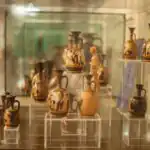
Exhibitions are public displays of historical objects, documents, artworks, or information, often found in museums or galleries. They provide a direct way to see and interact with historical evidence.
How to access historical information from exhibitions:
- Visit Museums and Galleries: These institutions curate collections of artifacts, documents, and visual materials from different historical periods.
- Observe Artifacts: Look closely at the objects on display, such as tools, clothing, pottery, or weapons. Their design, material, and condition can reveal much about the past.
- Read Exhibition Labels and Panels: These provide context, dates, and explanations for the items on display.
- Engage with Guides: Museum guides or curators can offer deeper insights and answer questions about the exhibits.
- Attend Guided Tours: These tours often highlight key aspects and narratives of the exhibition.
Examples of what can be found in exhibitions:
- Ancient pottery and sculptures
- Traditional Nigerian attire and regalia
- Historical maps and photographs
- Tools and weapons from different eras
- Documents like treaties or old letters
Libraries as Sources of History
Libraries are institutions that house collections of books, periodicals, manuscripts, and other materials for reading, study, and reference. They are invaluable for accessing written historical records.
How to access historical information from libraries:
- Search Library Catalogs: Use the library’s catalog (physical or digital) to find books, journals, and other materials related to your historical topic.
- Consult Reference Sections: Libraries have dedicated reference sections with encyclopedias, dictionaries, and atlases that provide background information.
- Read Books and Journals: Libraries contain a vast collection of secondary sources (history books, academic journals) and sometimes primary sources (e.g., published diaries, historical documents).
- Utilize Archival Collections: Some larger libraries have special collections or archives containing original manuscripts, rare books, and local historical documents.
- Access Digital Resources: Many libraries offer access to online databases, e-books, and digital archives that contain historical information.
Examples of what can be found in libraries:
- History textbooks and academic papers
- Biographies of historical figures
- Newspaper archives
- Government reports and official records
- Maps and atlases showing historical boundaries
Teaching Methods/Instructional Techniques
Discussion, Explanation, Group Work, Question and Answer, Observation, Guided Practice
Instructional Procedures
Step 1: Introduction
Time: 5 minutes
Teaching Skill: Recalling/Engaging
Teacher’s Activity: The teacher greets the students and reviews the previous lesson on the meaning and importance of history. The teacher then asks students what they think historians use to learn about the past, leading into the topic of sources of history.
Pupils’ Activity: Students respond to questions about the previous lesson and share their ideas on how historians find information.
Learning Point: Activating prior knowledge
Step 2: Explanation of Sources of History
Time: 7 minutes
Teaching Skill: Explaining/Defining
Teacher’s Activity: The teacher explains what sources of history are and introduces the three main types: primary, secondary, and tertiary sources, providing clear examples for each. The teacher uses charts to illustrate these types.
Pupils’ Activity: Students listen attentively, ask questions for clarification, and observe the charts.
Learning Point: Understanding historical sources
Step 3: Group Activity – Searching and Classification
Time: 10 minutes
Teaching Skill: Facilitating/Collaborating
Teacher’s Activity: The teacher divides students into groups and provides them with pictures of various historical items (e.g., old photographs, a textbook, a diary, an encyclopedia page, an ancient tool). The teacher instructs each group to classify these items as primary, secondary, or tertiary sources and discuss why.
Pupils’ Activity: Students work in groups to classify the provided examples of historical sources and discuss their reasoning.
Learning Point: Classifying historical sources
Step 4: Discussion on Accessing Sources
Time: 5 minutes
Teaching Skill: Guiding Discussion
Teacher’s Activity: The teacher leads a class discussion on where people can go to find historical information. The teacher guides students to mention places like museums, libraries, archives, and the internet.
Pupils’ Activity: Students participate in the discussion, contributing ideas on places to find historical sources.
Learning Point: Identifying access points
Step 5: Focus on Exhibitions
Time: 5 minutes
Teaching Skill: Explaining/Illustrating
Teacher’s Activity: The teacher explains exhibitions as a source of history, using pictures of museum exhibits or actual artifacts if available. The teacher then explains how students can access historical information from exhibitions, giving specific examples.
Pupils’ Activity: Students observe the pictures/artifacts and listen to the explanation, taking note of how to access information from exhibitions.
Learning Point: Exhibitions as sources
Step 6: Focus on Libraries
Time: 4 minutes
Teaching Skill: Explaining/Demonstrating
Teacher’s Activity: The teacher explains libraries as a source of history, showing pictures of different types of libraries. The teacher details how students can access historical information from libraries, including using catalogs and reference sections.
Pupils’ Activity: Students listen and understand how to use libraries to find historical information.
Learning Point: Libraries as sources
Step 7: Evaluation/Review
Time: 5 minutes
Teaching Skill: Questioning/Assessment
Teacher’s Activity: The teacher evaluates the learning by asking the following questions:
- What are historical sources?
- Name two types of historical sources and give an example of each.
- State two ways you can access historical information from an exhibition.
- Mention two ways you can find historical information in a library.
Pupils’ Activity: Pupils answer orally and in writing.
Learning Point: Assessing lesson understanding
Step 8: Note-Taking
Time: 4 minutes
Teaching Skill: Guided Writing
Teacher’s Activity: The teacher guides pupils/students to copy the essential Board Summary notes on sources of history, exhibitions, and libraries into their notebooks.
Pupils’ Activity: Pupils/students copy the notes carefully into their notebooks.
Learning Point: Recording lesson notes
Step 9: Conclusion
Time: 2 minutes
Teaching Skill: Summarizing
Teacher’s Activity: The teacher briefly summarizes the lesson by reiterating the importance of knowing and accessing historical sources like exhibitions and libraries for a better understanding of the past. The teacher encourages students to visit local museums or libraries.
Pupils’ Activity: Students listen and reflect on the lesson.
Learning Point: Consolidating lesson concepts
Continuous Assessment/Further Study
Type: Homework
Instruction: Answer the following questions in your notebook:
- Imagine you are researching the history of your town/community. List three different historical sources you would look for and where you would expect to find them.
- Differentiate between a primary source and a secondary source, giving one example for each that relates to Nigerian history.
- Visit a local library or search online for a historical exhibition related to Nigeria. Write down one interesting fact you learned and which type of source it represents.
Lesson Keywords
- Sources of History – Original materials or information used to understand the past.
- Exhibitions – Public displays of historical objects or information, often in museums.
- Libraries – Places where collections of books and other materials are kept for reading and study.
- Primary Sources – Firsthand accounts or original materials from the time of an event.
- Secondary Sources – Interpretations or analyses of primary sources.
- Tertiary Sources – Compilations or indexes of primary and secondary sources.
- Artifacts – Objects made or modified by humans, used as historical evidence.
Differentiation
For struggling learners: Provide simpler examples of historical sources and focus primarily on identifying exhibitions and libraries as sources. Offer pre-filled charts for classification activities. Pair them with more capable students during group work.
For advanced learners: Challenge them to identify specific historical exhibitions or libraries in Nigeria and research what types of historical materials they house. Encourage them to think about the reliability of different sources.
Suggested Lesson Videos
For further understanding, search YouTube for: sources of history for jss1 nigeria
Teacher Guide for Using This Lesson Plan
Before the lesson, ensure you have visual aids ready, such as pictures of various historical items (e.g., old photographs, a textbook, a diary, an ancient tool) for the group classification activity. Also, prepare images of different types of exhibitions (museums, art galleries) and libraries (public, academic) to illustrate the lesson content. During the introduction, engage students by asking open-ended questions about how we know about the past. Guide the group activity closely, ensuring all students participate and understand the distinctions between primary, secondary, and tertiary sources. Emphasize practical ways to access information from exhibitions and libraries, using local examples where possible. Allow students sufficient time to copy the Board Summary notes in Step 8. Check for understanding throughout the lesson, especially during the evaluation, to address any misconceptions. Encourage advanced learners to explore beyond the classroom by suggesting visits to local historical sites or online research.
Community Join the conversation Open discussion +