

Class: Primary 5
Term: 3rd Term
subject: National Values Education
curriculum Theme: Security Education
Previous Lesson: How To Ensure National Security
Topic: Influence Of National Security On Our Defence
Content/Learning Area: Influence Of National Security On Our Defence
Time Allocation: 40 minutes
Performance Objectives
By the end of the lesson, pupils should be able to:
- Cognitive Domain: Explain the meaning of national security and its influence on national defence.
- Affective Domain: Show appreciation for the role of national security in protecting citizens.
- Psychomotor Domain: Identify pictures or drawings of military facilities used for national defence.
- social Domain: Work in groups to discuss how security helps defend the country.
Reference Materials
The following resources were used in planning this lesson:
- 9 Years Basic Education Curriculum
- abuja Educational Resource Center Scheme of Work
- NAPPS National Unified Scheme of Work
- online Data from: wikipedia – Military
- Relevant Textbooks
Instructional Materials
To deliver this lesson, the teacher will use the following:
- Chart of national security symbols
- Pictures of military equipment and personnel
- Whiteboard and markers
- Flashcards with key terms
- Short video clip on national security (if available)
Rationale for the Lesson
Understanding national security helps pupils appreciate the importance of protecting the country and its people from danger.
Prerequisite/Previous Knowledge
Pupils already know the meaning of safety and have learned about agents that maintain law and order.
Lesson Content
Influence Of National Security On Our Defence
Security On Our Defence involves using the army, police, and other groups to keep the country safe. It is how a country prepares and uses its soldiers, weapons, and plans to stop enemies from attacking.
Influence of National Security on Defence
National security supports national defence in many ways. It gives help to the soldiers and provides tools and ideas to stop danger. The following are the ways national security influences defence:
- Helps train soldiers
- Provides weapons and tools
- Shares information to stop attacks
- Builds strong military bases
- Plans how to stop danger early
- Protects vital places in the country
- Supports intelligence gathering to prevent threats
- Ensures effective interaction between defence units
- Promotes collaboration with international security partners
Military Facilities Used for Defence
Military facilities are places used by the army and security to protect the country. Examples are:
- Army barracks
- Air force bases
- Navy bases
- Training camps
- Weapon storage buildings
- Defence control rooms
- Communication centers for strategic coordination
- Cybersecurity units to protect digital infrastructure
- Research and development facilities for military technology
Teaching Methods
To deliver this lesson, the teacher will adopt the following methods: discussion, lecture, Description, Storytelling, Visual Aids, Group Work
Instructional Procedures
To deliver this lesson, the teacher will adopt the following steps:
Step 1: Introduction
Time: 5 mins
Teaching Skill: Set induction
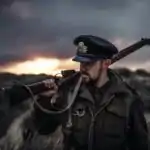
Teacher’s Activity: The teacher tells a story about how soldiers protect the country from enemies and shows a picture of soldiers in uniform.
Pupils’ Activity: Pupils listen to the story and observe the pictures.
step 2: Meaning of National Security
Time: 5 mins
Teaching Skill: explanation
Teacher’s Activity: The teacher explains the meaning of national security in simple terms and writes the definition on the board.Pupils’ Activity: Pupils listen and repeat after the teacher.
Step 3: Meaning of National Defence
Time: 5 mins
Teaching Skill: Explanation
Teacher’s Activity: The teacher explains national defence and shows drawings of military equipment.
Pupils’ Activity: Pupils observe and ask questions.
Step 4: Influence of National Security on Defence
Time: 8 mins
Teaching Skill: Discussion
Teacher’s Activity: The teacher discusses how national security helps defence with examples and asks questions.
Pupils’ Activity: Pupils give answers and join the discussion.
Step 5: military Facilities Used for Defence
Time: 5 mins
Teaching Skill: Visual Aids
Teacher’s Activity: The teacher displays images of army barracks, air force bases, etc., and explains thier uses.
Pupils’ Activity: Pupils name and describe the facilities.
Step 6: Note-Taking
Time: 3 mins
Teaching Skill: Writing
Teacher’s Activity: The teacher guides pupils to copy the class notes from the board.
Pupils’ activity: Pupils copy the notes in their books.
Step 7: Evaluation/Review
Time: 5 mins
Teaching Skill: Assessment
Teacher’s Activity: the teacher asks pupils to list ways national security supports defence and name military facilities.
Pupils’ activity: Pupils answer questions and complete tasks.
Objective-aligned checks:
- Explain the meaning of national security and its influence on national defence.
- Identify pictures or drawings of military facilities used for national defence.
Step 8: Conclusion
Time: 4 mins
Teaching Skill: Instructional, Cognitive
Teacher’s Activity: The teacher reviews the main points, gives praise for participation, and encourages them to be proud of national security agents.
Pupils’ Activity: Pupils listen and reflect on the lesson.
Lesson Keywords
- National security – Keeping the country safe
- National defence – Protecting the country using the army
- Military facilities – Places where soldiers work or train
- Soldiers – People who protect the country
- Weapons – Tools used to defend the country
- Intelligence – Gathering information to prevent threats
- Barracks – Housing for military personnel
Lesson Evaluation
To evaluate the learning, the teacher asks pupils to:
- Mention three ways national security helps our defence.
- List four military facilities used for defence.
- Say why national security is critically important to a country.
Assignment/Homework
- Draw and label three military facilities in Nigeria.
- Write a short paragraph on the importance of national security.
- interview a family member about their understanding of national defence.
Differentiation
- For slower learners: The teacher will assist slower learners with guided copying and give visual support through pictures.
- For advanced learners: Fast learners will write examples and explain answers in groups.
- For visual/auditory/kinesthetic learners: Use visual aids, discussions, and hands-on activities to cater to different learning styles.
Note for Teachers
Use local examples of military and security units pupils may know, like mobile police or civil defence. Encourage respectful talk about security agents.


Community Join the conversation Open discussion +