

Class: Senior Secondary School 1 (SSS 1)
Term: 1st Term
Week: 10
Age: 15 years
Duration: 45 minutes
Subject: Data Processing
Curriculum Theme: Technology
Previous Lesson: The Art of Information Processing: Procedures.
Topic: Process of Information Transmission
Subject Matter: Definition of information transmission, methods of transmitting information, comparison of common transmission methods.
Specific Objectives
By the end of the lesson, pupils should be able to:
Cognitive Domain:
- Define information transmission.
- List and explain various methods of transmitting information.
- Compare common methods of information transmission.
Affective Domain:
- Appreciate the importance of effective information transmission in daily life.
- Participate actively in class discussions about communication methods.
Psychomotor Domain:
- Identify examples of different information transmission methods.
- Differentiate between various information transmission methods based on their characteristics.
Social Domain:
- Collaborate with peers to discuss different communication channels.
- Share ideas on how information is transmitted in their communities.
Reference Materials
The following resources were used in planning this lesson:
- 9 Years Basic Education Curriculum for Data Processing.
- State Unified Scheme of Work for Senior Secondary Schools.
- Data Processing for Senior Secondary Schools 1 by Adewale S. A. et al.
Instructional Materials
The teacher will teach this lesson with the aid of:
- Samples of newspapers.
- Images or diagrams of a radio, telephone, and television.
- Charts illustrating various communication media.
Rationale for the Lesson
This lesson helps pupils understand how information moves from one point to another, which is a fundamental concept in data processing and daily communication. Understanding different transmission methods enables pupils to choose appropriate ways to send and receive information effectively in various situations.
Prerequisite/Previous Knowledge
Pupils have a basic understanding of what data and information are, and they are familiar with common communication devices they use or see daily.
Lesson Content/Board Summary
Process of Information Transmission
Definition of Information Transmission
Information transmission is the process of sending data or information from a sender to a receiver through a specific channel or medium. It involves encoding the information at the source and decoding it at the destination.
Methods of Transmitting Information
Information can be transmitted using various methods, each with its own characteristics and uses. Common methods include:
- Newspaper: A printed medium used to transmit news, articles, and advertisements to a wide audience. It is a one-way communication method.
- Radio: An audio medium that transmits sound waves over long distances using electromagnetic waves. It is primarily a one-way broadcast medium.
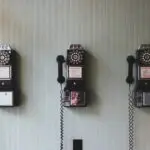
- Telephone: A device that allows two-way voice communication over a distance using electrical signals or digital data. It can be landline or mobile.
- Television: An electronic medium that transmits both audio and visual information (pictures and sound) to a large audience. It is primarily a one-way broadcast medium.
Comparison of Common Transmission Methods
The following table compares some common methods of information transmission:
- Newspaper:
- Medium: Print
- Direction: One-way
- Speed: Slow (daily/weekly publication)
- Audience: Mass, literate
- Cost: Low to moderate
- Radio:
- Medium: Audio broadcast
- Direction: One-way
- Speed: Real-time
- Audience: Mass, can reach illiterate
- Cost: Low (receiver)
- Telephone:
- Medium: Voice/Data (wired/wireless)
- Direction: Two-way
- Speed: Real-time
- Audience: Individual to small group
- Cost: Moderate to high (service fees)
- Television:
- Medium: Audio-visual broadcast
- Direction: One-way
- Speed: Real-time
- Audience: Mass
- Cost: Moderate (receiver)
Teaching Methods/Instructional Techniques
Discussion, Lecture, Demonstration, Question and Answer, Visual Aids
Instructional Procedures
Step 1: Introduction
Time: 5 minutes
Teaching Skill: Set Induction
Teacher’s Activity: The teacher greets the pupils and asks them how they receive news or communicate with friends and family. This helps to activate their prior knowledge and link it to the lesson topic.
Pupils’ Activity: Pupils respond by mentioning various ways they receive news or communicate, such as listening to the radio, reading newspapers, or using phones.
Learning Point: Pupils recall common communication methods and are introduced to the concept of information transmission.
Step 2: Definition of Information Transmission
Time: 10 minutes
Teaching Skill: Explanation/Definition
Teacher’s Activity: The teacher defines information transmission, explaining it as the movement of information from a source to a destination. The teacher writes the definition on the board.
Pupils’ Activity: Pupils listen attentively, ask questions for clarification, and copy the definition into their notebooks.
Learning Point: Pupils understand the meaning of information transmission.
Step 3: Explanation of Newspaper as a Transmission Method
Time: 5 minutes
Teaching Skill: Demonstration/Explanation
Teacher’s Activity: The teacher displays a sample newspaper and explains how it serves as a method of transmitting information, highlighting its one-way nature and reach.
Pupils’ Activity: Pupils observe the newspaper, contribute examples of information found in it, and note down key points.
Learning Point: Pupils understand the newspaper as an information transmission method.
Step 4: Explanation of Radio as a Transmission Method
Time: 5 minutes
Teaching Skill: Visual Aids/Explanation
Teacher’s Activity: The teacher shows an image of a radio and explains how it transmits audio information through broadcasts, reaching a mass audience.
Pupils’ Activity: Pupils identify the radio, discuss its uses for receiving news and entertainment, and record notes.
Learning Point: Pupils understand the radio as an information transmission method.
Step 5: Explanation of Telephone as a Transmission Method
Time: 5 minutes
Teaching Skill: Discussion/Explanation
Teacher’s Activity: The teacher displays pictures of different types of telephones (landline, mobile) and explains their function in two-way voice communication.
Pupils’ Activity: Pupils share their experiences using telephones and discuss the advantages of real-time, two-way communication.
Learning Point: Pupils understand the telephone as an information transmission method.
Step 6: Explanation of Television as a Transmission Method
Time: 5 minutes
Teaching Skill: Visual Aids/Explanation
Teacher’s Activity: The teacher shows an image of a television and explains its role in transmitting both audio and visual information to a wide audience.
Pupils’ Activity: Pupils discuss what they watch on television and how it transmits information like news, movies, and educational programs.
Learning Point: Pupils understand the television as an information transmission method.
Step 7: Evaluation/Review
Time: 5 minutes
Teaching Skill: Questioning/Assessment
Teacher’s Activity: The teacher evaluates the learning by asking the following questions:
- Define information transmission.
- List three methods of transmitting information.
- State one difference between radio and telephone as methods of information transmission.
- Mention one advantage of using a newspaper for transmitting information.
Pupils’ Activity: Pupils answer orally and in writing.
Learning Point: Pupils demonstrate understanding of the lesson.
Step 8: Conclusion
Time: 5 minutes
Teaching Skill: Summarization
Teacher’s Activity: The teacher summarizes the key points of the lesson, emphasizing the definition of information transmission and the various methods discussed. The teacher assigns homework: research other methods of information transmission not discussed in class.
Pupils’ Activity: Pupils listen to the summary and copy the homework assignment.
Learning Point: Pupils consolidate their understanding and are encouraged to explore further.
Lesson Keywords
- Transmission – The act or process of sending something from one place to another.
- Information – Facts provided or learned about something or someone.
- Newspaper – A printed publication containing news, advertisements, and articles.
- Radio – An apparatus for receiving or transmitting radio broadcasts.
- Telephone – A system for transmitting voices over a distance using wire or radio.
- Television – An electronic system of transmitting images and sounds over a distance.
Differentiation
For pupils who grasp concepts quickly, they can be tasked with researching the historical development of one transmission method. For those who need more support, the teacher will provide simplified definitions and more direct examples, possibly pairing them with stronger pupils for peer learning.
Note for teachers using this lesson plan
Ensure the instructional materials are readily available and in good condition before the lesson. Encourage pupils to relate the concepts to their daily experiences to make the lesson more engaging and relevant. Emphasize the advantages and disadvantages of each transmission method as part of the comparison.


Community Join the conversation Open discussion +