

Class: Senior Secondary School 1 (SS1 / SSS 1)
Term: Second Term
Week: 3
Age: 15 years
Duration: 45 minutes
Subject: Printing Craft
Curriculum Theme: Trade
Previous Lesson: Printing Processes: Gravure Intaglio, Screen Stencil And Flexography.
Topic: PRINTING PROCESSES (CONT)
Subject Matter: Functions of each printing process, Materials used for printing, Tools used for printing, Equipment commonly used, Selecting the right process for a job
Specific Objectives
By the end of the lesson, pupils should be able to:
Cognitive Domain:
- Explain the functions of various printing processes.
- Identify common materials, tools, and equipment used in printing.
- State the factors to consider when selecting a printing process for a job.
Affective Domain:
- Appreciate the importance of understanding different printing processes.
- Show interest in identifying various printing tools and materials.
Psychomotor Domain:
- Match different printing processes to their specific functions.
- Correctly identify displayed printing tools, materials, and equipment.
Social Domain:
- Participate actively in class discussions about printing processes.
Reference Materials
The following resources were used in planning this lesson:
- 9 Years Basic Education Curriculum for Basic Technology (JSS 1-3) and Trade Subjects (SSS 1-3).
- State Unified Scheme of Work for Printing Craft SSS 1.
- I.A. Adeogun, F.O. Olaniyan, & T.O. Adedeji. (2018). Printing Craft for Senior Secondary Schools. Lagos: University Press Plc.
- https://www.education.gov.ng/curriculum/
- https://www.learnprinting.com/processes/
Instructional Materials
The teacher will teach this lesson with the aid of:
- Samples of ink, printing plates (e.g., offset plate, screen mesh), rollers.
- A squeegee, cutting tools, various paper types (e.g., bond, art paper).
- Photos or diagrams of press components (e.g., offset press, screen printing machine).
- Whiteboard and markers/chalk.
Rationale for the Lesson
Understanding various printing processes helps pupils to know how different printed materials are produced. This knowledge enables them to make informed decisions when choosing the best method for a specific printing task, which is useful in both personal and professional contexts.
Prerequisite/Previous Knowledge
Pupils should have basic knowledge of what printing is and some common types of printing processes from the previous lesson.
Lesson Content/Board Summary
PRINTING PROCESSES (CONT)
Functions of Each Printing Process
Different printing processes are designed for specific purposes, offering unique advantages in terms of quality, cost, speed, and material compatibility.
The following are functions of common printing processes:
- Offset Lithography: Best for high-volume commercial printing of books, magazines, brochures, and packaging. It produces high-quality images consistently.
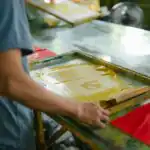
- Screen Printing: Suitable for printing on a wide range of materials, including textiles (T-shirts), plastic, wood, and glass. It allows for thick ink deposits and vibrant colours.
- Relief Printing (e.g., Letterpress): Used for specialised printing like invitations, business cards, and art prints, known for its tactile impression and unique aesthetic.
- Digital Printing (e.g., Inkjet, Laser): Ideal for short runs, variable data printing, and quick turnarounds. It is commonly used for posters, flyers, and personalised documents.
- Gravure Printing: Used for very high-volume, high-quality printing, especially for packaging, magazines, and catalogues, due to its excellent image reproduction and durability.
Materials Used for Printing
Printing requires various materials to transfer ink onto a substrate.
The following are common materials used for printing:
- Substrates: Paper (bond, art, bristol board), cardboard, fabric, plastic films, metal sheets, glass.
- Inks: Oil-based, water-based, UV-curable, solvent-based inks, each suited for different processes and substrates.
- Plates/Screens: Offset plates (aluminium), screen meshes (polyester, nylon), photopolymer plates for relief printing.
- Chemicals: Fountain solution (offset), cleaning solvents, photo emulsions (screen printing).
Tools Used for Printing
Various hand tools are essential for preparing, executing, and finishing printing jobs.
The following are common tools used for printing:
- Squeegee: Used in screen printing to force ink through the mesh onto the substrate.
- Cutting Tools: Craft knives, rotary cutters, guillotines for trimming paper and other substrates.
- Palette Knives/Spatulas: For mixing and handling inks.
- Registration Pins/Systems: To ensure accurate alignment of colours in multi-colour printing.
- Loupe/Magnifier: For inspecting print quality and detail.
Equipment Commonly Used in Printing
Printing processes rely on specific machinery to achieve desired results.
The following are common equipment used in printing:
- Printing Presses: Offset presses (sheet-fed, web-fed), screen printing machines (manual, automatic), digital printers (inkjet, laser), letterpress machines.
- Plate Processors: For developing and finishing printing plates.
- Drying Units: UV dryers, infrared dryers, air dryers for curing inks.
- Finishing Equipment: Cutters, folders, binders, laminators, die-cutting machines.
- Ink Rollers: For distributing ink evenly onto the printing plate in offset and relief printing.
Selecting the Right Process for a Job
Choosing the appropriate printing process depends on several factors to ensure efficiency and quality.
The following factors are considered when selecting a printing process:
- Quantity/Run Length: Digital for short runs, offset/gravure for long runs.
- Budget/Cost: Digital can be cheaper for small quantities; offset becomes cost-effective for larger volumes.
- Quality Requirements: High-end photography might require gravure or high-quality offset; text-heavy documents suit offset or digital.
- Type of Substrate: Screen printing for non-paper materials; offset for most paper types.
- Turnaround Time: Digital offers faster production for urgent jobs.
- Colour Requirements: Spot colours often use screen or offset; full-colour photographic reproduction uses offset or digital.
Teaching Methods/Instructional Techniques
Discussion, Lecture, Demonstration, Question and Answer, Visual Aids
Instructional Procedures
Step 1: Introduction
Time: 5 minutes
Teaching Skill: Set Induction
Teacher’s Activity: The teacher greets the pupils, reviews the previous lesson on basic printing processes, and introduces the day’s topic: “PRINTING PROCESSES (CONT),” explaining that they will delve deeper into functions, materials, tools, equipment, and selection criteria.
Pupils’ Activity: Pupils respond to greetings, recall the previous lesson, and listen attentively to the introduction of the new topic.
Learning Point: Pupils recall prior knowledge and are prepared for the new lesson.
Step 2: Functions of Each Printing Process
Time: 10 minutes
Teaching Skill: Explanation/Illustration
Teacher’s Activity: The teacher explains the specific functions and ideal applications of common printing processes such as offset lithography, screen printing, digital printing, and gravure, using examples.
Pupils’ Activity: Pupils listen, ask questions for clarification, and take notes.
Learning Point: Pupils understand that different printing processes serve distinct purposes.
Step 3: Materials Used for Printing
Time: 7 minutes
Teaching Skill: Demonstration/Identification
Teacher’s Activity: The teacher displays various printing materials like different paper types, ink samples, and printing plates (or photos of them). The teacher explains the role of each material.
Pupils’ Activity: Pupils observe the displayed materials, identify them, and note their uses.
Learning Point: Pupils identify and understand the purpose of key printing materials.
Step 4: Tools Used for Printing
Time: 7 minutes
Teaching Skill: Demonstration/Identification
Teacher’s Activity: The teacher shows and names various printing tools such as a squeegee, cutting tools, and palette knives. The teacher demonstrates how some tools are used.
Pupils’ Activity: Pupils observe the tools, identify them by name, and understand their functions.
Learning Point: Pupils recognise and know the uses of common printing tools.
Step 5: Equipment Commonly Used in Printing
Time: 7 minutes
Teaching Skill: Visual Aid/Explanation
Teacher’s Activity: The teacher displays photos or diagrams of various printing equipment (e.g., offset press, digital printer, screen printing machine) and explains their primary functions in the printing process.
Pupils’ Activity: Pupils observe the images, ask questions, and associate the equipment with their respective printing processes.
Learning Point: Pupils can identify major printing equipment and their roles.
Step 6: Selecting the Right Process for a Job
Time: 5 minutes
Teaching Skill: Discussion/Problem Solving
Teacher’s Activity: The teacher discusses the factors that influence the choice of a printing process (e.g., quantity, quality, cost, material type, turnaround time). The teacher presents a hypothetical printing job and asks pupils to suggest the best process.
Pupils’ Activity: Pupils contribute to the discussion and suggest appropriate printing processes based on the given factors.
Learning Point: Pupils learn how to select the most suitable printing process for a given job.
Step 7: Evaluation/Review
Time: 5 minutes
Teaching Skill: Questioning/Assessment
Teacher’s Activity: The teacher evaluates the learning by asking the following questions:
- State two functions of offset lithography.
- Mention three materials commonly used in printing.
- List two tools used specifically in screen printing.
- Explain two factors to consider when choosing a printing process for a job.
Pupils’ Activity: Pupils answer orally and in writing.
Learning Point: Pupils demonstrate understanding of the lesson.
Step 8: Conclusion
Time: 2 minutes
Teaching Skill: Summarisation
Teacher’s Activity: The teacher summarises the key learning points of the lesson, reinforcing the importance of understanding printing processes, materials, tools, equipment, and selection criteria. The teacher assigns homework for pupils to research a local printing press.
Pupils’ Activity: Pupils listen to the summary and copy down the homework assignment.
Learning Point: Pupils consolidate their understanding of the lesson and are given a task for further learning.
Lesson Keywords
- Offset Lithography – A printing technique where the inked image is transferred (or “offset”) from a plate to a rubber blanket, then to the printing surface.
- Screen Printing – A printing technique where a mesh is used to transfer ink onto a substrate, except in areas blocked by a stencil.
- Squeegee – A tool with a rubber blade used in screen printing to force ink through the mesh.
- Substrate – Any material on which printing is done, such as paper, fabric, or plastic.
- Digital Printing – A method of printing from a digital-based image directly to a variety of media.
Differentiation
For pupils who grasp concepts quickly, the teacher can ask them to research more advanced printing processes or the history of printing. For pupils needing more support, the teacher can provide simplified diagrams and offer one-on-one guidance during identification activities, focusing on core definitions and functions.
Note for teachers using this lesson plan
Teachers should ensure that actual samples or clear visual aids (photos, videos) of materials, tools, and equipment are available to enhance understanding. Encourage pupils to share any personal experiences with printed materials to make the lesson more relatable. Emphasise safety when discussing cutting tools.


Community Join the conversation Open discussion +