

Class: Senior Secondary School 1 (SS1, SS 1, SSS1, SSS 1)
Term: 3rd Term
Week: 2
Age: 15 years
Duration: 45 minutes
Subject: Basic Electronics
Curriculum Theme: Basic Electronics
Previous Lesson: Magnets and Magnetic Field: Key Terms and Types of Magnets.
Topic: MAGNETS AND MAGNETIC FIELD Temporary and permanent magnets.
Subject Matter: temporary magnets, permanent magnets, differences between temporary and permanent magnets, examples of temporary magnets, examples of permanent magnets
Specific Objectives
By the end of the lesson, pupils should be able to:
Cognitive Domain:
- Define temporary magnets and permanent magnets.
- List examples of temporary and permanent magnets.
- Differentiate between temporary and permanent magnets.
Affective Domain:
- Appreciate the importance of different types of magnets in everyday applications.
- Show interest in learning about magnetic properties.
Psychomotor Domain:
- Demonstrate the properties of temporary and permanent magnets using available materials.
Social Domain:
- Work collaboratively with peers in identifying and discussing various types of magnets.
Reference Materials
The following resources were used in planning this lesson:
- 9 Years Basic Education Curriculum (Senior Secondary School Basic Technology)
- State Unified Scheme of Work for Basic Electronics (SSS 1)
- Basic Electronics for Senior Secondary Schools by a relevant author/publisher.
Instructional Materials
The teacher will teach this lesson with the aid of:
- Bar magnets
- Iron filings
- Magnetic tapes
- Floppy disk
- Whiteboard/Blackboard and markers/chalk
Rationale for the Lesson
This lesson helps pupils understand the fundamental differences between temporary and permanent magnets, which are common components in many electronic devices. Understanding these concepts enables pupils to better grasp how various electronic gadgets function and their practical applications in daily life.
Prerequisite/Previous Knowledge
Pupils are assumed to have a basic understanding of magnets and their general properties from their Junior Secondary School Basic Technology lessons.
Lesson Content/Board Summary
MAGNETS AND MAGNETIC FIELD
Temporary Magnets
A temporary magnet is a material that acts as a magnet only when it is within a magnetic field or when an electric current is flowing through it. It loses its magnetism once the external magnetic field or current is removed.
The following are examples of temporary magnets:
- Electromagnets (when current flows)
- Soft iron cores (when exposed to a magnetic field)
- Paper clips (temporarily magnetized by a strong magnet)
Permanent Magnets
A permanent magnet is a material that retains its magnetism after being magnetized, even when the external magnetic field is removed. These magnets are made from hard magnetic materials.
The following are examples of permanent magnets:
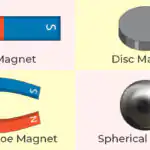
- Bar magnets
- Horseshoe magnets
- Refrigerator magnets
- Magnets in speakers and electric motors
- Alnico (an alloy of aluminium, nickel, and cobalt)
- Ferrite magnets
Differences Between Temporary and Permanent Magnets
The key differences between temporary and permanent magnets include:
- Magnetism Retention: Temporary magnets lose their magnetism easily, while permanent magnets retain their magnetism for a long period.
- Material: Temporary magnets are often made from soft magnetic materials (e.g., soft iron), while permanent magnets are made from hard magnetic materials (e.g., steel, alnico).
- Strength Control: The strength of a temporary magnet (like an electromagnet) can be easily controlled and varied, but the strength of a permanent magnet is fixed.
- Applications: Temporary magnets are used in applications requiring controlled magnetism (e.g., relays, circuit breakers, cranes), while permanent magnets are used where a constant magnetic field is needed (e.g., compasses, speakers, motors).
Teaching Methods/Instructional Techniques
Discussion, Lecture, Demonstration, Question and Answer, Visual Aids
Instructional Procedures
Step 1: Introduction
Time: 5 minutes
Teaching Skill: Set Induction
Teacher’s Activity: The teacher greets the pupils and asks them to recall what they know about magnets from JSS. The teacher then introduces the topic: “Magnets and Magnetic Field: Temporary and Permanent Magnets,” stating the specific objectives for the lesson.
Pupils’ Activity: Pupils respond to the teacher’s questions and listen attentively to the introduction and objectives.
Learning Point: Pupils recall prior knowledge and are prepared for the lesson.
Step 2: Definition of Temporary Magnets
Time: 8 minutes
Teaching Skill: Explanation/Definition
Teacher’s Activity: The teacher defines a temporary magnet, explaining that it only shows magnetism when influenced by an external magnetic field or electric current. The teacher provides examples like electromagnets and soft iron.
Pupils’ Activity: Pupils listen, take notes, and ask questions for clarification.
Learning Point: Pupils understand the definition and basic characteristics of temporary magnets.
Step 3: Definition of Permanent Magnets
Time: 8 minutes
Teaching Skill: Explanation/Definition
Teacher’s Activity: The teacher defines a permanent magnet as a material that retains its magnetism over time. The teacher explains that these are made from hard magnetic materials and gives examples.
Pupils’ Activity: Pupils listen, take notes, and compare with the concept of temporary magnets.
Learning Point: Pupils understand the definition and basic characteristics of permanent magnets.
Step 4: Examples of Temporary and Permanent Magnets
Time: 7 minutes
Teaching Skill: Illustration/Categorization
Teacher’s Activity: The teacher lists various examples of both temporary and permanent magnets, using the instructional materials (bar magnets, magnetic tapes, floppy disk, iron filings) to illustrate where possible. For instance, demonstrating how a soft iron nail can be temporarily magnetized.
Pupils’ Activity: Pupils observe the demonstrations, identify the different types of magnets, and note down the examples.
Learning Point: Pupils can identify and categorize different types of magnets.
Step 5: Differences Between Temporary and Permanent Magnets
Time: 7 minutes
Teaching Skill: Comparison/Discussion
Teacher’s Activity: The teacher leads a discussion on the key differences between temporary and permanent magnets, focusing on magnetism retention, materials used, strength control, and typical applications. The teacher writes the main points on the board.
Pupils’ Activity: Pupils actively participate in the discussion, contribute ideas, and note down the differences.
Learning Point: Pupils can clearly differentiate between temporary and permanent magnets based on their properties.
Step 6: Practical Demonstration
Time: 5 minutes
Teaching Skill: Demonstration
Teacher’s Activity: The teacher uses a bar magnet, iron filings, and a soft iron core (e.g., a large nail) to demonstrate temporary magnetism and permanent magnetism. For example, showing how the nail picks up iron filings only when near the bar magnet, and how the bar magnet always picks them up.
Pupils’ Activity: Pupils observe the demonstrations and relate them to the concepts learned.
Learning Point: Pupils visually confirm the properties of temporary and permanent magnets.
Step 7: Evaluation/Review
Time: 5 minutes
Teaching Skill: Questioning/Assessment
Teacher’s Activity: The teacher evaluates the learning by asking the following questions:
- Define a temporary magnet.
- Mention two examples of permanent magnets.
- State three key differences between a temporary and a permanent magnet.
- Give one example of a temporary magnet.
Pupils’ Activity: Pupils answer orally and in writing.
Learning Point: Pupils demonstrate understanding of the lesson.
Step 8: Conclusion
Time: 5 minutes
Teaching Skill: Summarization/Consolidation
Teacher’s Activity: The teacher briefly summarizes the main points of the lesson, reiterating the definitions and differences between temporary and permanent magnets. The teacher assigns homework, asking pupils to list five devices that use permanent magnets and five that use temporary magnets.
Pupils’ Activity: Pupils listen to the summary and note down the homework.
Learning Point: Pupils consolidate their understanding of the topic.
Lesson Keywords
- Magnet – An object that produces a magnetic field and attracts or repels other magnets or magnetic materials.
- Magnetic Field – The area around a magnet where its magnetic force is exerted.
- Temporary Magnet – A magnet that only exhibits magnetic properties when under the influence of an external magnetic field or electric current.
- Permanent Magnet – A magnet that retains its magnetic properties for a long time after being magnetized.
- Electromagnet – A type of temporary magnet in which the magnetic field is produced by an electric current.
Differentiation
For pupils who grasp concepts quickly, the teacher can challenge them to research the applications of different magnetic materials in advanced electronics. For pupils needing more support, the teacher will provide simplified definitions and more hands-on examples, possibly pairing them with faster learners for peer support during practical activities.
Note for teachers using this lesson plan
Ensure that the bar magnets and iron filings are readily available for the demonstration. Emphasize the practical applications of both temporary and permanent magnets to make the lesson more relatable. Encourage pupils to explore common household items that use magnets.


Community Join the conversation Open discussion +