

Class: Senior Secondary School 1 (SS1, SS 1, SSS1, SSS 1)
Term: 1st Term
Week: 3
Age: 15 years
Duration: 45 minutes
Subject: Yoruba
Curriculum Theme: Yoruba
Previous Lesson: Ìwé Kíkà: Ìtàn Àròsô Ôlörõ Geere.
Topic: ÈDÈ: Álífábëtì Èdè Yorùbá
Subject Matter: álífábëtì èdè Yorùbá, köńsónáýtì letters, fáwëlì letters, pronunciation drills, identifying consonant and vowel sounds
Specific Objectives
By the end of the lesson, pupils should be able to:
Cognitive Domain:
- Identify all the letters of the Yoruba alphabet.
- Differentiate between Yoruba vowel (fáwẹ̀lì) and consonant (kọ́ńsónáǹtì) letters.
- State the number of vowels and consonants in Yoruba.
Affective Domain:
- Listen attentively as the teacher pronounces the Yoruba letters.
- Participate actively in pronunciation drills.
- Show interest in learning the correct sounds of Yoruba letters.
Psychomotor Domain:
- Pronounce the Yoruba letters, including vowels and consonants, correctly.
- Copy the Yoruba alphabet accurately.
- Write examples of words using specific Yoruba letters.
Social Domain:
- Work cooperatively during group pronunciation practice.
Reference Materials
The following resources were used in planning this lesson:
- 9 Years Basic Education Curriculum for Yoruba Language.
- State Unified Scheme of Work for Yoruba Language.
- Aláwíyé Yoruba Fun Ilé Ẹkọ́ Gírámà Kẹ́ta (Book 3).
- https://waeconline.org.ng/
- https://nerdc.gov.ng/
Instructional Materials
The teacher will teach this lesson with the aid of:
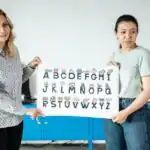
- Kádíböõdù ńlá tí a kô álífábëtì Yorùbá sí (Large cardboard with Yoruba alphabet written on it).
- Kádíböõdù ìró köńsónáýtì àti fáwëlì (Cardboard for consonant and vowel sounds).
- Káàdì lëtà (Letter cards).
Rationale for the Lesson
This lesson helps pupils to understand the foundational elements of the Yoruba language. Knowing the alphabet and its sounds enables them to read, write, and pronounce Yoruba words correctly, which is important for effective communication in the language.
Prerequisite/Previous Knowledge
Pupils are expected to have some basic knowledge of the Yoruba language, including simple sounds and perhaps a few letters learned in earlier classes.
Lesson Content/Board Summary
Álífábëtì Èdè Yorùbá (The Yoruba Alphabet)
Ìtumò Álífábëtì Èdè Yorùbá (Meaning of Yoruba Alphabet)
Álífábëtì èdè Yorùbá ni gbogbo àwọn lẹ́tà tí a fi ń kọ èdè Yorùbá. Àwọn lẹ́tà wọ̀nyí ni ó jẹ́ ìpìlẹ̀ fún kíkà àti kíkọ̀wé ní èdè Yorùbá.
Àwọn Lẹ́tà Álífábẹ́tì Èdè Yorùbá (Letters of the Yoruba Alphabet)
Álífábẹ́tì èdè Yorùbá ní lẹ́tà mẹ́ẹ̀ẹ́dọ́gbọ̀n (25).
Àwọn lẹ́tà wọ̀nyí ni:
- A, B, D, E, Ẹ, F, G, GB, H, I, J, K, L, M, N, O, Ọ, P, R, S, Ṣ, T, U, W, Y.
Àwọn Fáwẹ̀lì (Vowels)
Fáwẹ̀lì ni àwọn lẹ́tà tí a lè pè jáde láìsí ìdènà nínú ẹnu.
Àwọn fáwẹ̀lì méje (7) ló wà nínú èdè Yorùbá. Wọ́n pín sí fáwẹ̀lì marun-un tí kò ní àmì òrùn àti méjì tí ó ní àmì òrùn.
Àwọn fáwẹ̀lì náà ni:
- A, E, Ẹ, I, O, Ọ, U.
Àwọn Kọ́ńsónáǹtì (Consonants)
Kọ́ńsónáǹtì ni àwọn lẹ́tà tí a ń pè jáde pẹ̀lú ìdènà díẹ̀ nínú ẹnu, bóyá láti ètè, eyín, tàbí ahọ́n.
Àwọn kọ́ńsónáǹtì mẹ́tàdínlógún (18) ló wà nínú èdè Yorùbá.
Àwọn kọ́ńsónáǹtì náà ni:
- B, D, F, G, GB, H, J, K, L, M, N, P, R, S, Ṣ, T, W, Y.
Bí a Ṣe Ń Pe Àwọn Lẹ́tà (How to Pronounce Letters)
Olùkọ́ yóò ṣe ìtọ́nisọ́nà lórí bí a ṣe ń pe àwọn lẹ́tà kọ̀ọ̀kan, pàápàá àwọn fáwẹ̀lì tí ó ní àmì òrùn àti àwọn kọ́ńsónáǹtì bíi ‘gb’ àti ‘ṣ’.
Teaching Methods/Instructional Techniques
Discussion, Lecture, Demonstration, Question and Answer, Visual Aids
Instructional Procedures
Step 1: Introduction
Time: 5 minutes
Teaching Skill: Set Induction
Teacher’s Activity: The teacher greets the pupils and briefly reviews the previous lesson (if applicable). The teacher then introduces the new topic, “Álífábëtì Èdè Yorùbá,” by asking pupils if they know what an alphabet is in their mother tongue.
Pupils’ Activity: Pupils respond to the greetings and questions, attempting to recall or share their understanding of an alphabet.
Learning Point: Pupils connect their prior knowledge to the new lesson and are prepared for learning.
Step 2: Presentation of the Yoruba Alphabet
Time: 10 minutes
Teaching Skill: Explanation/Demonstration
Teacher’s Activity: The teacher displays the large cardboard with the complete Yoruba alphabet. The teacher then lists and pronounces each letter of the Yoruba alphabet clearly, pointing to them on the chart.
Pupils’ Activity: Pupils observe the chart, listen attentively, and repeat the pronunciation of each letter after the teacher.
Learning Point: Pupils identify and become familiar with all the letters of the Yoruba alphabet.
Step 3: Explanation of Yoruba Vowels (Fáwẹ̀lì)
Time: 7 minutes
Teaching Skill: Explanation/Drilling
Teacher’s Activity: The teacher defines what a vowel is in Yoruba and displays the cardboard showing only the Yoruba vowels. The teacher lists the seven Yoruba vowels (A, E, Ẹ, I, O, Ọ, U) and demonstrates their correct pronunciation, emphasizing the sounds of Ẹ and Ọ.
Pupils’ Activity: Pupils listen to the definition, observe the vowel chart, and practice pronouncing the vowels repeatedly after the teacher.
Learning Point: Pupils understand the concept of vowels in Yoruba and can pronounce them correctly.
Step 4: Explanation of Yoruba Consonants (Kọ́ńsónáǹtì)
Time: 7 minutes
Teaching Skill: Explanation/Drilling
Teacher’s Activity: The teacher defines what a consonant is in Yoruba and displays the cardboard showing only the Yoruba consonants. The teacher lists the eighteen Yoruba consonants and demonstrates their pronunciation, paying attention to sounds like ‘GB’ and ‘Ṣ’.
Pupils’ Activity: Pupils listen to the definition, observe the consonant chart, and practice pronouncing the consonants repeatedly after the teacher.
Learning Point: Pupils understand the concept of consonants in Yoruba and can pronounce them correctly.
Step 5: Pronunciation Drills and Identification
Time: 8 minutes
Teaching Skill: Practice/Application
Teacher’s Activity: The teacher leads a general pronunciation drill for all letters, mixing vowels and consonants. The teacher then uses letter cards to call out letters and asks pupils to identify if they are vowels or consonants.
Pupils’ Activity: Pupils participate actively in the pronunciation drills. They identify whether the called-out letters are vowels or consonants.
Learning Point: Pupils improve their pronunciation and ability to differentiate between Yoruba vowels and consonants.
Step 6: Writing Practice
Time: 3 minutes
Teaching Skill: Guided Practice
Teacher’s Activity: The teacher instructs pupils to copy the entire Yoruba alphabet from the board into their notebooks.
Pupils’ Activity: Pupils carefully copy the Yoruba alphabet into their notebooks.
Learning Point: Pupils practice writing the Yoruba alphabet accurately.
Step 7: Evaluation/Review
Time: 5 minutes
Teaching Skill: Questioning/Assessment
Teacher’s Activity: The teacher evaluates the learning by asking the following questions:
- Kí ni álífábëtì èdè Yorùbá? (What is the Yoruba alphabet?)
- Mẹ́ta nínú àwọn fáwẹ̀lì èdè Yorùbá. (Mention three of the Yoruba vowels.)
- Mẹ́ta nínú àwọn kọ́ńsónáǹtì èdè Yorùbá. (Mention three of the Yoruba consonants.)
- Báwo ni àwọn fáwẹ̀lì àti kọ́ńsónáǹtì ṣe yàtọ̀ síra? (How do vowels and consonants differ?)
Pupils’ Activity: Pupils answer orally and in writing.
Learning Point: Pupils demonstrate understanding of the lesson.
Step 8: Conclusion
Time: 3 minutes
Teaching Skill: Summarization/Assignment
Teacher’s Activity: The teacher summarizes the main points of the lesson, reiterating the importance of knowing the Yoruba alphabet. The teacher gives an assignment: “Kọ gbogbo álífábëtì èdè Yorùbá sí inú ìwé àlàyé yín lẹ́ẹ̀mejì. (Write the complete Yoruba alphabet in your notebook twice).”
Pupils’ Activity: Pupils listen to the summary and copy down the assignment.
Learning Point: Pupils consolidate their learning and are given tasks to reinforce their understanding.
Lesson Keywords
- Álífábëtì – Ìgbékalẹ̀ gbogbo àwọn lẹ́tà tí a fi ń kọ èdè kan. (The arrangement of all letters used to write a language.)
- Fáwẹ̀lì – Àwọn lẹ́tà tí a lè pè jáde láìsí ìdènà nínú ẹnu. (Letters that can be pronounced without obstruction in the mouth.)
- Kọ́ńsónáǹtì – Àwọn lẹ́tà tí a ń pè jáde pẹ̀lú ìdènà díẹ̀ nínú ẹnu. (Letters that are pronounced with some obstruction in the mouth.)
- Ìró – Ohùn tí a fi ń sọ̀rọ̀ tàbí pe lẹ́tà. (Sound used for speaking or pronouncing letters.)
- Lẹ́tà – Àmì kíkọ tí ó dúró fún ìró kan nínú èdè. (A written symbol representing a sound in a language.)
Differentiation
For pupils who are fast learners, the teacher can challenge them to identify words that start with specific Yoruba letters. For pupils who need more support, the teacher can provide individual attention during pronunciation drills and offer simplified letter cards for repeated practice.
Note for teachers using this lesson plan
Ensure clear and correct pronunciation of all Yoruba letters. Pay special attention to the distinct sounds of Ẹ, Ọ, and Ṣ, as these are unique to the Yoruba alphabet. Encourage active participation from all pupils throughout the lesson to build their confidence in speaking and writing Yoruba.
Community Join the conversation Open discussion +