

class: Primary One
Term: Second Term
Subject: National Values Education
Curriculum Theme: Civic education
Previous Lesson: Results Of Obeying Government Rules And Regulations
Topic: Difference Between Courtesy, Politeness And Etiquette
Content/Learning Area: Difference Between Courtesy, Politeness And Etiquette
Time Allocation: 40 minutes
Performance Objectives
By the end of the lesson, pupils should be able to:
- Cognitive Domain:
1.Define courtesy, politeness, and etiquette.
2. Explain the differences between courtesy, politeness, and etiquette.
- Affective Domain:
1. Demonstrate recognition for good manners.2. Identify polite behaviors.
- Psychomotor Domain:
1. Practise greeting and thanking classmates using proper etiquette.
- Social Domain:
1. Relate with peers using courteous and polite language during group activities.
Reference Materials
9–Years Basic Education Curriculum
Abuja Educational Resource Centre Scheme of Work
NAPPS National Unified Scheme of Work
Online Information from Britannica – Etiquette | Definition, Examples, Types, & Facts
Relevant Textbooks
Instructional Materials
To deliver this lesson, the teacher will use the following materials:
Flashcards with the terms “Courtesy,” “Politeness,” and “Etiquette”
Pictures showing polite behaviors (e.g., greeting, thanking, helping others)
A whiteboard and marker
Rationale for the Lesson
This lesson is crucial for developing children’s social skills and understanding of appropriate behavior. Knowing the difference between courtesy, politeness, and etiquette helps build positive relationships and contributes to a harmonious classroom environment.
Prerequisite/Previous Knowledge
The teacher will begin by asking pupils if they know what it means to be polite. The teacher will than ask for examples of polite actions they have seen or done. This will lead into a discussion about courtesy, politeness, and etiquette.
Lesson Content
Difference Between Courtesy, Politeness And Etiquette
Courtesy, politeness, and etiquette are ways we show respect and kindness to people around us.
The following are examples of courtesy, politeness, and etiquette:
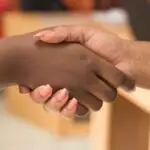
- Courtesy: Showing respect and consideration to others, like greeting an elder politely.
- Politeness: Using kind words and good manners, such as saying “please” and “thank you.”
- Etiquette: Following social rules,like eating with the correct utensils.
- Courtesy often involves actions like helping someone in need.
- Etiquette focuses on specific situations, like wearing formal clothes to an event.
- Courtesy can be demonstrated by offering your seat to an elderly person on a bus.
- Politeness includes writing thank-you notes after receiving a gift.
- Etiquette dictates how to behave at a wedding or funeral.
Teaching Methods
To deliver this lesson, the teacher will adopt the following methods: Direct instruction, Discussion, Role-playing, Visual Aids.
Instructional Procedures
To deliver this lesson, the teacher will adopt the following steps:
Step 1: Introduction
Time: 5 mins
Teaching Skill: Set Induction
Teacher’s Activity: Asks pupils if they know the words “courtesy,” “politeness,” and “etiquette” and gives examples.
Pupils’ Activity: Respond by sharing ideas or examples of polite behaviors.
Learning Point: Courtesy, politeness, and etiquette are ways of being respectful and kind.
Step 2: Description of Key Concepts
Time: 10 mins
Teaching Skill: Direct Instruction
Teacher’s Activity: Defines courtesy, politeness, and etiquette and explains their differences.
Pupils’ Activity: Listen and ask questions for clarification.
Learning Point: Courtesy is being respectful, politeness is showing good manners, etiquette is following social rules.
Step 3: Demonstration/Guided Practice
Time: 8 mins
Teaching Skill: Demonstration
Teacher’s Activity: Shows flashcards and pictures of people demonstrating courtesy, politeness, and etiquette.
Pupils’ Activity: Identify which term matches the pictures shown.
Learning Point: Real-life examples help distinguish the three terms clearly.
Step 4: Self-reliant Practice
Time: 10 mins
Teaching Skill: Role-play
Teacher’s Activity: Guides pupils to role-play scenarios showing politeness, courtesy, and etiquette.
Pupils’ activity: Act out the scenarios with classmates.
Learning Point: Applying these terms in practice improves understanding and skills.
Step 5: Note-Taking
Time: 4 mins
Teaching skill: Note Writing
Teacher’s Activity: Instructs pupils to copy a concise note summarizing the differences.
Pupils’ Activity: Copy the note into their exercise books.learning Point: Pupils understand key concepts through written summaries.
Step 6: Evaluation/Review
Time: 2 mins
Teaching Skill: Oral questioning
Teacher’s Activity: Asks questions to assess understanding of the topic.
Pupils’ activity: Answer questions to demonstrate learning.
learning Point: Pupils can differentiate between courtesy, politeness, and etiquette.
Objective-aligned checks:
- Define courtesy, politeness, and etiquette.
- Explain the differences between courtesy, politeness, and etiquette.
- Demonstrate recognition for good manners.
Step 7: Conclusion
Time: 1 min
Teaching skill: Recap
Teacher’s Activity: Recaps the lesson by summarizing the key points.
Pupils’ Activity: Share what they learned and how they will use it.
Learning Point: Pupils are confident in their understanding and submission.
Lesson Keywords
Courtesy – Showing respect and consideration to others.
Politeness – Using kind words and good manners. Etiquette – Following social rules.
Lesson Evaluation
To evaluate the learning, the teacher asks pupils to:
- What is the meaning of courtesy?
- Mention one example of politeness.
- What is etiquette?
- Name one difference between politeness and courtesy.
- Role-play a polite behavior with a classmate.
Assignment/Homework
- List three examples of courtesy you can show at home.
- Write down two polite phrases you can use when asking for something.
- Describe one etiquette rule you should follow during meal times.
Differentiation
For slower learners: The teacher will provide one-on-one assistance and use simpler language.
For advanced learners: The teacher will encourage them to research additional examples of courtesy, politeness, and etiquette.
For visual/auditory/kinesthetic learners: use visual aids,verbal explanations,and role-playing activities to cater to different learning styles.
Note for Teachers
Encourage pupils to practice courtesy, politeness, and etiquette in their daily interactions. Provide positive reinforcement when they demonstrate these behaviors. Observe pupils’ participation in discussions,their ability to define and differentiate between the three concepts,and their application of the concepts in role-playing activities. To conclude the lesson, the teacher will review the key differences between courtesy, politeness, and etiquette, emphasizing the importance of practicing these behaviors in daily life.The teacher will also praise the pupils for their participation and encourage them to continue practicing good manners.


Community Join the conversation Open discussion +