

Class: Senior Secondary School 2 (SS2 / SSS2)
Term: 1st Term
Week: 8
Age: 16 years
Duration: 45 minutes
Subject: Visual Art
Curriculum Theme: Creative Arts and Design
Previous Lesson: Imaginative Composition: Story Scene and Colour Distribution.
Topic: INTRODUCTION TO SCULPTURE
Subject Matter: Meaning of sculpture (art of creating three-dimensional forms), functions of sculpture, sculptural techniques and their usage.
Specific Objectives
By the end of the lesson, pupils should be able to:
Cognitive Domain:
- Define sculpture as an art form.
- Identify and describe the various functions of sculpture in society.
- List and explain different sculptural techniques.
- Recall common sculptural tools and their specific uses.
Affective Domain:
- Appreciate the artistic and cultural importance of sculpture.
- Show interest in learning more about sculptural processes and materials.
- Value the skill and effort involved in creating sculptural works.
Psychomotor Domain:
- Accurately identify photographs of different sculptural tools.
- Describe how specific tools are used in various sculptural techniques.
- Distinguish between different sculptural techniques based on their characteristics.
Social Domain:
- Discuss the role of sculpture in community development and cultural expression.
- Collaborate with peers to identify and describe sculptural elements in their environment.
Reference Materials
The following resources were used in planning this lesson:
- Senior Secondary Schools Education Curriculum
- State Unified Scheme of Work
- Agberien, J.A. (2016). Visual Art for Senior Secondary Schools. University Press PLC.
- https://www.britannica.com/art/sculpture
- https://www.artelino.com/articles/woodblock-printmaking-techniques.asp
Instructional Materials
The teacher will teach this lesson with the aid of:
- Concrete object tools (e.g., carving tools, modelling tools if available)
- Photographs of people and animals (as sculptural subjects)
- Charts or pictures showing different types of sculptures
- Charts or pictures illustrating various sculptural tools and techniques
Rationale for the Lesson
This lesson helps pupils understand sculpture as a significant three-dimensional art form. It enables them to appreciate the different ways sculpture contributes to society and to recognize the tools and methods artists use to create these works, enriching their understanding of art and culture.
Prerequisite/Previous Knowledge
Pupils should have a basic understanding of art forms and the concept of two-dimensional art from their previous lessons.
Lesson Content/Board Summary
INTRODUCTION TO SCULPTURE
Meaning of Sculpture
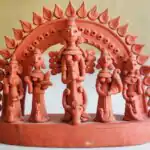
Sculpture is an art form that involves creating three-dimensional objects, either in the round (freestanding) or in relief (attached to a background). Sculptures can be made from various materials and are meant to be viewed from multiple angles.
Functions of Sculpture
Sculptures serve many purposes in society. These functions include:
- Aesthetic Function: To provide beauty and visual pleasure in public and private spaces.
- Commemorative Function: To honour individuals, events, or historical moments (e.g., statues of heroes, war memorials).
- Religious/Spiritual Function: To represent deities, sacred figures, or spiritual concepts (e.g., religious idols, shrine carvings).
- Utilitarian/Functional Function: To serve a practical purpose while also being artistic (e.g., decorated furniture, architectural elements, ceremonial objects).
- Narrative Function: To tell stories or convey messages about history, culture, or social issues.
- Symbolic Function: To represent ideas, values, or identities of a group or nation.
Sculptural Techniques
Sculpture involves various techniques to create three-dimensional forms. The choice of technique often depends on the material and the desired outcome.
Common sculptural techniques include:
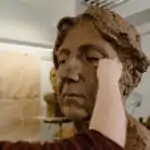
- Modelling: This involves building up and shaping soft or pliable materials like clay, wax, or plaster. It is an additive process where material is added to create the form.
- Carving: This is a subtractive process where material is removed from a solid block of wood, stone, ice, or other hard materials using tools like chisels, mallets, and gouges.
- Casting: This technique involves creating a mold from an original sculpture (the “positive”) and then pouring liquid material (like molten metal, plaster, or resin) into the mold. Once solidified, the mold is removed, leaving a replica of the original.
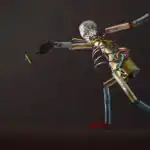
- Construction/Assemblage: This involves joining, welding, gluing, or assembling different materials (e.g., metal, wood, found objects) to create a sculptural form. It can be both additive and subtractive.
Sculptural Tools and Their Usage
Various tools are used in sculpture, each designed for specific techniques and materials.
Some common sculptural tools and their uses are:
- Modelling Tools: Spatulas, loop tools, wire tools, and ribbon tools are used for shaping, smoothing, and detailing soft materials like clay and wax.
- Carving Tools:
- Chisels: Used for cutting and shaping wood or stone.
- Mallets: Used to strike chisels, providing force for carving.
- Gouges: Curved chisels used for creating concave forms.
- Rasps and Files: Used for rough shaping and refining surfaces by abrading material.
- Casting Tools: Crucibles (for melting metal), ladles (for pouring), and various mold-making materials are essential for the casting process.
- Smoothing/Finishing Tools: Sandpaper, sponges, and rifflers (small files) are used for refining surfaces and achieving desired textures.
- Armatures: Internal frameworks, often made of wire or metal, used to support soft materials like clay, especially for larger sculptures.
Teaching Methods/Instructional Techniques
Discussion, Lecture, Demonstration, Question and Answer, Visual Aids
Instructional Procedures
Step 1: Introduction
Time: 5 minutes
Teaching Skill: Set Induction
Teacher’s Activity: The teacher greets the pupils, reviews the previous lesson briefly, and then introduces the new topic, “Introduction to Sculpture,” by asking pupils what they understand by the word ‘sculpture’ or if they have seen any sculptures.
Pupils’ Activity: Pupils respond to the teacher’s questions and state what they think sculpture means.
Learning Point: Pupils are introduced to the lesson and connect it to their prior knowledge.
Step 2: Meaning of Sculpture
Time: 7 minutes
Teaching Skill: Explanation/Definition
Teacher’s Activity: The teacher explains the meaning of sculpture as a three-dimensional art form, emphasizing its difference from two-dimensional art, using visual examples of sculptures.
Pupils’ Activity: Pupils listen attentively, observe the examples, and ask questions for clarification.
Learning Point: Pupils understand the definition of sculpture.
Step 3: Functions of Sculpture
Time: 7 minutes
Teaching Skill: Discussion/Illustration
Teacher’s Activity: The teacher leads a discussion on the various functions of sculpture in society, such as aesthetic, commemorative, religious, and utilitarian purposes, providing local and international examples.
Pupils’ Activity: Pupils contribute to the discussion by identifying functions of sculptures they have seen and discussing their importance.
Learning Point: Pupils recognize the diverse roles of sculpture.
Step 4: Sculptural Techniques
Time: 7 minutes
Teaching Skill: Explanation/Categorization
Teacher’s Activity: The teacher explains the major sculptural techniques: modelling, carving, casting, and construction/assemblage, differentiating between additive and subtractive processes with illustrations.
Pupils’ Activity: Pupils listen, take notes, and identify the characteristics of each technique.
Learning Point: Pupils understand the different methods used to create sculptures.
Step 5: Sculptural Tools and Their Usage
Time: 7 minutes
Teaching Skill: Demonstration/Identification
Teacher’s Activity: The teacher presents various sculptural tools (real objects or pictures) and explains their specific uses in relation to the techniques discussed (e.g., chisels for carving, spatulas for modelling).
Pupils’ Activity: Pupils observe the tools, identify them, and describe their functions.
Learning Point: Pupils recognize common sculptural tools and know how they are used.
Step 6: Class Activity/Discussion
Time: 5 minutes
Teaching Skill: Application/Critical Thinking
Teacher’s Activity: The teacher shows pupils photographs of different sculptures and asks them to identify the possible technique used and some tools that might have been involved in their creation.
Pupils’ Activity: Pupils analyze the sculptures and discuss their observations with their classmates.
Learning Point: Pupils apply their knowledge of techniques and tools to practical examples.
Step 7: Evaluation/Review
Time: 5 minutes
Teaching Skill: Questioning/Assessment
Teacher’s Activity: The teacher evaluates the learning by asking the following questions:
- Define sculpture in your own words.
- Mention three functions of sculpture in society.
- List two sculptural techniques and briefly explain one of them.
- Identify two tools used in carving and state their purpose.
Pupils’ Activity: Pupils answer orally and in writing.
Learning Point: Pupils demonstrate understanding of the lesson.
Step 8: Conclusion
Time: 2 minutes
Teaching Skill: Summarization
Teacher’s Activity: The teacher summarizes the key points of the lesson, reiterating the definition, functions, techniques, and tools of sculpture, and assigns homework.
Pupils’ Activity: Pupils listen and copy down the homework assignment.
Learning Point: The lesson is concluded, and pupils are given follow-up tasks.
Lesson Keywords
- Sculpture – Three-dimensional art form.
- Modelling – Additive technique using soft materials.
- Carving – Subtractive technique removing material from a solid block.
- Casting – Technique involving pouring liquid material into a mold.
- Assemblage – Technique of joining various materials.
- Armature – Internal support structure for sculpture.
Differentiation
For pupils who grasp concepts quickly, the teacher can encourage them to research different types of sculptural materials or famous Nigerian sculptors. For those needing more support, the teacher can provide simplified diagrams of tools and techniques and offer one-on-one assistance during class activities.
Note for teachers using this lesson plan
Teachers should ensure they have adequate visual aids, such as charts, photographs, or even small examples of sculptural tools, to make the lesson engaging and clear. Encourage pupils to observe sculptures in their local environment and discuss their observations. Emphasize safety if demonstrating actual tools.

Community Join the conversation Open discussion +