

Class: Senior Secondary School 2 (SS2 / SSS2)
Term: 2nd Term
Week: 6
Age: 16 years
Duration: 45 minutes
Subject: Visual Art
Curriculum Theme: Indigenous Crafts
Previous Lesson: Indigenous Craft Basketry and Mat Making: Weaving Materials.
Topic: INDIGENOUS CRAFT BSKETRY AND MAL MAKING
Subject Matter: Cloth weaving, basic principles of weaving (warp, weft, shuttle), types of loom (narrow horizontal loom, wide vertical loom)
Specific Objectives
By the end of the lesson, pupils should be able to:
Cognitive Domain:
- Define weaving.
- Describe the basic principles of weaving, including warp, weft, and shuttle.
- Identify and differentiate between narrow horizontal and wide vertical looms.
Affective Domain:
- Appreciate the cultural significance of indigenous weaving crafts in Nigeria.
- Develop an interest in learning and preserving traditional weaving techniques.
Psychomotor Domain:
- Identify various materials used for weaving.
- Sketch simple diagrams of different types of looms.
Social Domain:
- Discuss the role of weaving in community development and cultural preservation.
Reference Materials
The following resources were used in planning this lesson:
- Senior Secondary Schools Education Curriculum
- State Unified Scheme of Work
- Cultural and Creative Arts for Senior Secondary Schools, Book 2
- https://www.google.com/search?q=indigenous+craft+weaving+nigeria
- https://www.youtube.com/results?search_query=types+of+looms+and+weaving+process
Instructional Materials
The teacher will teach this lesson with the aid of:
- Loom images
- Weaving samples (e.g., woven cloth, raffia mats)
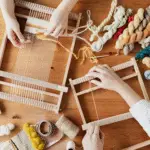
- Raffia or thread materials
- Charts illustrating the weaving process
- Pictures or videos of indigenous weavers at work
Rationale for the Lesson
This lesson helps pupils understand the fundamental techniques and tools used in indigenous weaving crafts. It enables them to appreciate the rich cultural heritage of Nigeria through traditional artistry and encourages the development of practical skills in craft making.
Prerequisite/Previous Knowledge
Pupils have basic knowledge of local crafts and art forms from their previous lessons.
Lesson Content/Board Summary
Indigenous Craft: Weaving
Introduction to Weaving
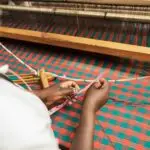
Weaving is the method of textile production in which two distinct sets of yarns or threads are interlaced at right angles to form fabric or cloth. It is a fundamental technique used in various indigenous crafts, including basketry, mat making, and cloth production.
Basic Principles of Weaving
The process of weaving relies on the interaction of three main components:
- Warp – These are the strong, stationary threads that are held taut on a loom. They run lengthwise through the fabric.
- Weft (or Filling) – These are the threads that are interlaced through the warp threads. They run crosswise from side to side, creating the design and texture of the fabric.
- Shuttle – This is a tool used to carry the weft thread back and forth through the warp threads, facilitating the interlacing process.
Types of Loom
A loom is a device used to weave fabric. Different types of looms are used depending on the scale and type of weaving:
- Narrow Horizontal Loom – This type of loom is typically small and portable, often operated by one person. It is used for weaving narrow strips of cloth, such as those used for traditional garments, sashes, or decorative bands. The warp threads are stretched horizontally.
- Wide Vertical Loom – This loom is larger and usually stands upright. It allows for the production of wider fabrics, often used for blankets, large cloths, or tapestries. Multiple weavers can sometimes work on a single wide vertical loom, and the warp threads are stretched vertically.
Teaching Methods/Instructional Techniques
Discussion, Lecture, Demonstration, Question and Answer, Visual Aids
Instructional Procedures
Step 1: Introduction
Time: 5 minutes
Teaching Skill: Set Induction
Teacher’s Activity: The teacher greets the pupils and asks them to mention any traditional crafts they know that involve interlacing materials.
Pupils’ Activity: Pupils respond by mentioning crafts like basketry, mat making, and cloth weaving.
Learning Point: Pupils recall prior knowledge related to indigenous crafts.
Step 2: Defining Weaving
Time: 7 minutes
Teaching Skill: Explanation/Definition
Teacher’s Activity: The teacher defines weaving as the interlacing of two sets of threads (warp and weft) to form a fabric, explaining its importance in indigenous crafts.
Pupils’ Activity: Pupils listen attentively and copy the definition into their notebooks.
Learning Point: Pupils understand the basic definition of weaving.
Step 3: Explaining Basic Principles of Weaving
Time: 10 minutes
Teaching Skill: Explanation/Demonstration
Teacher’s Activity: The teacher uses diagrams, weaving samples, or raffia/thread materials to explain and demonstrate the concepts of warp, weft, and shuttle.
Pupils’ Activity: Pupils observe the demonstration, ask questions, and describe the functions of warp, weft, and shuttle.
Learning Point: Pupils grasp the fundamental components and their roles in weaving.
Step 4: Discussing Types of Loom
Time: 8 minutes
Teaching Skill: Discussion/Visual Aids
Teacher’s Activity: The teacher displays images of narrow horizontal and wide vertical looms, discussing their characteristics, uses, and the types of fabrics produced.
Pupils’ Activity: Pupils identify the different looms and describe their features and uses.
Learning Point: Pupils learn about the different tools (looms) used in weaving.
Step 5: Cultural Significance of Indigenous Weaving
Time: 5 minutes
Teaching Skill: Discussion/Engagement
Teacher’s Activity: The teacher leads a brief discussion on the cultural importance of weaving in Nigerian societies, including its role in tradition, economy, and identity.
Pupils’ Activity: Pupils contribute to the discussion, sharing their thoughts on the value of weaving.
Learning Point: Pupils appreciate the cultural relevance of weaving.
Step 6: Practical Identification and Sketching
Time: 5 minutes
Teaching Skill: Practical Application
Teacher’s Activity: The teacher provides pupils with various weaving materials (e.g., different types of threads, raffia) for identification and instructs them to make quick sketches of a simple loom.
Pupils’ Activity: Pupils identify materials and attempt to sketch simple loom structures.
Learning Point: Pupils develop practical identification and drawing skills related to weaving.
Step 7: Evaluation/Review
Time: 5 minutes
Teaching Skill: Questioning/Assessment
Teacher’s Activity: The teacher evaluates the learning by asking the following questions:
- What is weaving?
- State and explain the three basic principles of weaving.
- Differentiate between a narrow horizontal loom and a wide vertical loom.
- Mention two materials commonly used for weaving indigenous crafts.
Pupils’ Activity: Pupils answer orally and in writing.
Learning Point: Pupils demonstrate understanding of the lesson.
Step 8: Conclusion
Time: 5 minutes
Teaching Skill: Summarization/Assignment
Teacher’s Activity: The teacher summarizes the key points of the lesson and assigns homework: “Draw and label a simple loom, and find out about a specific weaving craft from your local community.”
Pupils’ Activity: Pupils listen to the summary and copy the homework.
Learning Point: Pupils consolidate their learning and prepare for further exploration.
Lesson Keywords
- Weaving – The process of interlacing two sets of threads (warp and weft) to create fabric.
- Warp – The lengthwise threads held taut on a loom.
- Weft – The crosswise threads interlaced through the warp.
- Shuttle – A tool that carries the weft thread across the warp.
- Loom – A device used to weave fabric.
- Indigenous Craft – Traditional art forms and skills passed down through generations within a community.
Differentiation
For pupils who grasp concepts quickly, they can research specific indigenous weaving patterns or techniques. For those needing more support, the teacher will provide additional visual aids and simplified explanations, focusing on identifying the basic components.
Note for teachers using this lesson plan
Encourage pupils to bring in examples of woven items from their homes or communities. Where possible, arrange for a local weaver to demonstrate basic techniques. Emphasize the connection between the theoretical knowledge and the practical application in traditional crafts.

Community Join the conversation Open discussion +