

Note for teachers using this lesson plan
This lesson introduces JSS 1 students to the concept of environmental erosion, its various forms, and the factors that cause it, both naturally and through human activities. Prepare visual aids such as charts or pictures of erosion sites to make the concept concrete. Ensure a safe learning environment, especially if discussing or showing examples of erosion in the local community. By the end of the lesson, students should be able to identify, explain, and suggest basic control measures for erosion.
Class: JSS 1
Term: First Term
Week: 1
Age: 12 years
Duration: 45 minutes
Subject: Intermediate Science
Curriculum Theme: Our Environment
Focal competence: Applying different ways of preventing erosion and practicing erosion control measures
Key competencies/values: Communication; Collaboration; ICT and Digital Competencies; Respect
Skills:
- Applying different ways of preventing erosion in the environment
Previous Lesson:
Topic: Environmental Degradation: Erosion
Subject Matter: Meaning, examples of erosion, Identification of natural and human causes of erosion, Different methods of controlling erosion
Specific Objectives
By the end of the lesson, pupils/students should be able to:
Cognitive Domain
- Give examples of erosion.
- State the causes of erosion.
- Outline the methods of controlling erosion.
- Identify natural and human causes of erosion.
Affective Domain
- Participate actively in discussions about erosion.
- Appreciate the importance of controlling erosion.
Psychomotor Domain
- Observe an erosion site or a safe teacher-provided visual/virtual example and record observations.
- Draw simple diagrams illustrating types of erosion or control methods.
Reference Materials
The following resources were used in planning this lesson:
- 2025 Revised 9 Years Basic Education Curriculum
- Relevant State Unified Scheme of Work
- Basic Science and Technology Textbook for JSS 1
- The HeadTeacher Scheme of work
Instructional Materials
The teacher will teach this lesson with the aid of:
- Charts/pictures showing different types of erosion (e.g., gully erosion, sheet erosion).
- Charts/pictures showing different methods of controlling and preventing erosion (e.g., terracing, planting trees).
- Computer with internet access for showing virtual examples (if available).
- Whiteboard/Blackboard and markers/chalk.
Rationale for the Lesson
Understanding erosion is essential for students to grasp how natural processes and human actions impact the environment. This lesson helps students identify the causes of environmental degradation and learn practical ways to mitigate its effects, fostering a sense of responsibility towards environmental protection.
Prerequisite/Previous Knowledge
Students should have a basic understanding of their environment and some natural phenomena like rain and wind.
Lesson Content/Board Summary
Environmental Degradation: Erosion
Meaning of Erosion
Erosion is the process by which soil and rock materials are worn away and transported from one place to another by natural forces like water, wind, ice, and gravity. It is a natural process, but human activities can speed it up.
Examples of Erosion
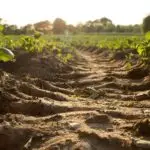
- Sheet Erosion: The uniform removal of a thin layer of topsoil from a large area, often by rainwater runoff.
- Rill Erosion: The formation of small, shallow channels (rills) on the soil surface by flowing water.
- Gully Erosion: The formation of large, deep channels (gullies) by concentrated runoff water, often developing from rills.
- Wind Erosion: The removal and transportation of soil particles by wind, common in dry and sandy areas.
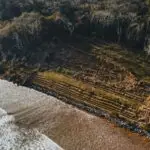
- Coastal Erosion: The wearing away of land and the removal of beach or dune sediments by wave action, tidal currents, and strong winds.
Causes of Erosion
Natural Causes
These are factors related to natural processes and conditions:
- Rainfall: Heavy rainfall can dislodge soil particles and carry them away as runoff.
- Wind: Strong winds can pick up loose soil particles, especially in dry, barren areas.
- Water (Rivers, Waves): Flowing rivers and ocean waves can erode riverbanks and coastlines.
- Ice/Glaciers: Moving ice masses can scrape and carry away large amounts of rock and soil (less common in Nigeria).
- Gravity: Causes landslides and mudslides on steep slopes.
- Topography (Slope): Steeper slopes increase the speed of water runoff, leading to more erosion.
- Soil Type: Loose, sandy soils are more prone to erosion than clayey soils.
Human Causes
These are human activities that accelerate the rate of erosion:
- Deforestation: Cutting down trees removes the protective cover of vegetation and exposes the soil directly to rain and wind.
- Overgrazing: Too many animals eating grass in an area can destroy vegetation, leaving the soil bare and vulnerable.
- Poor Farming Practices: Ploughing up and down slopes, not using contour ploughing, and not rotating crops can increase erosion.
- Construction Activities: Clearing land for buildings, roads, and other infrastructure exposes soil and disrupts natural drainage patterns.
- Bush Burning: Burning vegetation destroys organic matter in the soil and leaves it exposed.
- Mining: Surface mining operations remove topsoil and vegetation, leaving large areas susceptible to erosion.
Methods of Controlling Erosion
Erosion can be controlled through various methods, including:
- Afforestation/Reforestation: Planting new trees or replanting trees in deforested areas to provide soil cover and bind the soil with roots.
- Terracing: Building steps or flat platforms on hillsides to reduce the speed of water runoff and allow water to soak into the soil.
- Contour Ploughing: Ploughing across the slope of the land rather than up and down, creating ridges that slow down water flow.
- Cover Cropping: Planting crops that cover the soil surface, protecting it from the direct impact of rain and wind.
- Windbreaks/Shelterbelts: Planting rows of trees or shrubs to reduce wind speed and prevent wind erosion.
- Gabions: Using wire mesh cages filled with rocks to stabilize riverbanks and prevent gully erosion.
- Construction of Dams and Barriers: To control water flow and prevent flooding and erosion.
- Proper Grazing Management: Rotating livestock to prevent overgrazing in one area.
Teaching Methods/Instructional Techniques
Discussion, Demonstration, Guided Practice, Question and Answer, Explanation, Observation, Visual Aids.
Instructional Procedures
Step 1: Introduction
Time: 5 minutes
Teaching Skill: Engaging/Activating Prior Knowledge
Teacher’s Activity: The teacher greets the students and asks them to recall what they understand by “environment” and how it can be damaged. The teacher then introduces the topic: Environmental Degradation – Erosion.
Pupils’ Activity: Students respond to questions about the environment and listen attentively to the introduction.
Learning Point: Prior knowledge activation
Step 2: Meaning of Erosion
Time: 7 minutes
Teaching Skill: Explanation/Definition
Teacher’s Activity: The teacher explains the meaning of erosion as the wearing away and transportation of soil and rock by natural agents. The teacher uses simple language and relates it to everyday observations.
Pupils’ Activity: Students listen, ask questions for clarification, and participate in a short discussion on the definition.
Learning Point: Erosion definition
Step 3: Examples of Erosion
Time: 8 minutes
Teaching Skill: Illustration/Identification
Teacher’s Activity: The teacher shows charts/pictures of different types of erosion (sheet, rill, gully, wind) and asks students to identify them. The teacher gives local examples where possible.
Pupils’ Activity: Students observe the pictures, identify the types of erosion, and share any examples they have seen in their community.
Learning Point: Erosion examples
Step 4: Natural Causes of Erosion
Time: 6 minutes
Teaching Skill: Explanation/Categorisation
Teacher’s Activity: The teacher explains the natural causes of erosion, such as heavy rainfall, strong wind, and the action of water bodies. The teacher uses simple experiments or visual aids to demonstrate these forces.
Pupils’ Activity: Students listen, take note of the natural causes, and respond to questions about how these factors cause erosion.
Learning Point: Natural erosion causes
Step 5: Human Causes of Erosion
Time: 6 minutes
Teaching Skill: Explanation/Analysis
Teacher’s Activity: The teacher discusses human activities that contribute to erosion, such as deforestation, overgrazing, and poor farming practices. The teacher encourages students to identify these causes in their environment.
Pupils’ Activity: Students identify human causes of erosion and discuss how these activities accelerate the process.
Learning Point: Human erosion causes
Step 6: Methods of Controlling Erosion
Time: 5 minutes
Teaching Skill: Solution-oriented discussion
Teacher’s Activity: The teacher introduces various methods of controlling erosion, such as planting trees, terracing, and contour ploughing, using pictures or diagrams. The teacher emphasizes the importance of these methods.
Pupils’ Activity: Students observe the pictures and discuss the effectiveness of different control methods.
Learning Point: Erosion control methods
Step 7: Evaluation/Review
Time: 5 minutes
Teaching Skill: Questioning/Assessment
Teacher’s Activity: The teacher evaluates the learning by asking the following questions:
- What is erosion?
- Mention two examples of erosion.
- State two natural causes of erosion.
- Identify two human activities that cause erosion.
- Outline two ways erosion can be controlled.
Pupils’ Activity: Pupils answer orally and in writing.
Learning Point: Erosion concepts understood
Step 8: Note-Taking
Time: 4 minutes
Teaching Skill: Guided Writing
Teacher’s Activity: The teacher guides pupils/students to copy the essential Board Summary notes on the meaning, examples, causes, and control methods of erosion into their notebooks.
Pupils’ Activity: Pupils/students copy the notes carefully into their notebooks.
Learning Point: Notes on erosion
Step 9: Conclusion
Time: 2 minutes
Teaching Skill: Reinforcement
Teacher’s Activity: The teacher briefly reminds students about the importance of preventing erosion to protect our environment and thanks them for their participation.
Pupils’ Activity: Students listen and reflect on the lesson’s main points.
Learning Point: Erosion lesson reinforced
Continuous Assessment/Further Study
Type: Homework
Instruction: Answer the following questions in your notebook.
- Explain in your own words what erosion means.
- List three different types of erosion you learned today.
- Suggest three ways people in your community can help control erosion.
- Draw and label a simple diagram showing either gully erosion or a method of erosion control like terracing.
Lesson Keywords
- Erosion – The process of wearing away and transporting soil and rock by natural forces.
- Sheet Erosion – Uniform removal of topsoil by water.
- Gully Erosion – Formation of deep channels by concentrated water flow.
- Deforestation – Cutting down trees.
- Overgrazing – Too many animals eating grass in an area.
- Terracing – Building steps on slopes to control water.
- Contour Ploughing – Ploughing across slopes to slow water.
Differentiation
For weaker learners: Provide simplified definitions and focus on identifying common examples of erosion from pictures. Encourage them to draw simple diagrams of erosion types or control methods. Provide pre-written notes for copying if writing is a barrier.
For faster learners: Challenge them to research local erosion problems in their community and propose more detailed solutions. Ask them to explain the long-term effects of uncontrolled erosion on agriculture and infrastructure. Encourage them to use ICT to find more examples of erosion and control methods.
Suggested Lesson Videos
Search on YouTube for: JSS 1 erosion causes and control
Teacher Guide for Using This Lesson Plan
Before the lesson, ensure you have prepared clear charts or pictures illustrating different types of erosion (sheet, rill, gully, wind) and various control methods (terracing, afforestation, gabions). If possible, have a computer ready to show short video clips or images from search engines as instructional resources. Begin by engaging students with questions about their environment to connect the lesson to their prior knowledge. Explain the meaning of erosion using simple, relatable examples. Guide students through identifying both natural and human causes, encouraging them to think about their local environment. When discussing control methods, emphasize practical applications. During the evaluation, ensure all students have an opportunity to respond. Guide students to copy the Board Summary notes accurately into their notebooks. For weaker learners, provide extra visual support and simplify explanations. For faster learners, encourage deeper inquiry into local environmental issues related to erosion and potential solutions. Always ensure a safe classroom environment, especially when discussing or showing real-world examples of erosion.
Community Join the conversation Open discussion +