

Note for teachers using this lesson plan
This lesson introduces students to the concept of flooding, its causes, and the importance of effective drainage systems. Ensure you have visual aids like pictures or video clips to illustrate the impacts of floods and different drainage types. Encourage students to share their observations of flooding in their local environment and emphasize the practical steps they can take for flood control and prevention.
Class: JSS 1
Term: First Term
Week: 2
Age: 12 years
Duration: 45 minutes
Subject: Intermediate Science
Curriculum Theme: Our Environment
Focal competence: Demonstrating flood control and prevention in the environment (project/activity)
Key competencies/values: Critical Thinking; Responsibility; Leadership; Environmental literacy
Skills:
- Demonstrating flood control and prevention in the environment (project/activity)
Previous Lesson: Erosion, Examples, Causes and Control Methods
Topic: Environmental Degradation: Flooding
Subject Matter: Meaning, causes of flooding, Meaning, types and effects of drainage systems
Specific Objectives
By the end of the lesson, pupils/students should be able to:
Cognitive Domain
- explain the meaning of flooding;
- state causes of flooding;
- state the meaning of drainage;
- identify types of drainage systems;
- explain effects of flooding on the environment and farmland.
Affective Domain
- appreciate the importance of proper drainage systems in preventing flooding.
- show concern for environmental issues related to flooding.
Psychomotor Domain
- draw simple diagrams illustrating different types of drainage systems.
- participate in a project demonstrating simple flood control measures.
Social Domain
- collaborate with peers in discussing flood prevention strategies.
- advocate for responsible waste disposal to prevent drainage blockage.
Reference Materials
The following resources were used in planning this lesson:
- 2025 Revised 9 Years Basic Education Curriculum
- Relevant State Unified Scheme of Work
- Intermediate Science for Junior Secondary Schools Book 1
- The HeadTeacher Scheme of work
Instructional Materials
The teacher will teach this lesson with the aid of:
- Video clips on processes involved in flood control and prevention
- Charts/pictures showing types of floods
- Charts/pictures showing different ways of flood control and prevention
- Whiteboard and markers
- Textbooks
Rationale for the Lesson
Understanding flooding and drainage systems is crucial for students to grasp environmental degradation and its impact on human lives and agriculture. This lesson equips them with knowledge to identify causes and effects of flooding, promoting environmental literacy and responsible citizenship in mitigating these challenges.
Prerequisite/Previous Knowledge
Students should have a basic understanding of their environment and natural phenomena like rain.
Lesson Content/Board Summary
Environmental Degradation: Flooding
Meaning of Flooding
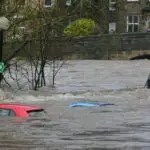
Flooding occurs when an area of land, usually dry, is submerged under water. It happens when water overflows from rivers, lakes, or oceans, or when heavy rainfall accumulates faster than it can be absorbed or drained away.
Causes of Flooding
Flooding can be caused by various factors, including:
- Heavy Rainfall: Prolonged or intense rainfall can lead to rivers overflowing their banks and low-lying areas becoming submerged.
- Blocked Drainage Systems: Drains and gutters blocked by refuse, plastic waste, or debris prevent water from flowing away, causing it to accumulate.
- Overflowing Rivers and Lakes: When rivers and lakes receive too much water, they can exceed their capacity and spill over into surrounding areas.
- Dam or Levee Failure: The collapse of dams or protective barriers can release large volumes of water, leading to sudden and severe floods.
- Deforestation: The removal of trees reduces the soil’s ability to absorb water, leading to increased surface runoff and higher flood risk.
- Coastal Storm Surges: Along coastlines, storms can push sea water inland, causing coastal flooding.
- Poor Urban Planning: Building on floodplains or areas with inadequate drainage infrastructure can exacerbate flooding.
Meaning of Drainage
Drainage refers to the natural or artificial removal of surface and sub-surface water from an area. It is the system by which water is channeled away to prevent accumulation and flooding.
Types of Drainage Systems
Drainage systems are designed to manage water flow and can be categorized into:
- Surface Drainage: This involves removing excess water from the surface of the land. Examples include natural slopes, open ditches, and roadside gutters.
- Subsurface Drainage: This involves removing excess water from beneath the ground surface. Examples include underground pipes (tile drains) and French drains, which collect water from the soil.
- Storm Drainage: Specifically designed to carry rainwater away from urban areas, often through a network of storm sewers and culverts.
- Agricultural Drainage: Systems used in farmlands to remove excess water from the soil, improving crop growth and preventing waterlogging.
Effects of Flooding on the Environment and Farmland
Flooding has significant negative impacts:
- Loss of Lives and Property: Floods can cause drowning, injuries, and destroy homes, businesses, and infrastructure.
- Damage to Farmland and Crops: Submerged farmlands lead to crop destruction, soil erosion, and loss of agricultural productivity, impacting food security.
- Displacement of People: Communities are often forced to evacuate their homes, leading to temporary or permanent displacement.
- Spread of Diseases: Contaminated water sources and poor sanitation during floods can lead to outbreaks of waterborne diseases like cholera and typhoid.
- Environmental Pollution: Floods can carry pollutants, sewage, and debris, contaminating water bodies and soil.
- Disruption of Transport and Communication: Roads, bridges, and communication networks can be damaged, isolating communities.
- Economic Losses: The cost of repairs, relief efforts, and lost productivity can be enormous, affecting national and local economies.
Teaching Methods/Instructional Techniques
Discussion, Explanation, Question and Answer, Demonstration, Group Work, Observation
Instructional Procedures
Step 1: Introduction
Time: 5 minutes
Teaching Skill: Engaging/Questioning
Teacher’s Activity: The teacher greets the students and asks them if they have ever witnessed heavy rainfall or seen areas covered in water after rain. The teacher then introduces the topic: Environmental Degradation: Flooding.
Pupils’ Activity: Students respond to the questions and listen attentively to the introduction.
Learning Point: Introduction to flooding
Step 2: Meaning of Flooding
Time: 7 minutes
Teaching Skill: Explanation/Definition
Teacher’s Activity: The teacher explains the meaning of flooding using simple language and relatable examples, possibly showing pictures of flooded areas. The teacher asks students to define flooding in their own words.
Pupils’ Activity: Students listen, observe pictures, and attempt to define flooding.
Learning Point: Flooding definition
Step 3: Causes of Flooding
Time: 8 minutes
Teaching Skill: Brainstorming/Explanation
Teacher’s Activity: The teacher engages students in an interactive discussion on possible causes of flooding, listing their contributions on the board. The teacher then explains and elaborates on each cause, such as heavy rainfall, blocked drains, and deforestation.
Pupils’ Activity: Students contribute ideas, ask questions, and listen to explanations.
Learning Point: Factors causing floods
Step 4: Meaning of Drainage
Time: 5 minutes
Teaching Skill: Definition/Clarification
Teacher’s Activity: The teacher introduces the concept of drainage, explaining its meaning as the removal of excess water. The teacher relates it to everyday experiences like water flowing away from a sink.
Pupils’ Activity: Students listen and understand the meaning of drainage.
Learning Point: Drainage system meaning
Step 5: Types of Drainage Systems
Time: 6 minutes
Teaching Skill: Identification/Classification
Teacher’s Activity: The teacher identifies and explains different types of drainage systems (e.g., surface, subsurface, storm, agricultural) using charts or diagrams to illustrate them. The teacher asks students to identify examples in their community.
Pupils’ Activity: Students observe charts, identify types, and give examples.
Learning Point: Drainage system types
Step 6: Effects of Flooding
Time: 5 minutes
Teaching Skill: Discussion/Analysis
Teacher’s Activity: The teacher leads a discussion on the effects of flooding on the environment, people, and farmlands, showing video clips or pictures of flood aftermath. The teacher emphasizes loss of lives, property, and crops.
Pupils’ Activity: Students watch clips, discuss effects, and share observations.
Learning Point: Flooding’s negative impacts
Step 7: Evaluation/Review
Time: 5 minutes
Teaching Skill: Questioning/Assessment
Teacher’s Activity: The teacher evaluates the learning by asking the following questions:
- What is flooding?
- Mention two causes of flooding.
- What is drainage?
- Name two types of drainage systems.
- State one effect of flooding on farmland.
Pupils’ Activity: Pupils answer orally and in writing.
Learning Point: Understanding flooding concepts
Step 8: Note-Taking
Time: 4 minutes
Teaching Skill: Guided Writing
Teacher’s Activity: The teacher guides pupils/students to copy the essential Board Summary notes on the meaning, causes, drainage types, and effects of flooding into their notebooks.
Pupils’ Activity: Pupils/students copy the notes carefully into their notebooks.
Learning Point: Recording lesson notes
Step 9: Conclusion
Time: 2 minutes
Teaching Skill: Summarizing/Reinforcement
Teacher’s Activity: The teacher briefly summarizes the key points of the lesson, emphasizing the importance of proper waste disposal and maintenance of drainage systems to prevent flooding. The teacher encourages students to be environmentally responsible.
Pupils’ Activity: Students listen and reflect on the lesson’s key takeaways.
Learning Point: Flood prevention importance
Continuous Assessment/Further Study
Type: Homework/Project
Instruction: Answer the following questions and prepare for a short project.
- Explain in your own words how heavy rainfall leads to flooding.
- Suggest three ways your community can prevent blocked drainage systems.
- Draw and label a simple diagram of a surface drainage system you have observed.
- Interview an adult in your community about their experience with flooding and how it affected them.
- Start thinking about a small project to demonstrate a simple flood control measure (e.g., a miniature dam, a proper gutter model).
Lesson Keywords
- Flooding – When an area of land is submerged under water.
- Drainage – The removal of excess water from an area.
- Heavy Rainfall – Intense or prolonged rain.
- Blocked Drains – Gutters or channels filled with refuse, preventing water flow.
- Erosion – The wearing away of soil by water or wind.
Differentiation
For weaker learners, provide simplified definitions and focus on identifying common causes and effects of flooding with visual aids. For faster learners, encourage them to research local flood prevention initiatives or design a more complex drainage system model.
Suggested Lesson Videos
For further understanding, search on YouTube for:
JSS1 meaning causes flooding drainage systems
Teacher Guide for Using This Lesson Plan
Before the lesson, ensure all instructional materials, especially pictures, charts, or video clips of floods and drainage systems, are ready. Begin by engaging students with questions about their personal experiences with heavy rain and water accumulation. Guide them through the definitions and causes of flooding, encouraging active participation and real-life examples. When discussing drainage, use diagrams to make the concepts concrete. Emphasize the devastating effects of flooding to instill a sense of responsibility. During the instructional procedures, ensure a balanced interaction between teacher explanation and student activities. Allow students to copy the Board Summary notes after the main teaching points have been covered and evaluated. For continuous assessment, encourage practical observations and simple project ideas to reinforce learning. Pay attention to common misconceptions, such as thinking all water accumulation is flooding, and clarify that flooding specifically refers to the submergence of usually dry land.
Community Join the conversation Open discussion +