

Note for teachers using this lesson plan
This lesson introduces students to the fundamental characteristics and importance of non-living matter, including its classification into metals and non-metals. Ensure you have a variety of non-living objects ready for hands-on classification activities. Encourage collaborative learning and guide students to actively participate in discussions and group work to meet the lesson objectives.
Class: JSS 1
Term: First Term
Week: 10
Age: 12 years
Duration: 45 minutes
Subject: Intermediate Science
Curriculum Theme: Living and Non-living Matter
Focal competence: Sorting non-living things into metals and non-metals
Key competencies/values: Collaboration; Information literacy; Respect; Environmental literacy
Skills:
- Sorting non-living things into metals and non-metals
Previous Lesson: Non-Living Matter and Examples
Topic: Non-Living Matter: Characteristics Of Non-Living Matter
Subject Matter: Characteristics of non-living matter, Importance of non-living matter, Non-living matter as metals and non-metals
Specific Objectives
By the end of the lesson, pupils/students should be able to:
Cognitive Domain
- Describe the characteristics of non-living matter.
- Explain the importance of non-living matter.
- State the characteristics of non-living matter.
- Discuss the uses and importance of non-living matter.
Affective Domain
- Appreciate the significance of non-living things in their environment.
- Demonstrate respect for the environment by understanding the role of non-living matter.
Psychomotor Domain
- Sort different non-living objects and materials into metals and non-metals.
- Identify various non-living things in their immediate surroundings.
Social Domain
- Collaborate effectively in groups to classify non-living matter.
- Engage in interactive discussions about non-living matter with peers and the teacher.
Reference Materials
The following resources were used in planning this lesson:
- 2025 Revised 9 Years Basic Education Curriculum
- Relevant State Unified Scheme of Work
- Basic Science and Technology for Junior Secondary School 1
- The HeadTeacher Scheme of work
Instructional Materials
The teacher will teach this lesson with the aid of:
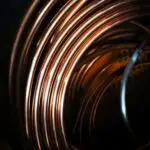
- Samples of non-living things (e.g., stone, wood, plastic bottle, iron rod, glass, rubber band, copper wire)
- Charts/pictures showing different types of non-living things based on metals and non-metals
- Charts/pictures showing different classes of non-living things based on metals and non-metals
- Whiteboard and markers/Chalkboard and chalk
Rationale for the Lesson
This lesson is important because it helps students understand the fundamental differences between living and non-living components of their environment. By identifying the characteristics and importance of non-living matter, students gain a foundational understanding of the physical world around them, which is essential for further scientific studies and environmental literacy.
Prerequisite/Previous Knowledge
Students should have a basic understanding of what matter is and some common examples of things found in their environment.
Lesson Content/Board Summary
Non-Living Matter: Characteristics Of Non-Living Matter
Characteristics of Non-Living Matter
Non-living matter refers to things that do not possess the fundamental characteristics of life. They do not grow, reproduce, respire, or respond to stimuli in the same way living organisms do. Key characteristics include:
- No Growth: Non-living things do not increase in size by internal processes. A stone does not grow like a plant or animal.
- No Reproduction: They cannot produce offspring or make copies of themselves. A chair cannot make another chair.
- No Respiration: Non-living things do not breathe or exchange gases to release energy from food.
- No Movement (on their own): They do not move from one place to another by themselves. They require an external force to move.
- No Response to Stimuli: They do not react to changes in their environment, such as light, heat, or touch, in a biological way.
- No Excretion: They do not produce waste products from metabolic processes.
- No Nutrition: They do not take in or process food for energy or growth.
- Made of Atoms and Molecules: All non-living matter is composed of atoms and molecules, forming various substances.
Importance of Non-Living Matter
Non-living matter plays a crucial role in our daily lives and the environment. Its importance and uses include:
- Building Materials: Materials like stones, sand, cement, wood, and metals are used to construct houses, roads, bridges, and other infrastructure.
- Tools and Equipment: Metals (e.g., iron, steel) are used to make tools, machinery, vehicles, and electronic devices that simplify work and improve communication.
- Energy Sources: Non-living matter such as coal, crude oil, and natural gas (fossil fuels) are primary sources of energy for electricity generation, transportation, and industrial processes.
- Water: Essential for all forms of life, for drinking, cooking, washing, irrigation, and industrial uses.
- Air: Provides oxygen for respiration, carbon dioxide for photosynthesis, and helps regulate Earth’s temperature.
- Soil: Supports plant growth, provides habitat for many organisms, and is a source of minerals.
- Minerals: Used in various industries, from manufacturing to medicine, and are vital for human health.
- Containers and Storage: Glass, plastics, and metals are used to make bottles, containers, and packaging materials.
Classification of Non-Living Matter: Metals and Non-Metals
Non-living matter can be broadly classified into different categories based on their properties. Two major categories are metals and non-metals.
- Metals:
- They are typically hard, shiny, and good conductors of heat and electricity.
- They are malleable (can be hammered into sheets) and ductile (can be drawn into wires).
- Examples: Iron, copper, aluminium, gold, silver, lead.
- Uses: Used in electrical wiring, construction, jewellery, cooking utensils, and machinery.
- Non-Metals:
- They are generally dull, brittle, and poor conductors of heat and electricity (insulators).
- They exist as solids, liquids, or gases at room temperature.
- Examples: Carbon (as coal, graphite, diamond), oxygen, nitrogen, sulphur, chlorine, rubber, plastic, wood, glass.
- Uses: Oxygen for breathing, carbon for fuel, sulphur in medicines, plastics for containers, wood for furniture.
Teaching Methods/Instructional Techniques
Discussion, Demonstration, Guided Practice, Question and Answer, Explanation, Observation, Group Work, Individual Practice.
Instructional Procedures
Step 1: Introduction
Time: 5 minutes
Teaching Skill: Engaging learners
Teacher’s Activity: The teacher greets the students and asks them to identify some objects in the classroom. The teacher then asks what makes some objects different from living things they learned about in the previous lesson.
Pupils’ Activity: Students identify objects like tables, chairs, books, and pens. They recall characteristics of living things and attempt to differentiate.
Learning Point: Introduction to non-living matter
Step 2: Characteristics of Non-Living Matter
Time: 8 minutes
Teaching Skill: Explaining/Questioning
Teacher’s Activity: The teacher introduces the concept of non-living matter and guides students to state its characteristics by asking questions like “Does a stone grow?” or “Can a table move by itself?”. The teacher lists their responses on the board.
Pupils’ Activity: Students participate in the discussion, answering questions and contributing ideas about the characteristics of non-living things.
Learning Point: Stating non-living characteristics
Step 3: Explanation of Characteristics
Time: 8 minutes
Teaching Skill: Detailed explanation
Teacher’s Activity: The teacher explains each characteristic of non-living matter in detail, providing clear examples for better understanding. The teacher uses the list generated in Step 2 as a guide.
Pupils’ Activity: Students listen attentively, ask questions for clarification, and take mental notes.
Learning Point: Understanding non-living characteristics
Step 4: Importance of Non-Living Matter
Time: 8 minutes
Teaching Skill: Facilitating discussion
Teacher’s Activity: The teacher initiates a discussion on the importance and uses of non-living matter in daily life. The teacher shows various samples (e.g., a piece of metal, plastic, wood) and asks students about their uses.
Pupils’ Activity: Students engage in an interactive discussion, sharing examples of how non-living things are important and used around them.
Learning Point: Uses and importance of non-living
Step 5: Classification into Metals and Non-metals
Time: 8 minutes
Teaching Skill: Group activity/Demonstration
Teacher’s Activity: The teacher divides students into groups and provides each group with a collection of non-living objects (e.g., iron nail, plastic spoon, copper wire, wooden block, rubber band). The teacher instructs them to brainstorm and classify the objects into metals and non-metals, explaining their reasoning.
Pupils’ Activity: Students work in groups to sort the provided non-living items, discussing their properties and classifying them as metals or non-metals.
Learning Point: Sorting non-living matter
Step 6: Reinforcement and Examples
Time: 4 minutes
Teaching Skill: Clarification/Reinforcement
Teacher’s Activity: The teacher reviews the group classifications, corrects any misconceptions, and provides additional examples of metals and non-metals, highlighting their key differences based on properties like conductivity and appearance.
Pupils’ Activity: Students listen to feedback, ask questions, and confirm their understanding of metals and non-metals.
Learning Point: Properties of metals and non-metals
Step 7: Evaluation/Review
Time: 5 minutes
Teaching Skill: Questioning/Assessment
Teacher’s Activity: The teacher evaluates the learning by asking the following questions:
- State three characteristics of non-living matter.
- Explain two ways non-living matter is important to us.
- Give two examples of metals and two examples of non-metals.
- How would you classify a plastic bottle and an iron spoon?
Pupils’ Activity: Pupils answer orally and in writing.
Learning Point: Assessment of lesson understanding
Step 8: Note-Taking
Time: 4 minutes
Teaching Skill: Guided Writing
Teacher’s Activity: The teacher guides pupils/students to copy the essential Board Summary notes on characteristics, importance, and classification of non-living matter into their notebooks.
Pupils’ Activity: Pupils/students copy the notes carefully into their notebooks.
Learning Point: Recording lesson notes
Step 9: Conclusion
Time: 2 minutes
Teaching Skill: Summarising
Teacher’s Activity: The teacher briefly summarizes the main points of the lesson, emphasizing that non-living things are all around us and are essential for life and human activities.
Pupils’ Activity: Students listen and reflect on the lesson’s main points.
Learning Point: Lesson summary and reinforcement
Continuous Assessment/Further Study
Type: Homework
Instruction: Answer the following questions in your notebook.
- List five non-living things you use at home and state their importance.
- Differentiate between metals and non-metals, giving two examples for each.
- Imagine a world without any non-living things. Describe how your daily life would be affected.
Lesson Keywords
- Non-living matter – Things that do not possess the characteristics of life (e.g., growth, reproduction, respiration).
- Characteristics – Distinguishing features or qualities.
- Metals – Non-living materials that are typically shiny, hard, and good conductors of heat and electricity (e.g., iron, copper).
- Non-metals – Non-living materials that are generally dull, brittle, and poor conductors of heat and electricity (e.g., wood, plastic, oxygen).
- Importance – The quality of being significant or valuable.
Differentiation
For weaker learners: Provide simplified charts with pictures of non-living things and their basic characteristics. Offer pre-sorted examples of metals and non-metals to help them understand the categories before attempting to sort new items. Focus on identifying 2-3 key characteristics and 2-3 important uses.
For faster learners: Challenge them to research and identify other categories of non-living matter (e.g., organic vs. inorganic) or explore the specific properties that make certain metals or non-metals suitable for particular uses (e.g., why copper is used for electrical wires). They can also investigate the environmental impact of certain non-living materials.
Suggested Lesson Videos
For further understanding, students can search for “Characteristics of Non-Living Things JSS 1” or “Metals and Non-metals for Junior Secondary” on YouTube.
Teacher Guide for Using This Lesson Plan
Before the lesson, gather a diverse collection of non-living objects that clearly represent both metals and non-metals (e.g., an iron nail, copper wire, plastic cup, wooden block, glass bottle, rubber band). Prepare charts or pictures illustrating the characteristics of non-living matter and examples of metals and non-metals. Begin by reviewing the characteristics of living things to provide a clear contrast. Guide the interactive discussions, ensuring all students have opportunities to contribute. During the group activity, circulate to monitor progress, provide assistance, and encourage collaborative learning. Ensure students understand that non-living things do not exhibit the seven life processes. Allow sufficient time for students to copy the Board Summary notes after the evaluation. Emphasize the practical relevance of non-living matter in their daily lives.
Community Join the conversation Open discussion +