

Class: Primary Two
Term: First Term
Subject: History
Curriculum Theme:
Previous Lesson: Occupations, Indigenous People Of The State VII
Topic: Indigenous People of the State
Content/Learning area: Important places in the state, values
Time Allocation: 40 minutes
Performance Objectives
By the end of the lesson, pupils should be able to:
- Cognitive Domain:
1. list important places in the state.
2. Explain the meaning of values.
- Affective Domain:
1. Show respect for the Indigenous People of the State.
2. Appreciate the importance of cultural preservation.
- Psychomotor Domain:
1. Actively participate in class discussions.
2. Take notes on critically important details.
- Social Domain:
1. Work collaboratively with peers.
2. Share ideas and perspectives respectfully.
Reference materials
- 9 – Years Basic Education Curriculum
- Abuja educational Resource Center scheme of Work
- NAPPS National Unified scheme of Work
- Relevant Textbooks
Instructional Materials
to deliver this lesson, the teacher will use the following materials:
- Whiteboard or chart paper
- Markers or pens
- Relevant pictures or images
Rationale for the Lesson
Understanding the Indigenous People of the State helps pupils connect with their local history and appreciate the diverse cultures within their community. This knowledge fosters a sense of belonging and promotes respect for different traditions.
Prerequisite/Previous Knowledge
Pupils have basic knowledge of their state.
Lesson Content
Indigenous people of the State
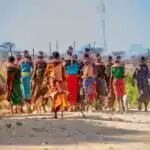
The Indigenous people of the State are the original inhabitants of our state. They have a rich history and culture that is critically important to understand and preserve.
What are Critically important Places?
Important places are locations that hold significance for the people of a state. These places can be ancient sites, cultural centers, or natural landmarks. They often represent the history, traditions, and values of the people who live ther.
Values
Values are the beliefs and principles that guide our behavior and choices. They are the things that we consider critically important and that help us make decisions about how to treat others and how to live our lives. Some critically important values include:
The following are examples of values:
- Respect: Treating others the way you want to be treated.
- Honesty: Telling the truth.
- Kindness: being kind and helpful.
- Courage: Being brave.
- Wisdom: Using knowledge to make good decisions.
- Integrity: Being honest and having strong moral principles.
- Responsibility: Being accountable for one’s actions and decisions.
- Patience: Remaining calm and tolerant, even when faced with delays or difficulties.
Critically important Places in the State
Many important places in our state reflect the history and culture of the Indigenous People. Examples include:
These include:
- State capital: Where the state government is located.
- Local market: A place to buy and sell goods.
- School: Where children learn.
- State House of Assembly: Where laws are made.
- state Library: A place with many books.
- State Museum: Shows the state’s history.
- State Park: A natural area for outdoor activities.
- State University: A place for higher education.
- Historic Landmark district: A historically meaningful area.
- State High Court: The highest court in the state.
- State Science Center: A place to learn about science.
- Governor’s Mansion/Government House: The governor’s home.
- Cultural Heritage Site: A place that preserves cultural traditions and artifacts.
- Religious Center: A place of worship and spiritual significance.
Teaching methods
To deliver this lesson, the teacher will adopt the following methods: Discussion, Question and answer, Interactive teaching
instructional Procedures
To deliver this lesson, the teacher will adopt the following steps:
Step 1: Introduction
Time: 5 minutes
Teaching Skill: Set Induction
Teacher’s Activity: Asks pupils what they know about their state and introduces the topic of Indigenous people.
Pupils’ Activity: Share their prior knowledge and listen attentively.
Step 2: Description of Key Concepts
Time: 10 minutes
Teaching Skill: Description
Teacher’s Activity: Explains the meaning of “Indigenous People” and “values,” providing clear examples.
Pupils’ Activity: listen attentively and take notes.
Step 3: Demonstration/Guided Practice
Time: 10 minutes
Teaching Skill: Modeling
Teacher’s Activity: Provides examples of important places in the state and discusses their meaning.
Pupils’ Activity: Participate in discussions and offer their own examples.
Step 4: Independent Practice
Time: 5 minutes
Teaching Skill: monitoring
Teacher’s Activity: guides pupils as they individually list important places and values.
Pupils’ Activity: Complete the activity independently.
Step 5: Note-Taking
Time: 5 minutes
Teaching Skill: Summarizing
teacher’s Activity: Summarizes key concepts and encourages pupils to write down critically important points.
Pupils’ Activity: Take notes on the lesson.
Step 6: Evaluation/Review
Time: 5 minutes
Teaching Skill: Questioning
Teacher’s Activity: Asks evaluation questions to assess understanding.
Pupils’ Activity: Answer the evaluation questions.
Objective-aligned checks:
- list important places in the state.
- Explain the meaning of values.
- Show respect for the Indigenous People of the State.
Step 7: Conclusion
Time: 5 minutes
Teaching Skill: Summarizing
Teacher’s Activity: Reviews the key concepts learned and assigns a short homework activity.
Pupils’ Activity: Listen attentively and prepare for the homework assignment.
Lesson Keywords
- Indigenous – Native or original to a place.
- Values – Beliefs that guide behavior.
- Culture – Customs and traditions of a group of people.
- State – A region or area with its own government.
- Respect – Showing consideration for others.
Lesson Evaluation
To evaluate the learning, the teacher asks pupils to:
- Name one important place in our state.
- What are values?
- Name one value we discussed.
- Why is it critically important to learn about the Indigenous People?
- How can we show respect for the Indigenous People?
Assignment/homework
- Draw a picture of an important place in your state.
- Write a sentence about its significance.
Differentiation
- For slower learners: Provide one-on-one assistance and simplified explanations.
- For advanced learners: Encourage them to research additional information about the Indigenous People and present their findings to the class.
- For visual/auditory/kinesthetic learners: Use visual aids, discussions, and hands-on activities to cater to different learning styles.
Note for Teachers
Encourage pupils to share their personal experiences and connections to the Indigenous People of the State to make the lesson more engaging and relevant.
Community Join the conversation Open discussion +