

Class: Primary Two
Term: First Term
Subject: History
Curriculum Theme:
Previous Lesson: Origins, Indigenous People Of The State III
Topic: Indigenous People of the State
Content/Learning Area: Identifying elements of indigenous culture, Naming two types of food associated with a particular indigenous group
time Allocation: 40 minutes
Performance Objectives
By the end of the lesson, pupils should be able to:
- Cognitive Domain:
1. Identify elements of indigenous culture.
2. Name two types of food associated with a particular indigenous group.
3.Explain the importance of understanding indigenous cultures.
4. Describe how surroundings influences indigenous culture.
- Psychomotor Domain:
1. Actively participate in class discussions.
2. Take notes on key concepts.
- Affective domain:
1. Show respect for diffrent cultures.
2. Appreciate the diversity of indigenous cultures.
- Social Domain:
1. Work collaboratively with peers.
2. Share ideas and perspectives respectfully.
reference Materials
- 9 – Years Basic Education Curriculum
- Abuja educational Resource Center Scheme of Work
- NAPPS National unified Scheme of Work
- Relevant Textbooks
Instructional Materials
To deliver this lesson, the teacher will use the following materials:
- Whiteboard or chart paper
- Markers or crayons
- Pictures or illustrations of indigenous people and their culture
- Relevant textbooks
Rationale for the Lesson
Understanding indigenous cultures promotes thankfulness for diversity and fosters respect for different ways of life. This knowledge is crucial for building a harmonious society and understanding our shared history.
Prerequisite/Previous Knowledge
The teacher will begin by asking pupils what they already know about different cultures. A brief discussion will follow, leading into a discussion about the indigenous people of their state.
Lesson Content
Indigenous People of the state
Indigenous people are the first inhabitants of a place.They have unique cultures, traditions, and ways of life.
What is culture?
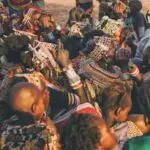
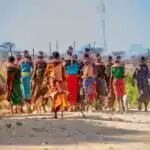
Culture is how a group of people live. It includes what they wear, eat, how they celebrate, their traditions, and stories. Indigenous culture includes clothing, hairstyles, food, and tribal marks. [[1]] Every society has its own culture, and each is unique. The surroundings often shapes a culture.Such as, people in cold mountains live differently then those in hot deserts.[[3]]
Elements of Indigenous Culture
Elements of indigenous culture are the unique aspects that define the way of life of a particular group of people.
These include:
- Clothing: Often conventional, made from natural materials like leather, fur, or woven fabrics.
- Hairstyles: Elaborate and symbolic, representing tribes, status, or age.
- Food: based on what’s available, like fruits, vegetables, fish, and meat.
- Tribal marks: Used for identification and lineage.
- Language: The unique language spoken by the indigenous group, often passed down through generations.
- Music and Dance: Traditional songs and dances that are integral to ceremonies and celebrations.
- Religious Beliefs: Spiritual practices and beliefs that are specific to the indigenous group.
Examples of Indigenous Food
Indigenous foods are those that are native to a particular region and are traditionally consumed by the local people.
Examples are:
- Fufu: A staple food made from pounded yams,cassava,or plantains. More about fufu
- Egusi Soup: A flavorful soup made with ground melon seeds.
- Akara: A popular snack made from black-eyed peas.
- Suya: Grilled meat marinated in spices.
- Moin Moin: A steamed bean pudding made from ground beans and spices.
- Pounded Yam: A smooth and elastic dough made from pounded yam, often served with soup.
- Edikaikong Soup: A nutritious vegetable soup made with pumpkin leaves and waterleaf.
Teaching Methods
To deliver this lesson, the teacher will adopt the following methods: Discussion, Question and answer, Use of visuals
Instructional Procedures
To deliver this lesson, the teacher will adopt the following steps:
Step 1: Introduction (Set Induction)
Time: 5 minutes
Teaching Skill: Questioning
Teacher’s Activity: Ask pupils what they know about different cultures and introduce the topic of indigenous people.
Pupils’ Activity: Respond to teacher’s questions and participate in the discussion.
Step 2: Description of Key Concepts
Time: 10 minutes
Teaching Skill: Explaining
Teacher’s Activity: Explain the meaning of “indigenous people” and “culture,” using examples.
Pupils’ Activity: Listen attentively and ask clarifying questions.
Step 3: Demonstration/Guided Practice
Time: 10 minutes
Teaching Skill: Modeling
Teacher’s Activity: Show pictures of indigenous people and their culture, explaining key elements like clothing, hairstyles, and food.
Pupils’ Activity: Observe the pictures and participate in the discussion.
Step 4: Autonomous Practice
Time: 5 minutes
Teaching Skill: Monitoring
Teacher’s Activity: Ask pupils to name two types of food associated with a particular indigenous group.
Pupils’ Activity: Answer the teacher’s questions.
Step 5: Note-Taking
Time: 5 minutes
Teaching Skill: Guiding
Teacher’s Activity: Guide pupils in taking notes on key concepts.
Pupils’ Activity: Take notes on the lesson.
step 6: Evaluation/Review
Time: 5 minutes
Teaching Skill: Assessing
Teacher’s Activity: Ask review questions to assess understanding.
Pupils’ Activity: Answer review questions.
Objective-aligned checks:
- Identify elements of indigenous culture.
- Name two types of food associated with a particular indigenous group.
- Explain the importance of understanding indigenous cultures.
Step 7: Conclusion
Time: 2 minutes
Teaching Skill: Summarizing
Teacher’s Activity: Summarize the key concepts and encourage pupils to continue learning about different cultures.pupils’ Activity: Listen to the summary and ask any remaining questions.
Lesson Keywords
- Indigenous – Native to a particular place.
- Culture – The customs, arts, social institutions, and achievements of a particular nation, people, or group.
- Traditions – Customs or beliefs passed down from generation to generation.
- Staple food – A main food that constitutes a dominant portion of a diet.
- Tribal marks – Scarifications or tattoos used for identification and lineage.
Lesson Evaluation
To evaluate the learning, the teacher asks pupils to:
- What are some elements of indigenous culture?
- Name two types of food associated with a particular indigenous group.
- Why is it significant to understand indigenous culture?
- how does the environment affect indigenous culture?
Observation: Active participation in discussions, accurate answers to questions, completion of note-taking.
Assignment/Homework
- Research and write a short paragraph about an indigenous group in your state.
- List three elements of the culture of the indigenous group you researched.
- Name two types of food commonly eaten by the indigenous group you researched.
Differentiation
- For slower learners: Provide one-on-one assistance and use simpler language.
- For advanced learners: Encourage them to research and present information on a specific indigenous group.
- For visual/auditory/kinesthetic learners: Use pictures, discussions, and hands-on activities to cater to different learning styles.
Note for Teachers
Ensure to use visual aids and real-life examples to make the lesson engaging and relatable for the pupils. Encourage pupils to share their own experiences and perspectives to foster a respectful and inclusive learning environment.
Community Join the conversation Open discussion +